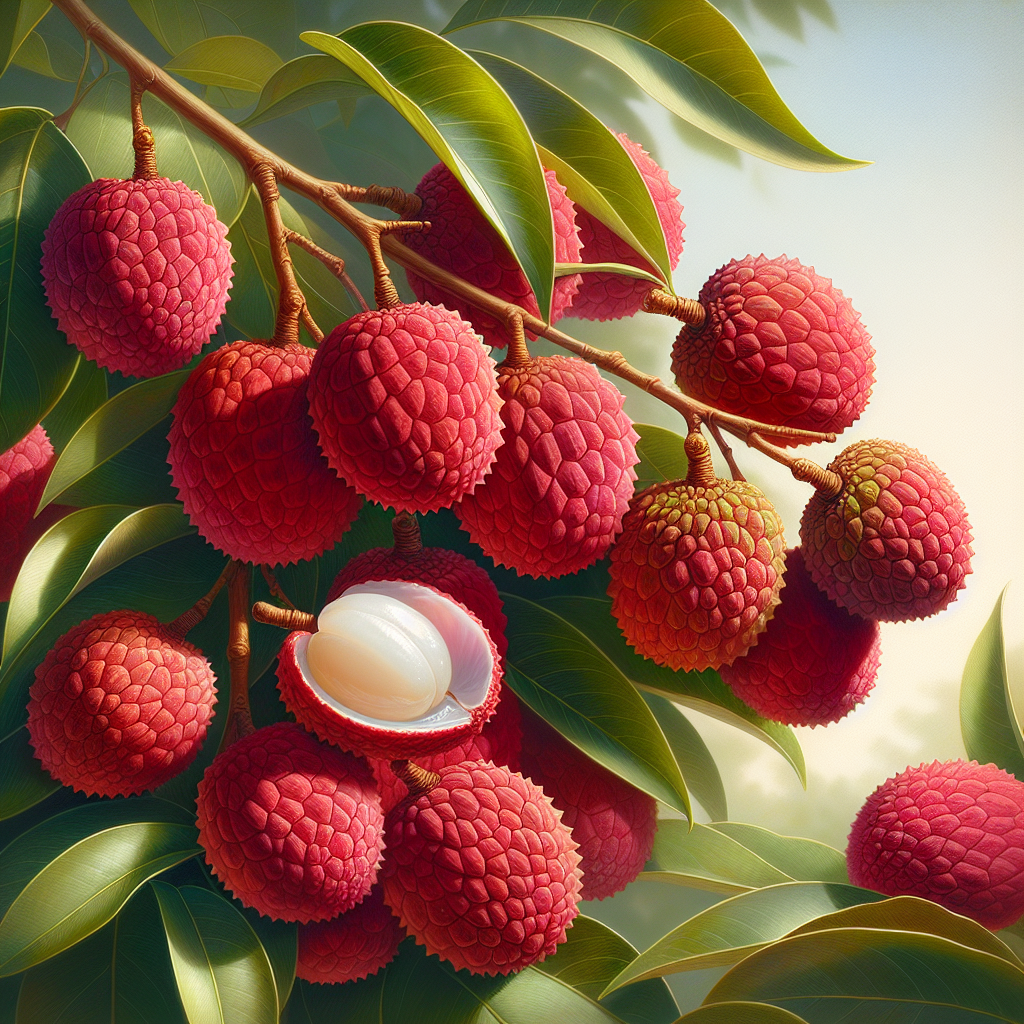
Introduction to Lychee (Emperor)
Lychee (Emperor), scientifically known as Litchi chinensis 'Emperor', stands out as one of the most sought-after lychee varieties among commercial growers and home orchardists. Originating from superior selections in subtropical regions, this cultivar is prized for its massive fruit size—often exceeding 50 grams per berry—combined with an intensely sweet, floral flavor and minimal seed. Unlike many lychees that suffer from cracking or uneven ripening, Emperor delivers consistent, high-quality clusters that command premium prices in markets.
This deep-dive guide provides professional-grade agricultural advice for successfully cultivating Lychee (Emperor) from propagation to harvest. Whether you're establishing a small farm orchard or expanding a backyard grove, understanding its specific needs for climate, soil, and care will maximize yields. Emperor lychees typically begin bearing 3-5 years after planting, with mature trees producing 100-300 pounds of fruit annually under optimal conditions. For growers in USDA zones 10-11 or equivalent subtropical areas, this variety offers reliable performance and resistance to common stressors like heat and humidity. Mango (crop) growers often transition to lychees for diversification due to similar tropical requirements.
Key benefits include superior shelf life post-harvest, making it ideal for shipping, and a vigorous growth habit that supports high-density planting. With proper management, Emperor can thrive for decades, providing a lucrative long-term investment. This guide draws on entomological, botanical, and agronomic expertise to ensure your success.
Botanical Profile of Lychee (Emperor)
Lychee (Emperor) is an evergreen tree in the Sapindaceae family, growing to 30-40 feet tall in optimal conditions, though dwarfing rootstocks can limit it to 15-20 feet for easier management. The tree features pinnate leaves 6-12 inches long, glossy green above and slightly coppery underneath, providing dense shade. New growth flushes pinkish-red before maturing to deep green, a hallmark of healthy lychees.
Flowers emerge in panicles up to 18 inches long during late winter to spring, with Emperor producing a high percentage of hermaphroditic flowers for better pollination rates. Fruits develop in loose clusters, each berry heart-shaped, 1.5-2.5 inches in diameter, with rough, vibrant red skin that turns dull when overripe. The translucent white aril encases a single large seed, but Emperor's seed is often aborted or small, increasing edible yield to 75-80% of fruit weight.
Root system is fibrous and shallow, extending 2-3 times the canopy width, sensitive to waterlogging. Emperor is a late-season variety, ripening 2-4 weeks after early types like Brewster, allowing staggered harvests. Its genetic vigor confers tolerance to high winds and moderate salinity compared to other cultivars. For detailed subtropical fruit profiles, see our Soil Health Mastery blog.
Soil, pH, and Climate Requirements for Lychee (Emperor)
Lychee (Emperor) demands well-drained, fertile soils rich in organic matter, ideally sandy loam or clay loam with 2-5% organic content. Avoid heavy clays prone to water retention, as roots are susceptible to root rot. Optimal pH is 5.5-6.5; test soil annually and amend with dolomite lime if below 5.5 or sulfur if above 7.0. Incorporate 4-6 inches of compost pre-planting to enhance microbial activity and nutrient retention.
Climate-wise, Emperor requires frost-free environments with average temperatures of 68-86°F (20-30°C). It tolerates brief dips to 28°F (-2°C) once established but young trees need protection below 32°F (0°C). Rainfall of 40-60 inches annually is ideal, supplemented by irrigation during dry spells. High humidity (60-80%) aids fruit set, but excellent air circulation prevents fungal issues. In marginal areas, use microclimates or high tunnels. Heatwaves above 95°F (35°C) can cause fruit drop; mulching and shade cloth mitigate this, as discussed in heat management strategies.
Full sun (8+ hours daily) is essential for fruit quality. Windbreaks are crucial in exposed sites to prevent desiccation and physical damage. Salinity tolerance is moderate (EC <2.0 dS/m); leach soils if irrigation water exceeds this.
Step-by-Step Planting & Propagation
Propagation
Air-layering (marcotting) is the preferred method for Lychee (Emperor), yielding 90% success. Select 1-2 year-old branches, girdle 1-2 inches wide, apply rooting hormone (IBA 5000 ppm), wrap with moist sphagnum moss and plastic. Roots form in 6-8 weeks. Grafted trees on rootstocks like 'Tai So' improve vigor and soil adaptability.
Seeds are not recommended due to long juvenility (5-10 years to fruit) and off-type progeny.
Planting
Plant in early spring or fall in frost-free areas. Dig holes 3x wider than root ball, 2 feet deep. Space trees 20-25 feet apart for standard, 12-15 feet for dwarfs. Backfill with amended soil, stake if needed. Water deeply post-planting (20-30 gallons/tree). Apply 4-6 inches mulch, keeping 6 inches from trunk.
For container growing, use 25-gallon pots with well-draining mix; repot every 2 years.
Care & Maintenance regimes for Lychee (Emperor)
Water young trees weekly (1-2 inches), maturing to deep, infrequent irrigation. Drip systems deliver 0.5-1 inch/week during fruit swell. Fertilize 4x/year: NPK 8-3-9 in spring (1 lb/tree), balanced summer feed. Foliar micronutrients (Zn, Mn, B) prevent deficiencies.
Prune post-harvest to open canopy, remove deadwood. Thin dense clusters for larger fruit. Intercrop with legumes for nitrogen fixation.
Pests, Diseases & Organic Management
Common pests include aphids, scale insects, mealybugs, and fruit borers. Monitor weekly; use neem oil or insecticidal soap for soft-bodied pests. Introduce lacewings and ladybugs. For borers, remove affected panicles.
Diseases: Anthracnose (Colletotrichum spp.) causes flower blight—apply copper fungicide pre-bloom. Phytophthora root rot managed by drainage and phosphonate drenches. Organic IPM emphasizes sanitation, mulching, and resistant spacing. Learn more in our pest management blog: Why 90% of Small Farms Fail at Pest Management.
Harvesting, Curing & Optimal Storage
Harvest when 80% color change, clusters intact. Yield peaks at 10-15 years. Clip with secateurs, handle gently to avoid skin cracking. Cool to 50°F (10°C) within 4 hours. Store at 32-41°F (0-5°C), 90-95% RH for 3-4 weeks. For curing, brief ethylene exposure enhances red color.
Companion Planting for Lychee (Emperor)
Pair with guava for pest diversion, thyme as groundcover for nematodes, and marigold for soil health. Avoid water-hungry crops like corn near roots. Legumes like clover fix nitrogen. See companion strategies here.