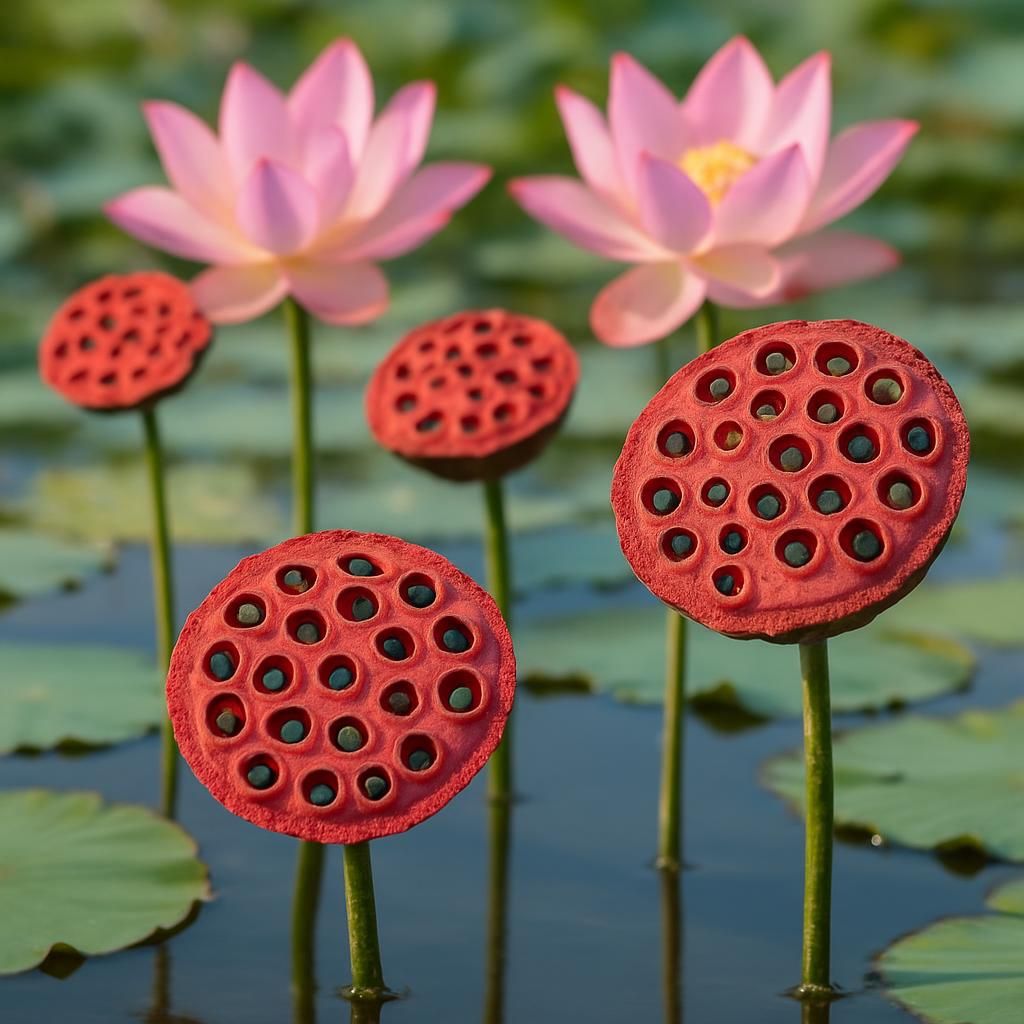
Introduction to Lotus Seed (Red)
Lotus Seed (Red) is a high-value aquatic perennial prized across Asia for its large crimson seeds, edible rhizomes, and ornamental flowers. The crop thrives in shallow, sun-drenched ponds and flooded fields, delivering both food and income within one growing season. Professional growers appreciate its dual market: fresh and dried seeds command premium prices while the remaining plant parts supply starch, medicine, and cut-flower sales.
Successful cultivation hinges on stable water depth, fertile anaerobic mud, and a frost-free period of at least 180 days. When managed correctly, a well-established bed can remain productive for 8–12 years with minimal replanting. This guide presents field-tested protocols used by commercial producers in China, India, and Thailand.
Botanical Profile of Lotus Seed (Red)
Nelumbo nucifera 'Red Seed' belongs to the Nelumbonaceae family. Plants produce peltate leaves up to 60 cm across that float or rise above water on petioles 1–2 m long. Flowers measure 15–25 cm and shift from deep pink to crimson as they age. The fruit forms a distinctive conical receptacle containing 15–25 hard, red-brown seeds each weighing 1.2–1.8 g.
Rhizomes are segmented, starchy, and extend horizontally 30–50 cm below the mud surface. The cultivar is day-neutral but requires minimum water temperatures of 20 °C for flowering and seed set. Seeds remain viable for decades when kept dry, allowing reliable propagation.
Soil, pH, and Climate Requirements for Lotus Seed (Red)
Lotus Seed (Red) demands heavy clay or silty loam with high organic matter and low permeability. The ideal pH range is 6.0–7.5. Standing water 15–30 cm deep must be maintained throughout the growing season. Below is a summary of optimal conditions:
| Parameter | Ideal Range | Notes |
|---|---|---|
| Soil Texture | Clay to silty clay loam | Retains water; permits rhizome expansion |
| Soil pH | 6.0–7.5 | Avoid acidic peat or saline soils |
| Water Depth | 15–30 cm | Increase to 40 cm in peak summer heat |
| Water Temperature | 20–32 °C | Below 18 °C delays sprouting |
| Air Temperature | 25–35 °C day / 18–24 °C night | Frost kills emergent leaves |
| Sunlight | Full sun (≥8 h) | Essential for flowering and seed fill |
| Organic Matter | 4–8 % | Incorporate well-rotted manure or compost |
Step-by-Step Planting & Propagation
Site Preparation: Excavate ponds or paddies to 40–60 cm depth. Line with 15–20 cm of heavy clay or bentonite if native soil drains too quickly. Level the base and flood to 10 cm.
Rhizome Selection: Choose healthy terminal segments 20–30 cm long with at least three nodes and intact growing tips. Avoid damaged or desiccated pieces.
Planting Window: In subtropical zones plant when water temperature stabilizes above 20 °C (late March–April in the northern hemisphere). Tropical growers may plant year-round.
Spacing: Insert rhizomes horizontally 5–8 cm deep at 1.0 m × 1.2 m spacing for commercial beds. Closer spacing (0.8 m) increases early yield but requires more seed stock.
Initial Flooding: Maintain 10 cm water for the first 10–14 days to encourage root anchorage, then raise to 20 cm.
Alternative Seed Propagation: Scarify hard seed coats with sandpaper or soak in 80 °C water for 30 seconds. Germinate in shallow trays at 25 °C; transplant seedlings at the three-leaf stage.
Care & Maintenance regimes for Lotus Seed (Red)
Consistent water level and nutrient supply drive both rhizome and seed production. Monitor dissolved oxygen and pH weekly. The following schedule supports commercial yields:
| Growth Stage | Water Depth | Fertilizer (per 100 m²) | Pruning / Thinning |
|---|---|---|---|
| Pre-plant | 10 cm | 8 kg well-rotted manure + 0.5 kg bone meal | None |
| Vegetative (weeks 1–8) | 20 cm | 0.8 kg NPK 15-15-15 split twice | Remove yellow leaves; thin to 1 plant/m² |
| Flowering (weeks 9–14) | 25 cm | 0.4 kg potassium sulfate | Deadhead spent blooms to direct energy to seeds |
| Seed Fill (weeks 15–20) | 30 cm | Foliar seaweed extract every 14 days | None |
| Post-harvest | 15 cm | Top-dress 3 kg compost | Cut foliage to 10 cm above water |
Mulch exposed mud edges with rice straw to suppress weeds and stabilize temperature. Aerate water mechanically only if dissolved oxygen drops below 3 mg/L.
Pests, Diseases & Organic Management
Major threats include Aphids, Spider Mites, and Root-knot nematodes. Fungal issues such as Rhizoctonia crown rot and Phytophthora appear under stagnant, over-fertilized conditions.
Organic Controls:
- Release lady beetles and lacewings at first aphid sighting.
- Apply neem oil (0.5 %) or potassium soap weekly during humid periods.
- Solarize empty beds for 4–6 weeks between crop cycles to reduce nematode populations.
- Maintain 25 cm water depth to limit spider mite outbreaks.
- Remove and destroy infected rhizomes immediately.
Regular scouting and balanced nutrition remain the most effective preventive measures.
Harvesting, Curing & Optimal Storage
Rhizomes reach marketable size 120–150 days after planting. Seeds mature when receptacles turn brown and begin to split (160–180 days). Harvest early morning when temperatures are lowest.
Rhizome Harvest: Drain field to 5 cm, then use specialized forks or suction dredges. Wash immediately in clean water and trim damaged sections.
Seed Harvest: Cut entire receptacles and air-dry at 30 °C for 48 h. Shell seeds by hand or mechanical cracker. Dry further to 10–12 % moisture for long-term storage.
Store dried seeds in airtight containers at 10–15 °C and <60 % RH; viability exceeds 80 % after five years. Fresh rhizomes keep 7–10 days at 4 °C or can be sliced and frozen.
Companion Planting for Lotus Seed (Red)
Pair Lotus Seed (Red) with Rice in rotational flooded systems to break pest cycles and improve nutrient cycling. Water Spinach (not in wiki list) planted on pond edges provides additional income and attracts beneficial insects. Marigold borders deter nematodes and aphids while adding color for agritourism. Avoid tall crops that shade lotus leaves.
Companion planting strategies further enhance biodiversity and resilience in aquatic systems.