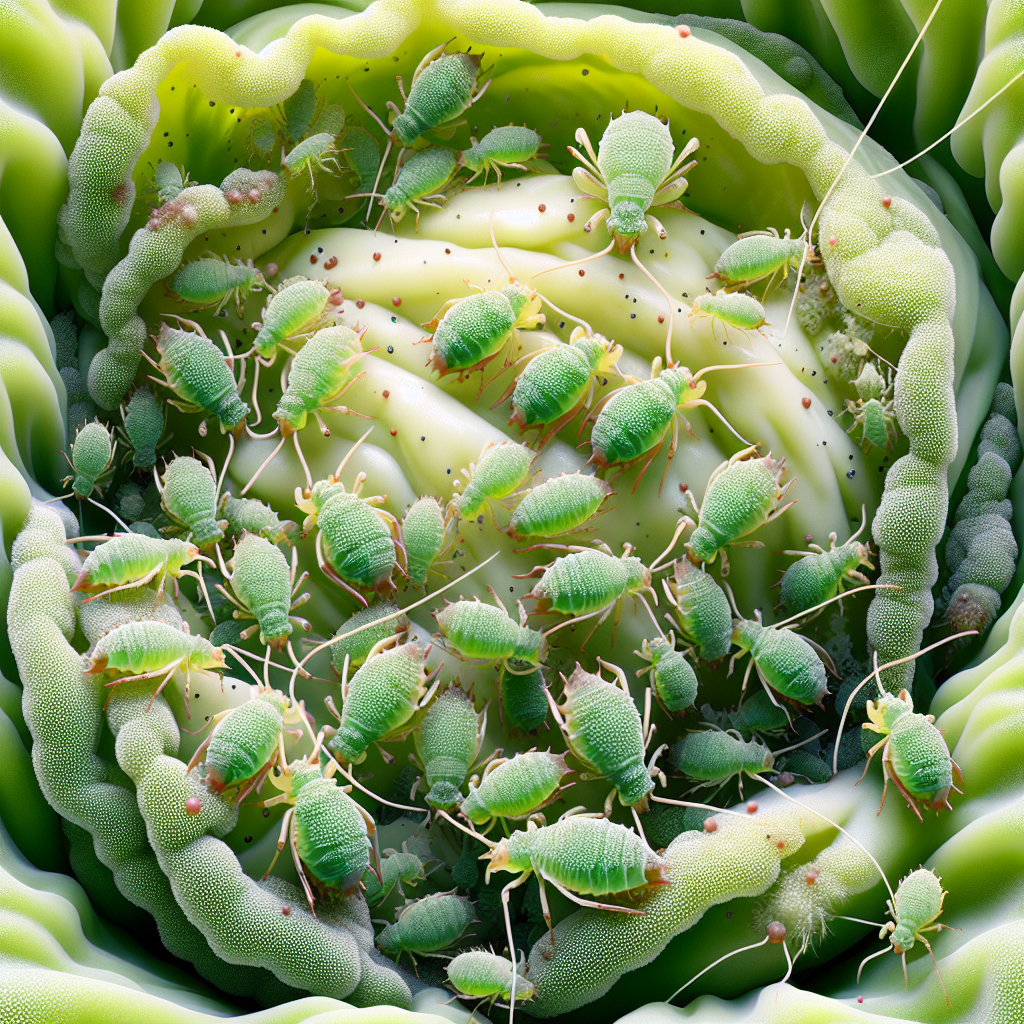
Introduction to lettuce aphid
The lettuce aphid, scientifically known as Nasonovia ribisnigri, is one of the most challenging pests in leafy greens production, particularly affecting lettuce crops worldwide. Native to Europe, it has spread to North America, Asia, and other regions, becoming a major threat to commercial and home growers alike. Unlike many Aphids, lettuce aphids have a unique behavior: they preferentially colonize the innermost leaves and hearts of lettuce plants, making early detection difficult. This pest thrives in cool weather, rapidly building populations that distort growth, reduce photosynthesis, and contaminate produce with sticky honeydew, fostering sooty mold growth.
Growers report yield losses up to 80% in severe infestations, with contaminated heads often unmarketable. The aphid's resistance to multiple insecticides complicates chemical control, pushing emphasis toward integrated pest management (IPM). Understanding its biology is crucial for timely intervention. For more on general aphid challenges, see our Spring Pest Patrol insights on organic strategies.
Economic impacts are stark: in California’s Salinas Valley, a key lettuce hub, annual losses exceed millions. Symptoms appear subtly at first—curling leaves and stunted heads—but escalate quickly. This guide equips you with diagnostics, lifecycle knowledge, triggers, treatments, prevention, and affected crops for proactive defense.
Identifying Symptoms & Damage
Early identification of lettuce aphid infestations hinges on recognizing subtle cues before populations explode. Look for clusters of small, pear-shaped insects (1-2 mm long) in pale green to blackish hues, often with dark leg segments and antennae. Unlike other aphids, they cluster tightly in plant hearts, protected from sprays and predators.
Primary Symptoms:
- Leaf Curling and Cupping: Inner leaves twist upward, forming a rosette-like structure.
- Stunting: Plants appear dwarfed, with reduced head size and crispness.
- Honeydew and Sooty Mold: Sticky excretions coat leaves, promoting black fungal growth that renders produce unsellable.
- Yellowing and Necrosis: Severe feeding causes chlorosis, followed by leaf drop.
Damage Progression:
- Initial colonization on lower leaves.
- Migration to hearts within 7-10 days.
- Population boom: one female produces 50-100 offspring.
- Head contamination: 20+ aphids per head downgrades quality.
Differentiate from other pests like whiteflies (winged, underside feeding) or mites (speckled damage). Use a hand lens for confirmation—look for the aphid's cauda (tail-like structure). Scout weekly, parting leaves to inspect cores. Threshold: 5-10% plants infested warrants action.
In hydroponics, aphids spread via transplant shock. Damage reduces marketable yield by 30-50%, with honeydew attracting ants that protect aphids further.
Lifecycle and Progression of lettuce aphid
Lettuce aphids complete their lifecycle in 8-12 days under optimal conditions (60-70°F), with 20-30 generations per season. All stages are female parthenogenetically (virgin birth), accelerating outbreaks.
Key Stages:
- Eggs (Overwintering): Rare in mild climates; laid on alternate hosts like Prunus spp.
- Nymphs (4 Instars): Wingless, 0.5-1.5 mm, feed immediately. Develop in 5-7 days.
- Adults: Wingless (most common) or winged (dispersal form). Live 20-40 days, birthing live nymphs every 2-3 days.
Progression Timeline:
- Spring: Winged migrants from weeds invade transplants.
- Summer: Explosive reproduction in cool microclimates.
- Fall: Peak on late plantings; winged forms seek sheltered crops.
Overwintering occurs as nymphs on volunteer lettuce or wild hosts. Winged morphs trigger on overcrowding or host decline, spreading 1-2 miles via wind. Monitor with yellow sticky traps: >5 aphids/trap signals risk.
Understanding this enables timed interventions, like removing volunteers pre-planting.
Environmental Triggers & Risk Factors
Lettuce aphids flourish in moderate temperatures (50-75°F), high humidity (>70%), and dense canopies. Triggers include:
- Cool, Moist Weather: Optimal at 65°F; hot spells (>85°F) induce winged dispersal.
- Nitrogen-Rich Soil: Excess N promotes tender growth and aphid preference.
- Overcrowded Plantings: Shaded, humid interiors favor heart colonization.
- Weed Hosts: Prickly lettuce, sow thistle harbor populations.
- Transplant Stress: Weak seedlings attract colonizers.
Risk amplifies in coastal valleys or greenhouses with poor ventilation. Late-season plantings face higher pressure from fall migrants. Lettuce varieties like iceberg are magnets due to tight heads; loose-leaf types fare better.
Organic Control & Treatment Plans
Organic management emphasizes IPM: monitor, disrupt, and deploy predators. Avoid broad-spectrum sprays preserving beneficials.
Cultural Controls:
- Rogue infested plants weekly.
- Space plants 12-18 inches for airflow.
- Reflective mulches deter alates.
Biological Controls:
- Predators: Ladybugs, lacewings, syrphid flies. Release 1,000/acre.
- Parasitoids: Aphidius colemani mummifies 70% aphids.
- Entomopathogens: Beauveria bassiana sprays (OMRI-listed).
Organic Treatments:
- Insecticidal Soaps: 2% potassium salts, drench hearts (rotate weekly).
- Neem Oil: Azadirachtin disrupts feeding/ reproduction.
- Pyrethrins: Short-residual knockdown.
- Oils (Jojoba/Horticultural): Smother eggs/nymphs.
Treatment Plan:
- Scout: Yellow traps + visual (10 plants/100 sq ft).
- Threshold: 1 aphid/plant early, 10/plant late.
- Apply at dusk; repeat 3-5 days.
- Integrate with cabbage interplanting for trap cropping.
Success rates: 80-90% with combined methods.
Preventing lettuce aphid in the Future
Prevention beats cure: break the lifecycle proactively.
- Resistant Varieties: 'Green Towers', 'Sierra' show tolerance.
- Crop Rotation: Avoid brassicas/lettuce >2 years.
- Sanitation: Destroy volunteers, weeds; clean equipment.
- Timing: Plant early spring/fall; avoid peak migration.
- Barriers: Row covers until heading.
- Trap Crops: Sow susceptible lettuce borders.
Monitor forecasts; destroy cull piles. Quarantine transplants. Long-term: enhance biodiversity with thyme or yarrow repellents.
Crops Most Affected by lettuce aphid
Primarily Iceberg Lettuce, Romaine Lettuce, Butterhead Lettuce, endive, chicory. Minor: spinach, kale. Economic hits on head lettuce; baby greens less impacted due to harvest timing.