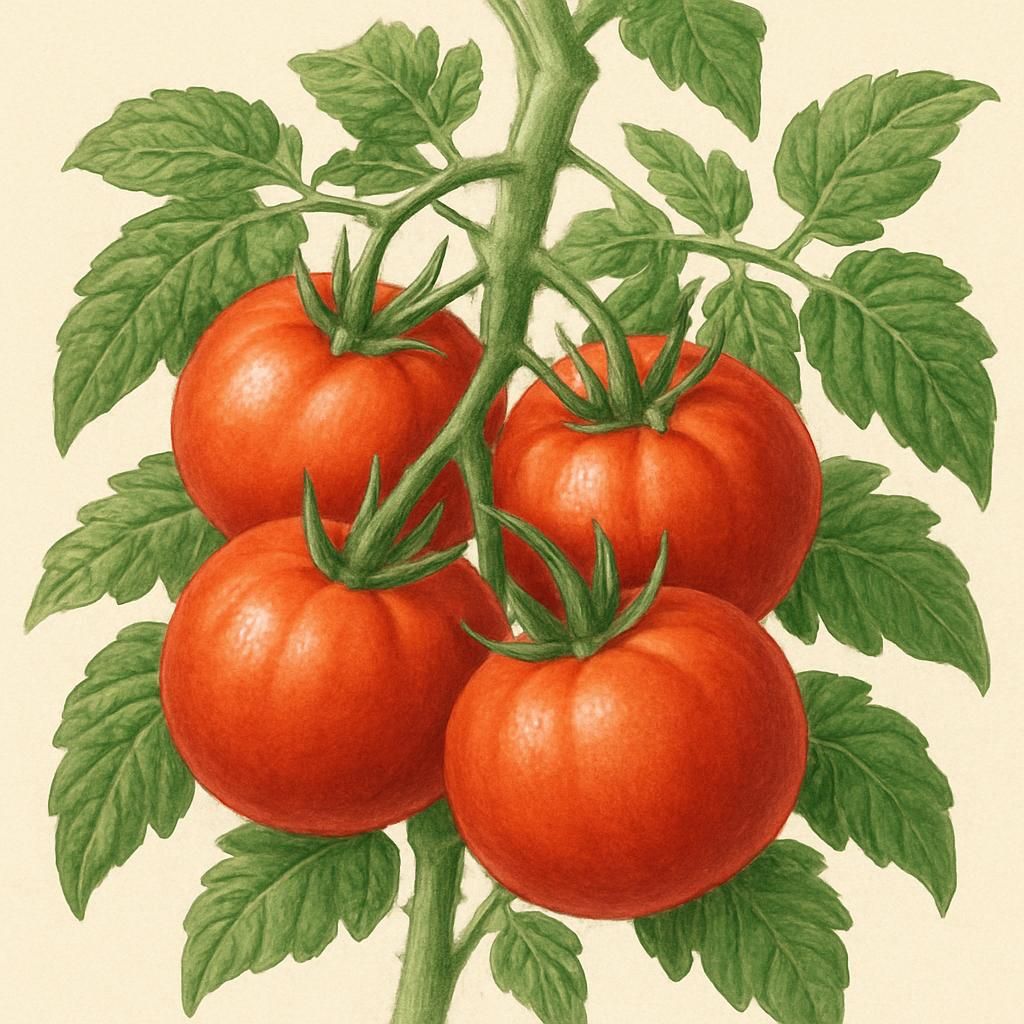
Introduction to Legend Tomato
Legend Tomato is a modern indeterminate hybrid developed for both commercial greenhouse production and open-field cultivation. It consistently produces large, round fruit with deep red coloration and firm texture, making it a favorite among growers seeking dependable yields without excessive chemical intervention. Its strong resistance profile and adaptability have positioned it as a reliable choice for regions where traditional varieties struggle with foliar diseases.
Botanical Profile of Legend Tomato
Legend Tomato belongs to the Solanaceae family and exhibits classic indeterminate growth, requiring trellising or staking for optimal production. The plants develop vigorous vines that can reach 6–8 feet in height under favorable conditions, with compound leaves displaying a slightly waxy cuticle that aids in reducing water loss. Flowers are self-pollinating and typically appear in clusters of 6–8, setting fruit that matures in approximately 70–75 days from transplant. The cultivar is noted for its uniform fruit size averaging 8–10 ounces and a balanced sugar-to-acid ratio that appeals to both fresh market and processing buyers.
Soil, pH, and Climate Requirements for Legend Tomato
Successful cultivation begins with precise soil and climate management. Legend Tomato performs best in well-drained loamy soils rich in organic matter. The following table outlines optimal conditions:
| Parameter | Ideal Range/Value | Notes |
|---|---|---|
| Soil Type | Sandy loam to loam | Excellent drainage prevents root diseases |
| Soil pH | 6.2–6.8 | Maintain with dolomitic lime if needed |
| Temperature (Day) | 70–85°F (21–29°C) | Optimal for fruit set and photosynthesis |
| Temperature (Night) | 60–70°F (15–21°C) | Prevents blossom drop |
| Growing Season | 120–150 frost-free days | Use season extension in cooler zones |
| Spacing | 24–36 inches between plants | Rows 4–5 feet apart for airflow |
Step-by-Step Planting & Propagation
Start seeds indoors 6–8 weeks before the last expected frost, maintaining soil temperature at 75–80°F for rapid germination. Transplant seedlings outdoors once nighttime temperatures consistently exceed 55°F and soil has warmed to at least 60°F. Harden off plants for 7–10 days prior to field placement. Install sturdy trellis systems or cages at planting to support the indeterminate vines. Apply a starter fertilizer solution high in phosphorus to encourage root establishment. Mulch immediately after transplanting with 2–3 inches of organic material to conserve moisture and suppress weeds.
Care & Maintenance regimes for Legend Tomato
Consistent cultural practices maximize both yield and fruit quality. The table below provides a structured schedule:
| Growth Stage | Watering Schedule | Fertilizer Application | Pruning Schedule |
|---|---|---|---|
| Transplant to 4 weeks | 1–1.5 inches per week; keep soil evenly moist | 10-20-10 NPK at planting; side-dress with calcium nitrate at 3 weeks | Remove lower suckers up to first flower cluster |
| Flowering to Fruit Set | Increase to 1.5–2 inches weekly during peak heat | Switch to 5-10-10; apply every 14 days | Continue weekly sucker removal; thin to 2–3 main stems |
| Fruit Development to Harvest | Maintain consistent moisture; reduce slightly 7–10 days before final harvest | Potassium-heavy feed (0-0-20) every 10–14 days | Stop aggressive pruning 3 weeks before expected last harvest |
Pests, Diseases & Organic Management
Legend Tomato carries genetic resistance to several key pathogens, yet integrated management remains essential. Monitor regularly for Aphids, Spider Mites, and Whiteflies. Deploy yellow sticky traps and introduce beneficial insects such as lady beetles and lacewings. For fungal threats including Early Blight and Septoria Leaf Spot, maintain adequate plant spacing and apply copper-based or neem oil sprays at first sign of symptoms. Rotate crops on a three-year cycle and remove crop debris at season end to reduce overwintering inoculum.
Harvesting, Curing & Optimal Storage
Harvest fruit at the breaker stage for longest shelf life or allow full vine ripening for superior flavor. Pick in the morning when temperatures are cooler to preserve quality. Gently place fruit in single layers within ventilated crates. For short-term storage, hold at 55–60°F with 85–90% relative humidity. Avoid refrigeration below 50°F, which induces chilling injury and flavor loss. For extended storage, consider controlled-atmosphere conditions or rapid cooling immediately after harvest.
Companion Planting for Legend Tomato
Strategic companions enhance pest suppression and nutrient cycling. Interplant with Basil to deter Thrips and improve flavor perception. Marigold borders repel nematodes and attract pollinators. Avoid planting near Fennel or Walnut trees, which can inhibit tomato growth through allelopathy. Consider pairing with Cucumber or Pepper in rotation systems to break disease cycles.
For advanced seasonal planning insights, see The Overlooked Art of Seasonal Harvest Timing for Small Farm Profit.