Introduction to Lac Resin
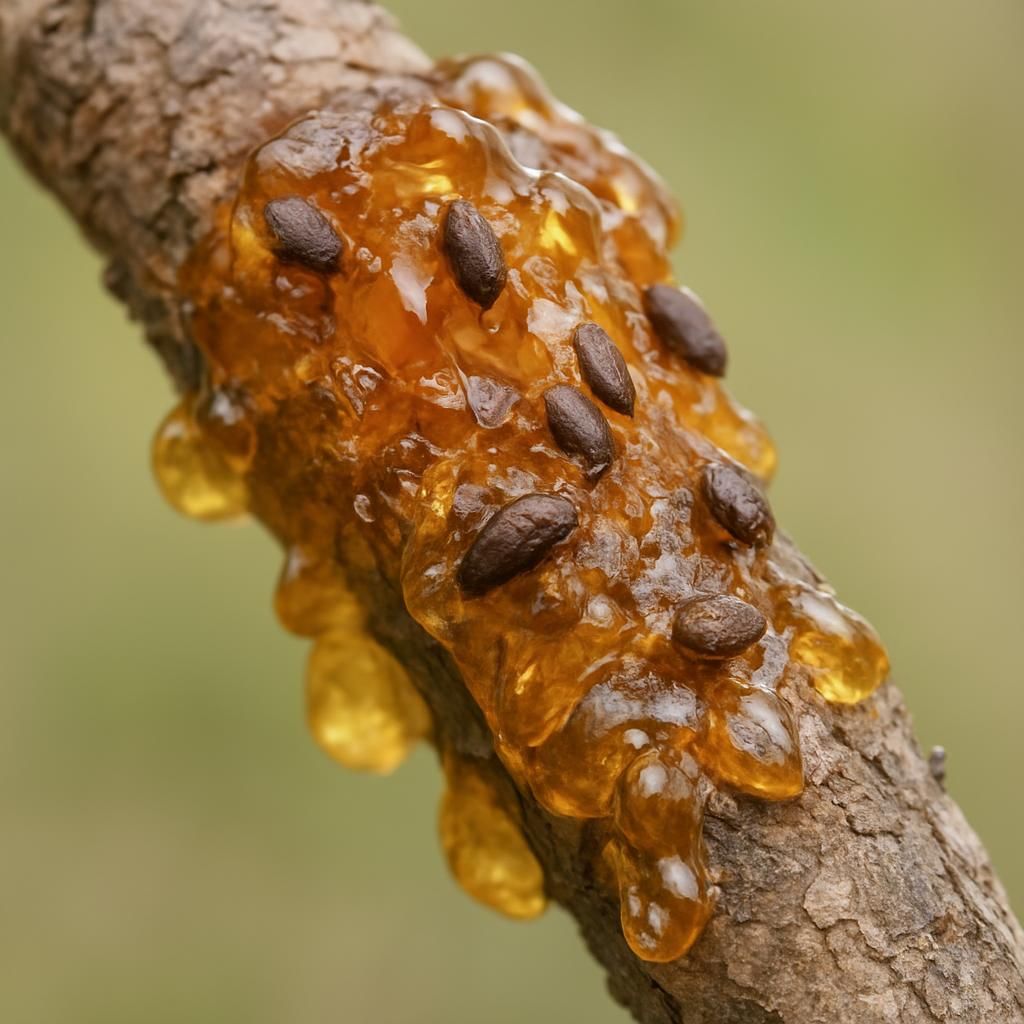
Lac resin, commonly known as shellac after processing, is a natural polymer secreted by the lac insect (Kerria lacca) as a protective coating. The resin is harvested from host trees, primarily in India, Thailand, and parts of Southeast Asia, where traditional lac cultivation supports rural economies. Shellac is valued for its glossy finish, adhesive properties, and use as a food-grade coating, pharmaceutical excipient, and wood finish. Production is sustainable when managed properly, relying on the symbiotic relationship between the insect and its host plants.
Botanical Profile of Lac Resin
The lac insect Kerria lacca belongs to the family Kerriidae and is a scale insect that pierces the phloem of host trees to extract sap. Female insects secrete a hard, amber-colored resin that encrusts twigs, forming the raw material known as sticklac. The primary commercial hosts include palash (Butea monosperma), kusum (Schleichera oleosa), and ber (Ziziphus mauritiana). The insect completes two generations annually in most regions, with the rainy season crop (katki) and winter crop (baisakhi) being the most important. The resin itself is composed mainly of aleuritic acid and other hydroxy fatty acids, giving it unique solubility and film-forming characteristics.
Soil, pH, and Climate Requirements for Lac Resin
Lac cultivation succeeds on well-drained loamy or sandy loam soils with good organic matter. Host trees perform poorly in heavy clay or waterlogged conditions. The ideal soil pH ranges from 6.0 to 7.5. Lac insects thrive in tropical and subtropical climates with distinct wet and dry seasons. Annual rainfall of 1000–1500 mm supports vigorous host growth, while temperatures between 20 °C and 35 °C favor insect development. Prolonged frost or temperatures above 40 °C can kill both insects and young shoots.
| Parameter | Ideal Range | Notes |
|---|---|---|
| Soil Type | Sandy loam to loam | Well-drained; avoid waterlogging |
| Soil pH | 6.0 – 7.5 | Slightly acidic to neutral |
| Annual Rainfall | 1000 – 1500 mm | Even distribution preferred |
| Temperature Range | 20 – 35 °C | Optimal for insect settlement and growth |
| Altitude | Up to 600 m | Higher altitudes slow insect cycles |
| Relative Humidity | 60 – 80 % | Supports resin secretion |
Step-by-Step Planting & Propagation
- Select healthy, disease-free seedlings of host species such as palash or kusum and plant them at 4 m × 4 m spacing during the monsoon.
- Allow trees to establish for 3–4 years until they reach 2–3 m height and sufficient branch girth.
- Collect mature lac brood from proven mother trees in late May or November, depending on the crop season.
- Tie 20–30 cm brood sticks onto the lower branches of host trees at a rate of 2–3 sticks per tree.
- Maintain 60–70 % shade during the first 15 days after inoculation to improve settlement.
- Monitor for successful settlement after 3 weeks; remove any excess brood to prevent overcrowding.
Care & Maintenance regimes for Lac Resin
Regular weeding, light pruning, and nutrient management keep host trees vigorous and productive. Mulching with dried leaves or crop residues conserves moisture and suppresses weeds. Irrigation is rarely needed once trees are established, except during severe drought. Fertilizer application should be split between pre-monsoon and post-harvest periods.
| Activity | Frequency | Details |
|---|---|---|
| Watering | As needed in first 2 years | Deep watering every 10–15 days during dry spells |
| Fertilizer | Twice yearly | 5 kg FYM + 50 g NPK (10:26:26) per tree at onset of monsoon and harvest |
| Pruning | Annual | Remove dead wood and thin overcrowded branches after each harvest |
| Mulching | Seasonal | 10 cm layer of organic mulch around base to retain moisture |
| Weeding | 3–4 times per year | Manual weeding or shallow hoeing to reduce competition |
Pests, Diseases & Organic Management
The lac insect itself can be attacked by predators and parasitoids such as Aphids and Scale insects. Major threats include the lac predator Eublemma amabilis and the parasitoid wasp Tetrastichus purpureus. Fungal diseases such as Powdery mildew and Sooty mold can develop on honeydew excreted by the insects. Organic management includes releasing Trichogramma wasps, applying neem oil at 3 % concentration during early settlement, and maintaining biodiversity through Companion planting with marigold and Gliricidia to attract beneficial insects. Regular removal of heavily infested twigs reduces pest pressure.
Harvesting, Curing & Optimal Storage
Harvest occurs when the resin has hardened and the insects have completed their life cycle, typically 4–5 months after inoculation. Cut the encrusted twigs (sticklac) and scrape the resin while still on the tree or after drying. Dry the collected material in shade for 3–5 days to reduce moisture below 10 %. Crush and sieve to separate lac from wood debris, then store in cool, dry conditions in jute or HDPE bags. Properly cured lac retains quality for up to 12 months. For export-grade shellac, further solvent extraction and bleaching are performed in processing units.
Companion Planting for Lac Resin
Host trees benefit from understory legumes such as Pigeon pea and Sesame that fix nitrogen and improve soil structure. Aromatic herbs including Thai Basil and Rosemary repel sucking insects while attracting pollinators. Marigold borders reduce nematode populations and enhance biodiversity. Avoid planting heavy feeders such as Corn or Tomato directly under lac hosts, as they compete for nutrients and may harbor shared pests.