Introduction to Kwai Mi
Kwai Mi, scientifically known as Conopomorpha sinensis (also recognized as the Cocoa Pod Borer or CPB), is one of the most notorious pests in tropical agriculture. First identified in Southeast Asia, particularly in regions like Malaysia and Indonesia, this small moth from the family Gracillariidae has earned its infamous reputation for inflicting severe damage on high-value crops. Farmers often refer to it simply as "Kwai Mi," a local term highlighting its elusive and destructive nature.
The pest's larvae tunnel into developing pods and fruits, feeding internally and rendering produce unsalable. This hidden feeding makes early detection challenging, leading to yield losses of up to 80% in unmanaged cocoa plantations. Kwai Mi thrives in humid, tropical environments, spreading rapidly via infested plant material or wind-dispersed adults. Understanding its biology is crucial for sustainable control, as chemical reliance has led to resistance issues worldwide. This guide provides professional-grade diagnostics, lifecycle insights, and organic strategies tailored for small to medium-scale farms, ensuring resilient crop production. With integrated pest management (IPM), growers can reduce Kwai Mi impacts by over 70% while preserving beneficial ecosystems.
Identifying Symptoms & Damage
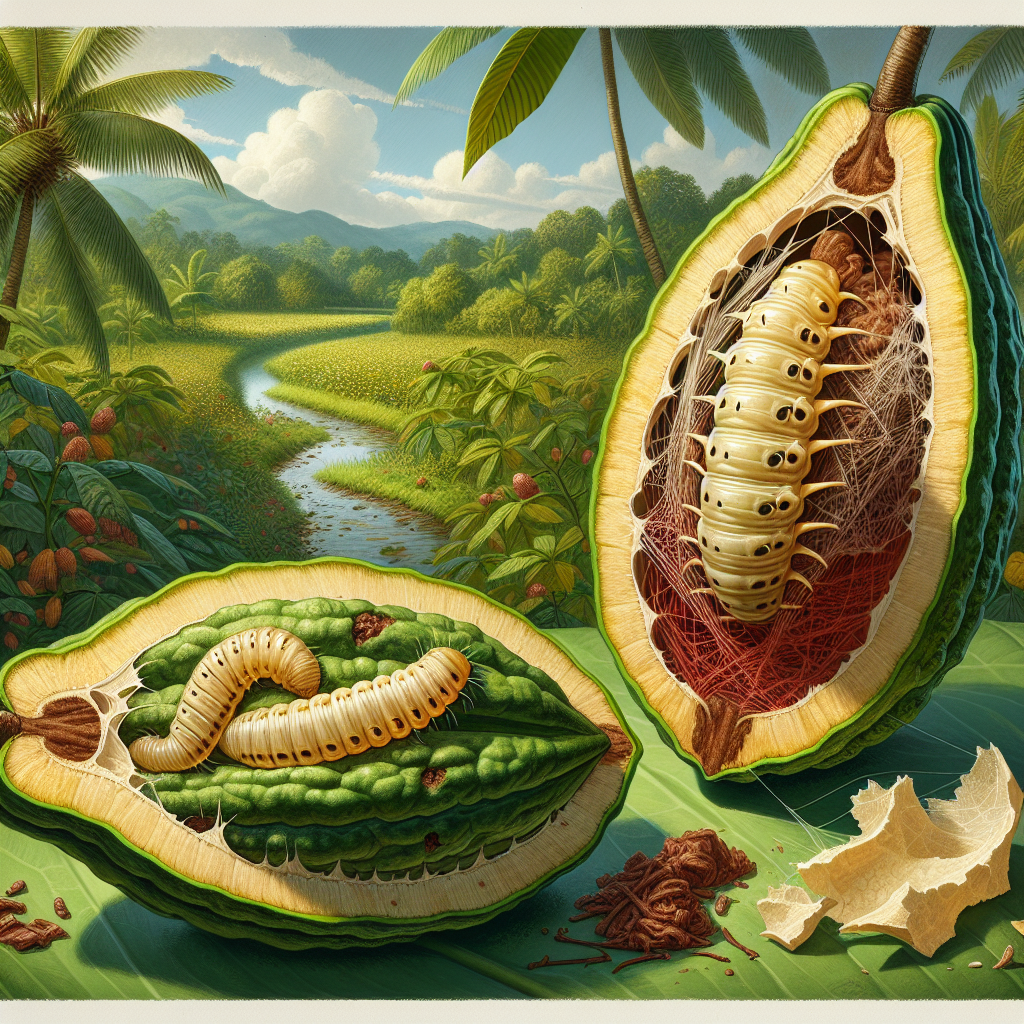
Early identification of Kwai Mi infestations is vital, as damage often remains concealed until severe. Look for small entry holes (1-2 mm) on pod surfaces, often fringed with silk or frass (insect waste). Affected pods show irregular bore tunnels filled with reddish-brown frass, leading to premature ripening, blackening, or rotting. Severely infested pods split open, exuding a fermented pulp that attracts secondary pests like ants or fruit flies.
On cocoa, beans inside pods become hollowed or webbed, drastically reducing marketable yield. Similar symptoms appear on coffee cherries, avocado fruits, and rambutan—entry holes followed by internal decay. Differentiate from other borers like fruit borers by the characteristic zigzag larval tunnels and silk webbing. Leaves may show mining trails if larvae feed externally early on, appearing as silvery serpentine patterns.
Diagnostic tips: Slice open suspect pods to reveal cream-colored larvae (up to 10 mm long) with dark heads. Adults are tiny (6-8 mm wingspan), silver-gray moths active at dusk. Use a hand lens for confirmation. Yield impacts include 30-50% pod loss in moderate infestations, escalating to total crop failure in peaks. Regular scouting every 7-10 days prevents oversight, especially during flowering.
Lifecycle and Progression of Kwai Mi
Kwai Mi completes its lifecycle in 21-35 days, depending on temperature (optimal 25-30°C). Eggs (0.3 mm, flat, white) are laid singly on pod surfaces, hatching in 3-5 days into larvae that immediately bore inside. Larval stage (4 instars, 10-14 days) is destructive: first instars mine the husk, later ones tunnel into pulp and seeds, producing silk partitions.
Mature larvae exit via bore holes, spin reddish cocoons on pods or debris, pupating for 7-10 days into adults. Moths mate immediately, females laying 50-100 eggs over 5-7 days. Multiple generations (8-12/year) overlap in tropics, with peaks during rainy seasons. Overwintering occurs as diapausing pupae in dry periods.
Progression: Eggs (Days 1-5) → Larvae (Days 6-20) → Pupa (Days 21-30) → Adult. Monitor for synchronized emergences post-rain. Lifecycle knowledge enables timed interventions, like cocoon removal during pupal peaks.
Environmental Triggers & Risk Factors
Kwai Mi flourishes in high humidity (>80%) and temperatures above 24°C, common in tropical lowlands. Rainy seasons trigger outbreaks by enhancing egg survival and adult flight. Poor sanitation—leaving fallen pods—serves as reservoirs, amplifying populations. Monoculture plantations face higher risks due to lack of diversity.
Risk factors include dense canopies reducing airflow, promoting moist microclimates; nearby alternate hosts like lychee or longan; and stressed plants from nutrient deficiencies. Wind currents spread moths up to 2 km. Climate change exacerbates issues with prolonged wet spells. Check Why 80% of Small Farms Battle Weather Disasters - And How Hyper-Local AI Forecasts Can Save Your Harvest for weather-pest links. Mitigate by pruning for ventilation and monitoring forecasts.
Organic Control & Treatment Plans
Organic management emphasizes IPM: prevention, monitoring, and targeted controls. Scouting: Weekly pod inspections using pheromone traps (1-2/ha) to detect adults early.
Cultural Controls: Harvest ripe pods promptly; destroy infested ones by burial or incineration. Prune lower branches for sunlight penetration. Plant trap crops like cassava borders.
Biological Controls: Release parasitoids like Trichogrammatid wasps (egg parasitoids, 70% efficacy) or Bracon hebetor (larval). Promote predators: birds, ants. Neem oil (2-5% emulsion) sprays deter egg-laying; apply weekly during peaks. Bacillus thuringiensis (Bt) var. kurstaki targets larvae effectively.
Treatment Plan:
- Week 1: Install traps, scout 20% pods.
- Week 2-4: Remove infested pods (>5% threshold), apply neem/Bt.
- Ongoing: Biocontrol releases, sanitation.
Avoid broad-spectrum sprays to preserve whiteflies predators. Success rates: 60-85% reduction. See Why 90% of Small Farms Fail at Pest Management - And 8 Organic Fixes That Actually Work for more.
Preventing Kwai Mi in the Future
Long-term prevention builds resilient systems. Use certified pest-free planting material. Intercrop with repellents like marigold or garlic to disrupt host location. Maintain ground covers to suppress pupae. Rotate crops every 2-3 years, avoiding susceptible hosts.
Sanitation is key: Clear debris post-harvest, deep plow to expose pupae. Reflective mulches deter adults. Pheromone mating disruption (dispensers/ha) confuses males, reducing eggs by 50%. Monitor via apps for degree-day models predicting generations. Train farmhands on early signs. For cocoa, variety resistance like cacao hybrids shows promise. Consistent practices yield <10% infestation.
Crops Most Affected by Kwai Mi
Kwai Mi targets tropical fruits and pods, with cocoa suffering most (up to 90% losses). Key crops:
- Cacao: Primary host, pods bored during development.
- Coffee (coffee): Cherries damaged, beans unfit.
- Avocado (avocado, Hass Avocado): Fruit tunneling causes drop.
- Mango (mango, Alphonso Mango): Similar internal feeding.
- Rambutan, lychee, longan: Regional staples hit hard.
Secondary: Durian (durian), jackfruit. Avoid planting near wild hosts. Resistant varieties and diversification protect yields.