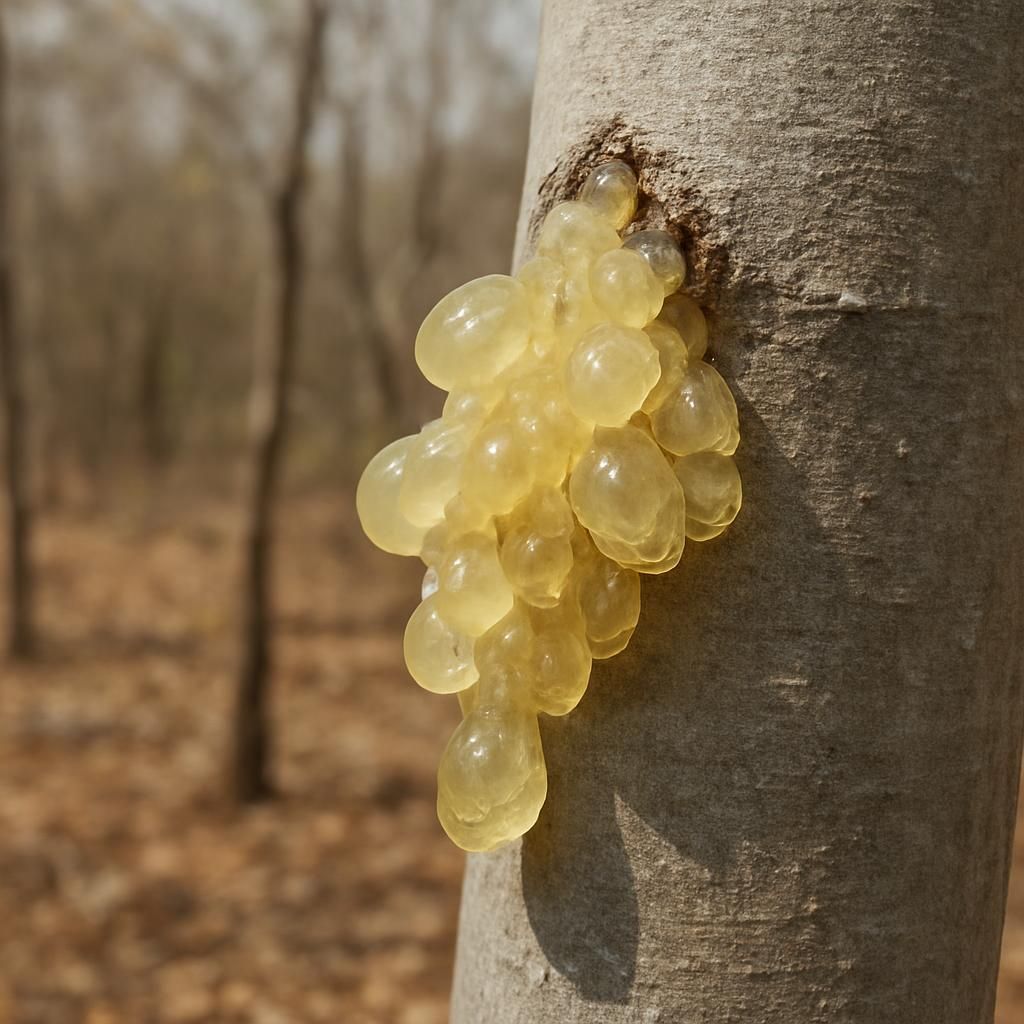
Introduction to Karaya Gum
Karaya gum, also known as Indian gum tragacanth or katira, is a high-value natural polysaccharide obtained from the exudate of Sterculia urens trees. Native to the dry deciduous forests of India and parts of Southeast Asia, this crop provides both economic returns and ecological benefits when grown sustainably. The gum forms when the tree is intentionally wounded, creating a protective barrier that hardens into translucent, pale-yellow to pinkish lumps. Commercial demand remains strong due to its excellent water-binding, emulsifying, and stabilizing properties in products ranging from ice cream and bakery items to laxatives and textile printing pastes.
Cultivation of Sterculia urens is gaining interest among farmers seeking drought-tolerant, low-maintenance perennial crops. The tree can thrive on marginal lands with minimal irrigation once established, making it suitable for semi-arid regions. Proper management practices, including correct wounding techniques and timely harvesting, directly influence both yield and gum quality. This guide delivers professional-grade agricultural advice for establishing and maintaining productive Karaya gum plantations.
Botanical Profile of Karaya Gum
Sterculia urens belongs to the Malvaceae family (formerly Sterculiaceae). It is a medium-sized deciduous tree reaching 10–18 meters in height with a spreading crown and smooth, greyish-white bark that peels in thin flakes. The leaves are palmately lobed with 3–5 lobes, and the tree produces small, yellowish flowers in axillary panicles during the dry season. Fruits are woody follicles containing several seeds. The tree’s ability to exude gum is a defense mechanism triggered by injury or stress.
The gum itself is a complex acetylated polysaccharide composed primarily of galacturonic acid, galactose, rhamnose, and glucuronic acid. Its high molecular weight and branched structure give it superior swelling capacity compared to many other natural gums. Trees typically begin producing commercial quantities of gum after 7–10 years and can remain productive for 40–60 years under good management.
Soil, pH, and Climate Requirements for Karaya Gum
Sterculia urens performs best on well-drained, sandy loam to gravelly soils with low fertility. It tolerates poor soils and rocky substrates but requires excellent drainage to prevent root rot. The species is highly drought-resistant once established and prefers regions receiving 500–1200 mm of annual rainfall, concentrated in a distinct monsoon period followed by a long dry season.
| Parameter | Ideal Range | Notes |
|---|---|---|
| Soil Type | Sandy loam to gravelly | Avoid heavy clay and waterlogged sites |
| Soil pH | 6.0 – 8.0 | Slightly acidic to mildly alkaline |
| Temperature | 20–38 °C daytime | Tolerates brief dips to 5 °C |
| Annual Rainfall | 500–1200 mm | Long dry period essential for gum formation |
| Altitude | 200–900 m | Thrives in foothills and plateaus |
| Sunlight | Full sun | Minimum 6–8 hours direct sunlight daily |
Step-by-Step Planting & Propagation
Propagation of Karaya gum is almost exclusively achieved through seeds, although air-layering has been attempted with limited success. Collect mature seeds from healthy, high-yielding mother trees between March and May. Soak cleaned seeds in warm water for 24 hours or treat with concentrated sulfuric acid for 5–10 minutes followed by thorough rinsing to break dormancy.
Prepare nursery beds with a 1:1:1 mixture of sand, soil, and well-rotted compost. Sow seeds 2–3 cm deep at 10 cm × 10 cm spacing. Germination occurs in 10–20 days at 25–30 °C. Transplant seedlings to polybags at the two-leaf stage and grow on for 6–12 months until they reach 60–90 cm height. Field planting should coincide with the onset of monsoon rains. Dig pits 60 cm × 60 cm × 60 cm, refill with topsoil mixed with 5 kg farmyard manure and 50 g neem cake. Plant seedlings at 6 m × 6 m spacing for timber-plus-gum systems or 8 m × 8 m for pure gum orchards.
Care & Maintenance regimes for Karaya Gum
Young trees require regular weeding and protection from browsing animals during the first three years. Mulching with dry leaves or straw conserves moisture and suppresses weeds. Pruning is minimal; remove only dead or crossing branches during the dormant season. Once trees reach 4–5 years, implement a controlled wounding schedule to stimulate gum production without compromising tree health.
| Activity | Schedule | Details |
|---|---|---|
| Watering | Year 1–3: every 10–14 days | 20–30 L per tree; reduce after establishment |
| Fertilizer | Annual: June & October | 10–15 kg FYM + 100 g NPK (10:26:26) per tree; avoid excess nitrogen |
| Pruning | December–January | Light thinning only; never remove more than 20 % of canopy |
| Wounding | October–March (Year 5 onward) | 3–4 shallow V-shaped incisions per trunk; rotate locations yearly |
| Mulching | Post-monsoon & pre-summer | 10–15 cm layer within 1 m radius of trunk |
Pests, Diseases & Organic Management
Karaya gum trees are relatively pest-resistant, but young plantations may suffer from Aphids and leaf-feeding caterpillars. Monitor for Spider mites during prolonged dry spells; overhead misting and neem oil sprays provide effective control. Termites can attack stressed seedlings—treat planting pits with neem cake and maintain soil moisture. The most serious disease is root rot caused by Phytophthora species in poorly drained soils. Ensure proper site selection and avoid over-irrigation. Anthracnose and leaf spot diseases occasionally appear during humid periods; remove affected leaves and apply copper-based fungicides only when necessary.
Harvesting, Curing & Optimal Storage
Gum exudation peaks 7–15 days after wounding. Collect hardened lumps by hand every 10–15 days during the dry season. Avoid contamination with bark or soil. Spread collected gum in single layers on clean trays in a well-ventilated shed for 3–5 days to complete curing and reduce moisture content to below 12 %. Grade according to color, size, and purity. Store in moisture-proof jute bags or HDPE drums with silica gel packets at 15–25 °C. Properly cured and stored gum retains quality for 18–24 months.
Companion Planting for Karaya Gum
Intercropping young Karaya plantations with drought-tolerant legumes such as Pigeon pea or Sesame improves soil fertility and provides early income. Marigold planted along borders repels nematodes and certain insects. In mature orchards, shade-tolerant understory crops like Turmeric or Ginger can be grown successfully during the first 4–5 years before canopy closure. Avoid heavy feeders that compete aggressively for water. Maintain at least 2 meters clearance around each tree trunk to facilitate gum collection and reduce disease pressure.