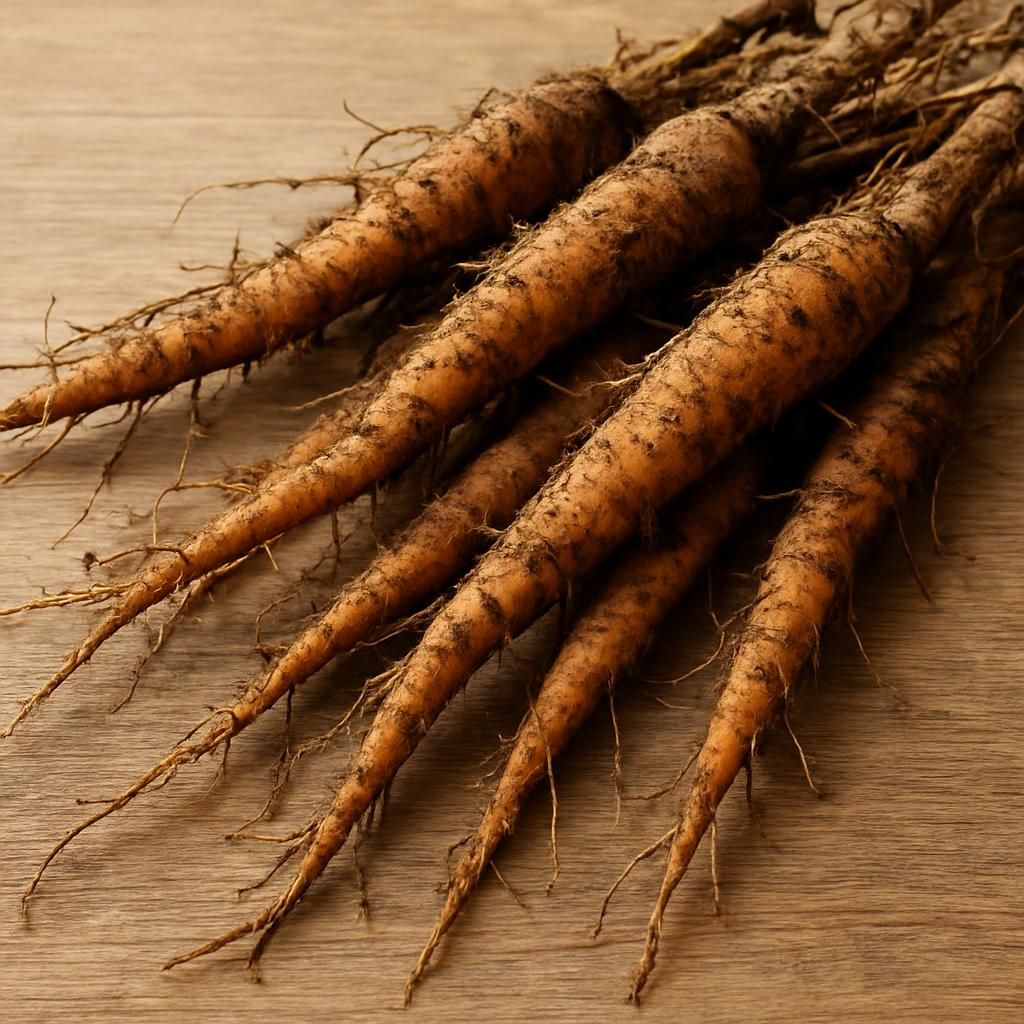
Introduction to Kalmegh Root
Kalmegh Root (Andrographis paniculata) is a high-value medicinal crop cultivated primarily for its bitter taproot and aerial parts rich in andrographolides. The plant thrives in warm, humid climates and is grown across India, Southeast Asia, and parts of Africa as both a commercial and small-farm crop. Professional growers value Kalmegh Root for its short 90–120 day cycle, relatively low input requirements, and strong market demand in the herbal and pharmaceutical sectors.
Successful cultivation depends on precise soil management, timely irrigation, and integrated pest control to protect root quality. This guide provides detailed, field-tested practices for commercial and small-scale production.
Botanical Profile of Kalmegh Root
Andrographis paniculata is an erect, branched annual belonging to the Acanthaceae family. It produces opposite, lanceolate leaves and small, white-to-purple flowers arranged in panicles. The plant develops a prominent, fleshy taproot that stores the highest concentration of andrographolides. Mature plants reach 30–110 cm in height with a fibrous root system extending 20–40 cm deep.
The root system consists of a central taproot with lateral feeder roots; andrographolide content peaks at flowering stage before seed set. Genetic variation exists between wild and cultivated accessions, with improved varieties offering higher biomass and consistent phytochemical profiles.
Soil, pH, and Climate Requirements for Kalmegh Root
Kalmegh Root performs best in well-drained sandy loam to loam soils with good organic matter. Heavy clay soils restrict root expansion and increase disease risk. The crop tolerates a broad pH range but optimal growth occurs in slightly acidic to neutral conditions.
| Parameter | Ideal Range | Notes |
|---|---|---|
| Soil Type | Sandy loam to loam | Avoid heavy clay; improve drainage with organic matter |
| Soil pH | 5.5 – 7.0 | Slightly acidic to neutral; test before planting |
| Temperature (Day) | 25–35 °C | Optimal vegetative growth; avoid frost |
| Temperature (Night) | 18–25 °C | Cooler nights improve root quality |
| Annual Rainfall | 1000–2000 mm | Supplemental irrigation needed in dry spells |
| Relative Humidity | 60–80 % | High humidity favors disease; ensure airflow |
| Altitude | 0–1200 m | Performs well from plains to mid-hills |
Step-by-Step Planting & Propagation
Kalmegh Root is propagated exclusively by seed. Select certified seed from high-andrographolide accessions. Soak seeds in warm water for 12–18 hours to improve germination. Sow in well-prepared nursery beds or plug trays using a sterile seed-starting mix.
Transplant seedlings at the 4–6 leaf stage, 25–30 days after sowing. Maintain row spacing of 30 cm and plant spacing of 15–20 cm. Raised beds 15–20 cm high improve drainage during monsoon periods. Direct seeding is possible in light soils but requires thinning to final spacing.
Care & Maintenance regimes for Kalmegh Root
Consistent moisture during the first 30 days after transplanting is critical for root establishment. Subsequent irrigation should be scheduled to maintain even soil moisture without waterlogging. Fertilizer application focuses on balanced NPK with emphasis on potassium to enhance root development and andrographolide synthesis.
| Growth Stage | Water Schedule | Fertilizer Application | Pruning/Maintenance |
|---|---|---|---|
| Week 0–4 (Establishment) | Light irrigation every 2–3 days; keep soil moist | 10-26-26 NPK @ 40 kg/ha at transplanting | Remove weeds; no pruning |
| Week 5–8 (Vegetative) | Irrigation every 5–7 days; 25–30 mm | 50 kg N/ha split at 30 and 45 days | Light weeding; mulch if needed |
| Week 9–12 (Flowering) | Reduce frequency; allow slight drying | 40 kg K₂O/ha at flowering initiation | Pinch terminal buds if branching desired |
| Week 13–Harvest | Withhold irrigation 10–14 days before harvest | No additional fertilizer | Remove diseased foliage |
Pests, Diseases & Organic Management
Common pests include Aphids, Thrips, and Spider Mites which can transmit viruses and reduce photosynthetic capacity. Root-knot nematodes (Root-knot nematodes) may cause galling in sandy soils. Major diseases are Powdery mildew, Alternaria leaf spot, and Root rot caused by Pythium and Rhizoctonia.
Organic management begins with crop rotation, use of disease-free seed, and neem-based sprays. Encourage beneficial insects with flowering borders. Soil solarization and application of Trichoderma harzianum suppress soil-borne pathogens. Monitor weekly and apply botanical insecticides only when economic thresholds are exceeded.
Harvesting, Curing & Optimal Storage
Harvest Kalmegh Root at 90–120 days when plants begin yellowing and andrographolide content is maximal. Cut plants at ground level, shake off soil, and separate roots. Wash roots gently under running water to remove adhering soil without damaging the epidermis.
Cure roots in shade for 3–5 days until moisture content reaches 10–12 %. Store in cool, dry, ventilated conditions inside jute or cloth bags. Vacuum-sealed packaging extends shelf life up to 18 months while preserving bioactive compounds. Avoid direct sunlight and high humidity during storage.
Companion Planting for Kalmegh Root
Kalmegh Root benefits from association with Marigold which repels nematodes and attracts pollinators. Coriander and Rosemary improve pest deterrence through volatile compounds. Avoid planting near Tomato or members of the Solanaceae family which share common soil pathogens.
Intercropping with short-duration legumes such as Mung Bean can enhance soil nitrogen and provide additional income during the Kalmegh growing cycle. Maintain at least 1 m buffer from heavy feeders to prevent nutrient competition.