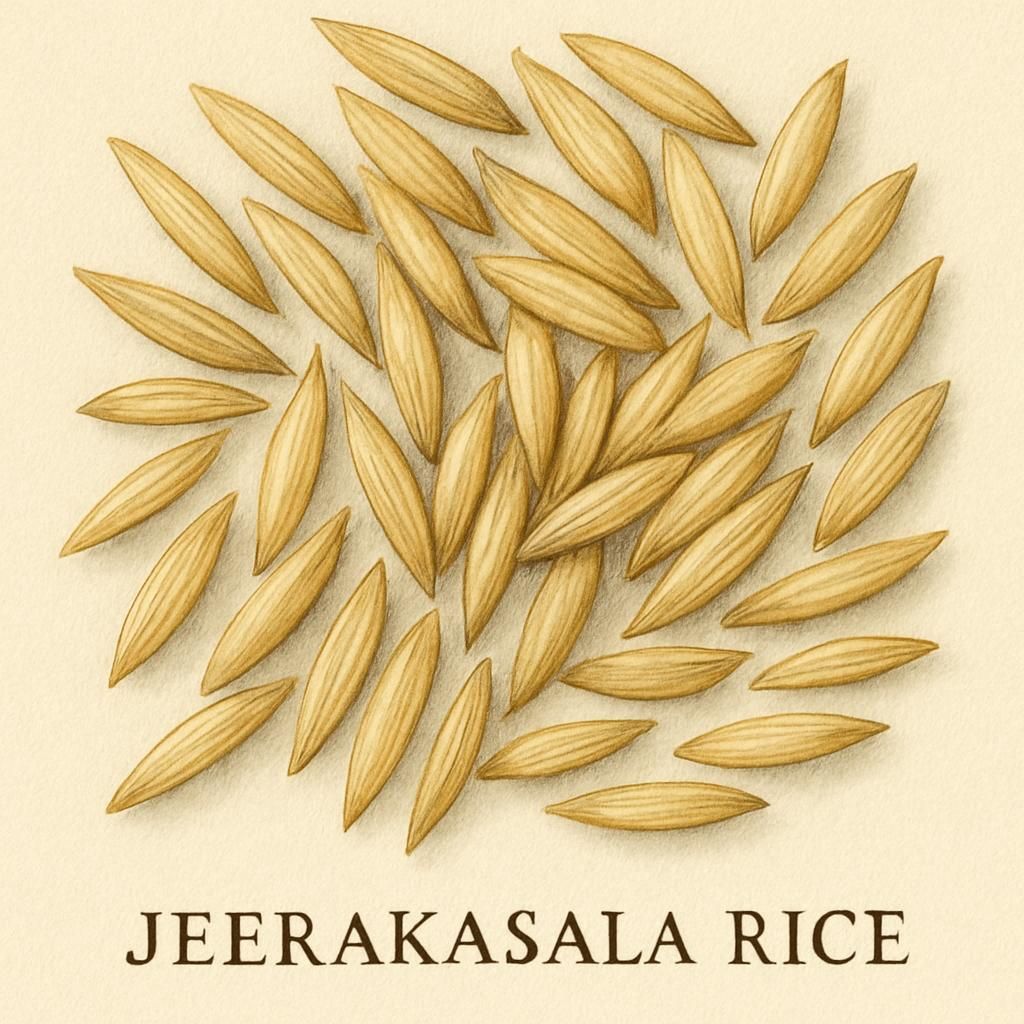
Introduction to Jeerakasala Rice (Khaima)
Jeerakasala Rice, also known as Khaima, is an aromatic and delicate rice variety from the lush regions of Kerala, India. This rice holds a significant cultural importance and is widely used in traditional South Indian dishes, especially biryanis and festive occasions. Its unique aroma, texture, and taste make it a favorite among rice connoisseurs.
Botanical Profile of Jeerakasala Rice (Khaima)
Jeerakasala belongs to the species Oryza sativa, under the family Poaceae. This rice variety is characterized by its small grain size, slender appearance, and distinctive fragrance which sets it apart from other aromatic rice types like Basmati Rice.
Soil, pH, and Climate Requirements for Jeerakasala Rice (Khaima)
Jeerakasala rice thrives in specific soil and climate conditions, which play a crucial role in achieving the ideal yield and quality. Below is a table detailing the optimal conditions:
| Parameter | Ideal Conditions |
|---|---|
| Soil Type | Loamy or clayey, rich in organic matter |
| Soil pH | 5.5 to 6.5 (slightly acidic) |
| Climate | Tropical, warm and humid |
| Temperature | 25°C to 35°C |
| Rainfall | 150-250 cm annually |
For more information on soil preparation and analysis, consider exploring strategies for soil revival.
Step-by-Step Planting & Propagation
- Seed Selection: Choose high-quality seeds from a reputable source to ensure uniform growth and desirable characteristics.
- Soil Preparation: Plow the field to a fine tilth and incorporate organic compost or well-rotted manure to enhance soil fertility.
- Sowing: Broadcast seeds in rows maintaining a spacing of about 15 cm between rows. The optimal sowing time is during the monsoon season to align with natural rainfall.
- Water Management: Ensure proper water leveling to avoid water logging. Utilize a controlled irrigation system for effective water management.
- Transplanting: If starting in a nursery bed, transplant seedlings at the 2-3 leaf stage to the main field, maintaining plant spacing of 15 cm.
Care & Maintenance Regimes for Jeerakasala Rice (Khaima)
A well-regimented care and maintenance schedule are crucial to ensure optimal growth and yield. Here’s a quick reference table to aid in planning:
| Aspect | Schedule |
|---|---|
| Watering | Maintain optimum water level |
| Fertilization | N: 40 kg/ha, P: 20 kg/ha, K: 30 kg/ha |
| Weeding | Every 2 weeks |
| Pest Control | Monitor regularly, use traps |
Regularly check for signs of nutrient deficiencies and pest attacks. For additional organic maintenance strategies, check out organic fixes.
Pests, Diseases & Organic Management
Jeerakasala Rice is vulnerable to various pests and diseases which can affect yield and quality. Common challenges:
- Pests: Stem Borers, Planthoppers, and Leafhoppers.
- Diseases: Blast, Sheath Blight.
Organic Management Tips:
- Implement companion planting with Marigold to deter pests.
- Utilize neem oil and bio-pesticides for effective pest management.
- Rotate crops with legumes or Soybeans to break pest cycles.
Harvesting, Curing & Optimal Storage
Jeerakasala rice can be harvested when about 80-90% of the grains in a panicle turn golden yellow. Guidelines for post-harvest processing include:
- Curing: Allow harvested rice to dry in the sun for a few days before threshing to enhance aroma and shelf life.
- Storage: Store in a cool, dry place in airtight containers to maintain quality.
Companion Planting for Jeerakasala Rice (Khaima)
Companion planting can offer mutual benefits such as improved fertility, pest control, and better yields.
- N-fixing Plants: Clover, enhance soil nitrogen.
- Pest Repellents: Thyme, repels pest insects.
- Soil Benefactors: Incorporating Pigeon Pea in rotation improves soil health.
For more insights on pairing crops for optimized growth, read about companion planting pairings.