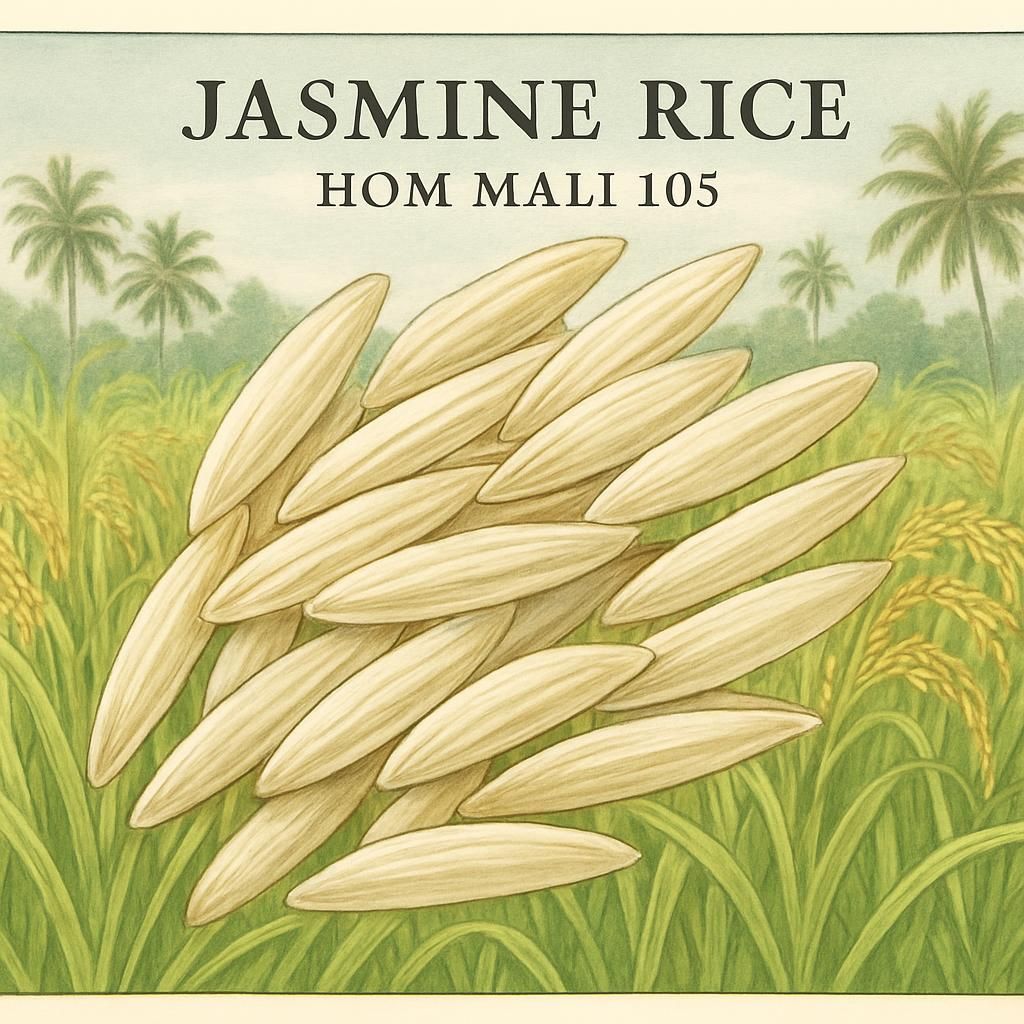
Introduction to Jasmine Rice (Hom Mali 105)
Jasmine Rice (Hom Mali 105) is a premier rice variety native to Thailand, known for its aromatic fragrance and delicate texture when cooked. Cultivated predominantly in the northeastern regions of Thailand, this rice has gained global recognition for its distinctive characteristics. The growing conditions in these regions, such as tropical climate and specific soil requirements, contribute to its unique attributes.
Botanical Profile of Jasmine Rice (Hom Mali 105)
The botanical classification of Jasmine Rice (Hom Mali 105) places it within the species Oryza sativa, under the genus Oryza. It belongs to the grass family Poaceae. This variety is characterized by long, slender grains that produce a soft texture and distinctive fragrance when cooked. The aroma is often compared to that of pandan leaves or popcorn, contributing to its popularity in various culinary applications.
Soil, pH, and Climate Requirements for Jasmine Rice (Hom Mali 105)
To achieve the best yield and quality for Jasmine Rice (Hom Mali 105), it is crucial to provide ideal soil and climate conditions. This variety thrives in the following:
| Condition | Ideal Requirement |
|---|---|
| Soil Type | Well-drained, sandy loam |
| pH | 5.5 to 6.5 |
| Temperature | 25°C to 35°C |
| Rainfall | 1,200 to 1,500 mm/year |
Jasmine Rice is sensitive to flooding and waterlogged conditions, whereas a well-managed irrigation system is essential for its proper growth.
Step-by-Step Planting & Propagation
- Seed Selection: Choose high-quality, disease-free Jasmine Rice seeds for planting.
- Soil Preparation: Till the soil to break up large clumps and incorporate organic matter to improve soil quality.
- Sowing: Broadcast seeds evenly in prepared fields. Optimal planting time is at the start of the wet season.
- Transplanting: After seedlings mature, transplant them into flooded fields spaced 20-25 cm apart to maximize growth space.
- Water Management: Maintain a consistent water level (about 5 cm above soil level) for proper seedling establishment post-transplant.
Care & Maintenance Regimes for Jasmine Rice (Hom Mali 105)
Proper maintenance techniques are essential to secure high yields and rice quality:
| Activity | Schedule |
|---|---|
| Irrigation | Continuous; avoid flooding |
| Fertilization | NPK at 3 stages (tillering, panicle initiation, grain filling) |
| Pest Control | Regular monitoring |
The fertilization regime should be adjusted based on soil tests to provide the right nutrients. Pest management, including the control of Spider Mites and Stem Borers, is critical.
Pests, Diseases & Organic Management
Common pests include Stem Borers and Stink Bugs, which can significantly affect yields if not managed. Diseases such as Blast and Bacterial Leaf Blight also pose threats. Integrated Pest Management (IPM) strategies, including regular monitoring, use of biopesticides, and resistant varieties, can minimize damage.
Organic options include neem oil applications and natural predators like lady beetles to address pest populations. The article 7 Summer Pest Traps That Sabotage Small Farm Harvests further elaborates on pest control strategies.
Harvesting, Curing & Optimal Storage
Jasmine Rice is typically ready for harvest about 30-35 days after flowering. The key indicators for harvesting include golden-colored grains and drooping panicles. Post-harvest, drying should reduce moisture content to 14% for storage.
Proper curing increases flavor and aroma by allowing enzymatic changes. For storage, keep rice in moisture-proof containers at temperatures below 20°C to preserve quality.
Companion Planting for Jasmine Rice (Hom Mali 105)
Companion planting with crops like Soybeans and Lychee can improve nitrogen fixation and pest deterrence. Implementing companion planting principles is beneficial for maintaining ecosystem diversity and health. Refer to Summer Companion Planting: 10 Organic Pairings to Boost Small Farm Resilience for comprehensive strategies.