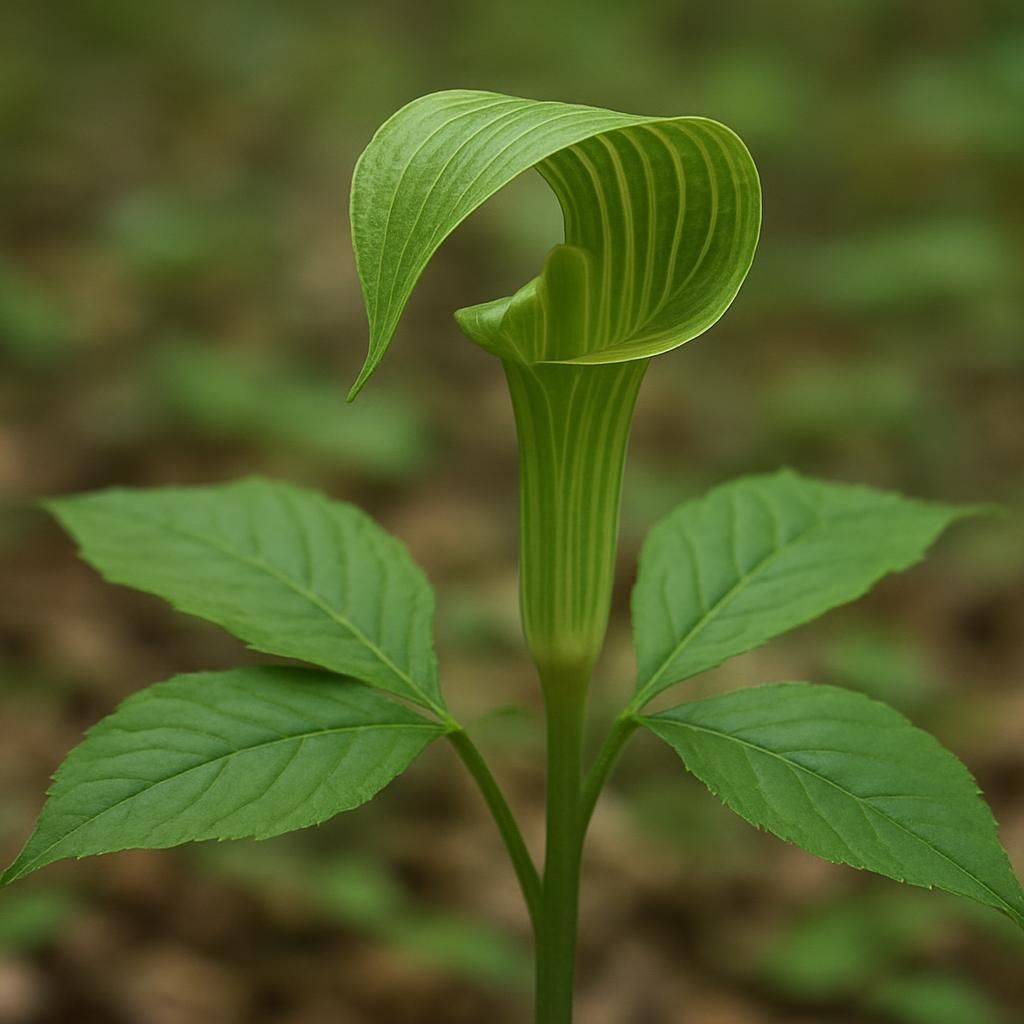
Introduction to Jack-in-the-Pulpit
Jack-in-the-Pulpit (Arisaema triphyllum) is a distinctive North American woodland perennial known for its striking hooded spathe and upright spadix. Native to rich deciduous forests across eastern and central North America, it thrives in moist, shaded understories where few other crops compete. Gardeners and foragers value the plant both for its ornamental appeal and its traditional medicinal uses, though all parts contain calcium oxalate crystals that require careful handling. This comprehensive guide provides professional-grade, practical advice for establishing and maintaining healthy stands of Jack-in-the-Pulpit in home gardens and small-scale plantings.
Botanical Profile of Jack-in-the-Pulpit
Arisaema triphyllum belongs to the Araceae family and produces a single trifoliate leaf on a smooth, upright stem that emerges from a corm. The inflorescence consists of a tubular spathe that curls over a central spadix, giving the plant its common name. Plants are typically 12–30 inches tall and spread slowly via offsets and seed. The foliage persists through summer before senescing in autumn, after which the plant enters dormancy. The corm is the primary storage organ and can reach 1–2 inches in diameter after several seasons of growth. Wikipedia entry on Arisaema triphyllum provides additional taxonomic details.
Soil, pH, and Climate Requirements for Jack-in-the-Pulpit (MUST INCLUDE A MARKDOWN TABLE OF IDEAL CONDITIONS)
Jack-in-the-Pulpit demands consistently moist, humus-rich soil with excellent structure and high organic matter content. The plant performs best in partial to full shade and cool temperate climates with reliable rainfall or supplemental irrigation. Avoid compacted or heavy clay soils that restrict root development. The following table summarizes optimal growing conditions:
| Parameter | Ideal Range | Notes |
|---|---|---|
| Soil Type | Loamy, high in organic matter | Incorporate leaf mold or well-rotted compost |
| Soil pH | 5.5–6.5 | Slightly acidic conditions preferred |
| Moisture | Consistently moist, never waterlogged | Mulch helps retain moisture |
| Temperature Range | 50–75 °F (10–24 °C) daytime | Cool nights beneficial |
| Light | Partial to full shade | Avoid direct afternoon sun |
| USDA Zones | 4–9 | Hardy to -30 °F (-34 °C) |
Step-by-Step Planting & Propagation
Plant corms in autumn or early spring when soil temperatures are cool. Choose a site protected from strong winds and direct sun. Dig holes 4–6 inches deep and space corms 8–12 inches apart. Place each corm with the pointed end upward and backfill with amended native soil. Water thoroughly after planting and apply a 2-inch layer of shredded leaves or pine needles as mulch. For seed propagation, collect ripe red berries in late summer, clean the seeds, and sow immediately in flats of moist seed-starting mix. Stratify flats outdoors over winter or refrigerate for 60–90 days before moving to a shaded cold frame. Germination typically occurs the following spring. Division of established clumps can be performed every 4–5 years in early spring before new growth emerges.
Care & Maintenance regimes for Jack-in-the-Pulpit (MUST INCLUDE A MARKDOWN TABLE OF WATER, FERTILIZER, AND PRUNING SCHEDULES)
Once established, Jack-in-the-Pulpit requires minimal intervention beyond consistent moisture and annual organic amendments. Remove spent foliage in late autumn after it yellows naturally. Avoid high-nitrogen fertilizers that promote weak growth. The table below outlines recommended seasonal schedules:
| Season | Watering | Fertilizer | Pruning / Maintenance |
|---|---|---|---|
| Spring | Keep soil evenly moist | Apply 1 inch compost or aged manure around base | Remove winter mulch gradually as shoots emerge |
| Summer | Water during dry spells (1 inch/week) | Side-dress with leaf mold if growth is slow | Cut back any damaged leaves only |
| Autumn | Reduce watering as plants senesce | No fertilizer needed | Cut foliage to ground after yellowing |
| Winter | Ensure mulch remains in place | None | Protect crowns with additional leaf mulch in zone 4–5 |
Pests, Diseases & Organic Management
Jack-in-the-Pulpit is relatively pest-resistant but can suffer from Slugs and Snails that chew emerging foliage. Hand-pick or use beer traps and diatomaceous earth barriers. Occasional outbreaks of Spider Mites may occur in very dry shade; increase humidity with misting and apply insecticidal soap. Fungal issues such as Botrytis can develop in overly wet conditions—improve air circulation and remove affected tissue promptly. Root rot caused by Pythium is prevented by ensuring good drainage and avoiding overwatering. Deer rarely browse the foliage due to the presence of calcium oxalate crystals.
Harvesting, Curing & Optimal Storage
Jack-in-the-Pulpit is primarily grown as an ornamental perennial rather than a food crop. If seed collection is desired, harvest ripe red berries in late summer when they soften. Wear gloves to avoid skin irritation from calcium oxalate. Clean seeds and store in moist sphagnum moss at 34–40 °F for winter stratification. Corm division is best performed during dormancy; lift clumps carefully, separate healthy offsets, dust cuts with cinnamon, and replant immediately or store in barely moist peat at 35–45 °F until spring planting. Never consume raw plant parts.
Companion Planting for Jack-in-the-Pulpit
Pair Jack-in-the-Pulpit with other shade-loving woodland species that share similar moisture and soil requirements. Recommended companions include Trillium, Wild Ginger, and ferns such as Maidenhair Fern. These plants create a layered understory that conserves soil moisture and suppresses weeds. Avoid planting near aggressive spreaders such as English Ivy that can outcompete young corms. The combination of Jack-in-the-Pulpit with spring ephemerals also enhances biodiversity and provides continuous seasonal interest in native plant gardens.
For more on building resilient shade gardens, read The Truth About Fall Garden Transitions for Small Farm Resilience.