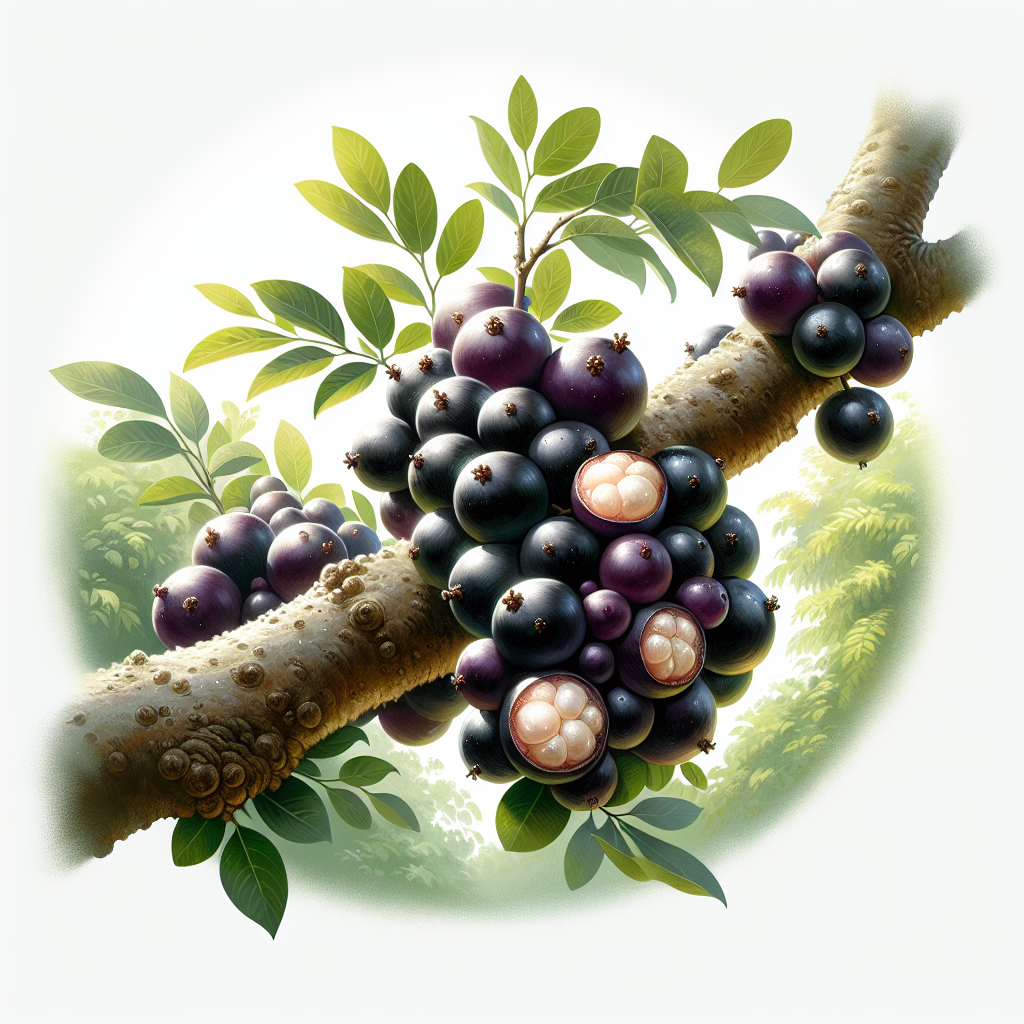
Introduction to Jaboticaba (Sabara)
Jaboticaba (Sabara), known scientifically as Myrciaria cauliflora 'Sabara', is one of the most visually striking and rewarding fruit trees for home gardeners and small-scale farmers in subtropical regions. Native to the Atlantic Forest of Brazil, this evergreen tree earns its nickname "Brazilian grape tree" from its extraordinary habit of bearing fruit directly on the trunk and older branches—a phenomenon called cauliflory. The Sabara cultivar stands out for its superior fruit quality: larger berries (up to 3 cm in diameter), thinner skins, and exceptionally sweet, juicy white pulp with a mild, grape-like flavor and minimal astringency.
Unlike typical fruit trees where production takes years, mature Sabara jaboticaba trees can yield 10-25 kg of fruit per season, often multiple times a year in ideal conditions. Fruits mature in 2-3 months after flowering, clustering in dense, stunning masses that resemble purple pearls on bark. This guide provides professional-grade, step-by-step advice for successfully growing Jaboticaba (Sabara), from site selection to post-harvest handling. Whether you're in Florida, California, Hawaii, or similar climates (USDA zones 9b-11), this deep-dive will equip you with proven techniques to achieve heavy crops while minimizing common pitfalls like poor drainage or nutrient deficiencies.
Botanical Profile of Jaboticaba (Sabara)
Jaboticaba belongs to the Myrtaceae family, closely related to guavas and eucalyptus. Myrciaria cauliflora 'Sabara' is a selected clone prized for its vigor and fruit excellence over wild types. Trees grow slowly to 10-15 meters in native habitats but are typically pruned to 4-6 meters in cultivation for easier harvesting. The smooth, grayish bark becomes textured with age, serving as the canvas for its signature fruit display.
Leaves are opposite, elliptical, 4-8 cm long, glossy dark green above and lighter beneath, creating a dense, tropical canopy. Flowers are tiny (3-5 mm), white to pale yellow, with four petals and numerous stamens, appearing in dense racemes on trunks and branches from late winter to spring. Pollination is primarily by native bees and flies; hand-pollination isn't usually needed.
Fruits are spherical berries, 1.5-3 cm diameter, with glossy purple-black skin covering translucent white pulp surrounding 1-4 small, hard seeds. Sabara fruits have higher sugar content (18-22° Brix) and better texture than cultivars like Ponhema or Sabara Paulista. Trees are long-lived (50+ years), self-fertile, but cross-pollination with other Myrciaria species like guava enhances yields. Growth rate is 30-60 cm/year initially, accelerating with optimal care.
Soil, pH, and Climate Requirements for Jaboticaba (Sabara)
Jaboticaba (Sabara) thrives in fertile, well-draining soils rich in organic matter—sandy loam or clay loam amended with compost is ideal. Avoid heavy clays prone to waterlogging, as root rot is the #1 killer. Soil should be deep (at least 1 meter) with good aeration; raised beds or mounds (30-50 cm high) are recommended in high-rainfall areas. Incorporate 20-30% pine bark, perlite, or coarse sand for drainage.
Optimal pH is 5.5-6.5 (slightly acidic); test and amend with sulfur if above 7.0 or lime if below 5.0. Jaboticaba tolerates poor soils but responds dramatically to micronutrients like iron, zinc, and manganese—use chelated formulations in alkaline conditions. Mulch heavily (10-15 cm) with organic matter to retain moisture, suppress weeds, and moderate soil temperature.
Climatically, Sabara prefers frost-free subtropical to tropical zones (USDA 9b-11, min temps > -2°C). Ideal temperatures: 18-30°C daytime, 10-20°C nights. It endures brief droughts but fruits best with 1200-2000 mm annual rainfall, evenly distributed. Full sun (6-8+ hours) promotes flowering; light shade is tolerated by young trees. High humidity (60-80%) aids fruit set, but excellent air circulation prevents fungal issues. In marginal climates, protect from winds and use microclimates near south-facing walls. For heatwave resilience, see Why Summer Heatwaves Are Silently Killing Small Farm Yields - And 7 Organic Strategies to Fight Back.
Step-by-Step Planting & Propagation
Propagation
Seeds germinate in 20-30 days at 25-30°C but produce variable offspring—use for rootstock. For true-to-type Sabara, propagate via air-layering (most reliable, 80% success) or cuttings. Air-layer in spring: girdle 5 cm branch section, apply rooting hormone (IBA 3000 ppm), wrap in moist sphagnum moss and plastic; roots form in 6-8 weeks. Cuttings (semi-hardwood, 15 cm) root in 4-6 weeks under mist with bottom heat.
Planting
Plant in early spring or fall. Dig holes 60x60x60 cm, backfill with 50% native soil + 50% compost + 200g superphosphate. Space trees 4-6 m apart for canopy development. Position graft union (if grafted) 10 cm above soil. Water deeply post-planting; stake if needed. Young trees need weekly irrigation (20-40 L/tree) until established (1-2 years).
Care & Maintenance regimes for Jaboticaba (Sabara)
Water consistently: 40-60 L/week during fruiting, less in dormancy. Deficit irrigation boosts flavor but risks drop. Fertilize 4x/year: spring/summer NPK 10-5-20 (200g/tree), fall/winter 6-6-6 + micronutrients. Foliar spray iron chelate monthly if chlorotic.
Prune lightly post-harvest: remove deadwood, water sprouts, and crowded branches to expose trunk for fruiting. Thin heavy fruit clusters to 5-10 fruits/branch for size. Mulch annually; control weeds mechanically.
Protect young trees from sunburn with 50% shade cloth. In containers (min 50-100 L), use well-draining mix and repot every 2-3 years.
Pests, Diseases & Organic Management
Common pests: scale insects, mealybugs, ants farming them. Control with neem oil (2% weekly), horticultural oil, or introduce ladybugs. Fruit flies and birds ravage crops—use fine mesh netting or kaolin clay sprays.
Diseases: root rot (Phytophthora) from poor drainage—improve soil, apply phosphite drenches. Anthracnose causes fruit rot; ensure airflow, copper fungicide preventively. Leaf spots managed by removing debris, potassium bicarbonate sprays.
For organic IPM, monitor weekly; encourage biodiversity with marigold borders. Details in Why 90% of Small Farms Fail at Pest Management - And 8 Organic Fixes That Actually Work. Avoid overhead watering to minimize fungal risks.
Harvesting, Curing & Optimal Storage
Harvest when fruits fully blacken and soften (110-120 days post-flower). Twist clusters off trunk by hand or use secateurs—yields peak at 3-4 years. Fruits don't ripen off-tree; consume fresh within 3-5 days at 20°C.
For storage: refrigerate at 5-8°C (90-95% RH) up to 3 weeks; freeze pulp or make jams/jellies. Dry skins may crack—cure in paper bags at room temp 2-3 days. Process immediately into wine, liqueurs, or desserts for highest value.
Companion Planting for Jaboticaba (Sabara)
Pair with nitrogen-fixers like pigeon pea or clover for soil enrichment. Shallow-rooted herbs (thyme, rosemary) suppress weeds without competing. Avoid deep-rooted trees like mango. Flowers like nasturtium and yarrow attract pollinators, deter aphids. Learn more in Why Companion Planting Feels Like Guesswork for Small Farms - And How AI Makes It Foolproof. This setup boosts biodiversity, pest resistance, and microclimate benefits.