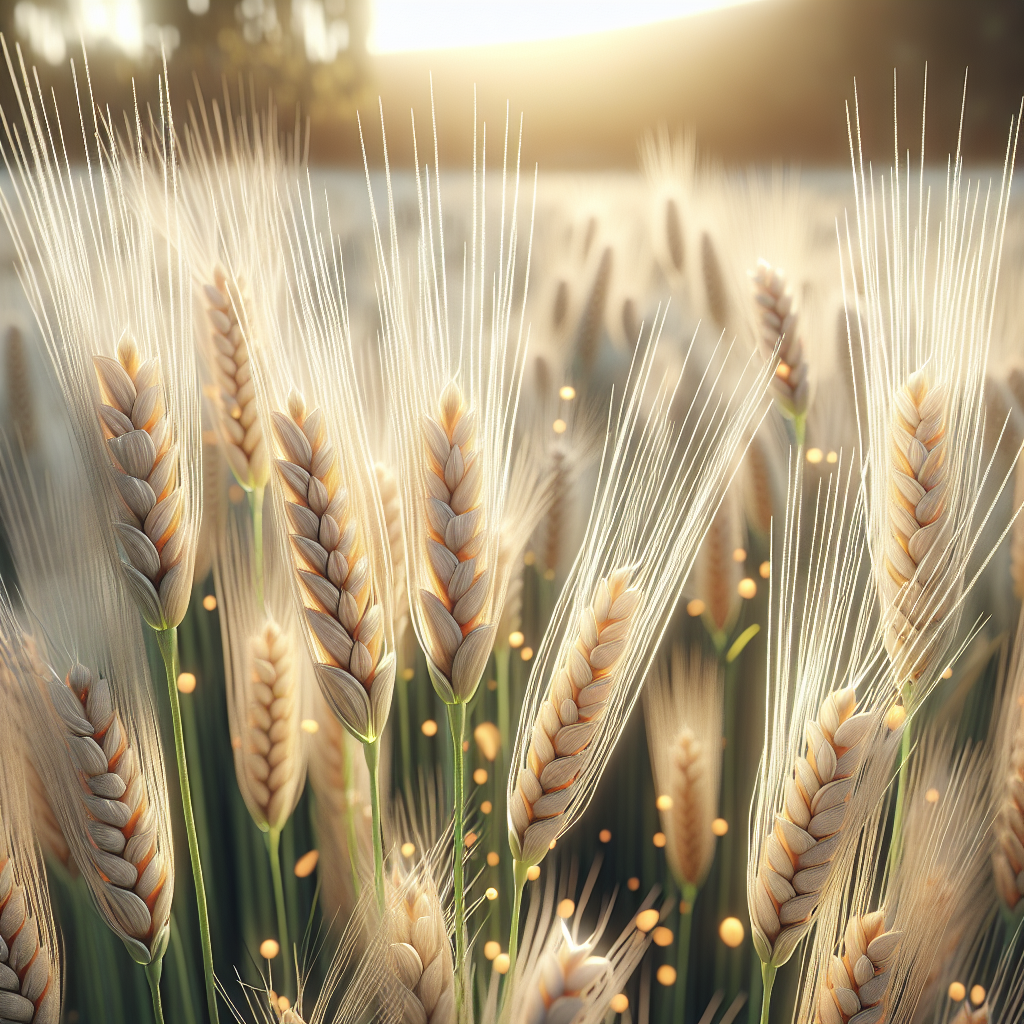
Introduction to Ivory Teff
Ivory Teff is a pale-seeded selection of teff, a tiny-grained annual cereal native to Ethiopia and Eritrea and one of the oldest domesticated grains still in regular cultivation. Compared with darker-seeded teff types, ivory forms are generally preferred where a lighter flour color, milder flavor, and premium market class are desired. In traditional food systems, the palest grains often command the highest prices because they produce a softer, lighter-toned flour.
This crop is remarkable for combining traits that rarely occur together: extremely small seed, rapid establishment under warmth, relatively short time to maturity, and good performance in low-input systems. It is also unusually flexible in use. Growers may raise it for grain, cut it young as fine-stemmed hay, or use it as a quick summer cover on clean fields. For a broader species-level overview, see Teff. For general soil-building principles that support better teff stands, see soil health strategies.
Its greatest strengths are speed and resilience; its greatest vulnerabilities are poor seedbed preparation, crusting soils, early weed competition, and lodging when overfertilized or overirrigated. Because the seed is so small, successful production depends less on aggressive inputs and more on precision: fine tilth, shallow sowing, even moisture, and careful harvest timing.
Botanical Profile of Ivory Teff
Ivory Teff belongs to the grass family, Poaceae, and is classified botanically as Eragrostis tef. It is a tufted, warm-season annual C4 grass, which helps explain its excellent performance in heat and its efficient water use relative to many temperate cereals. Plants typically grow from 30 to 120 cm tall depending on fertility, moisture, stand density, and whether the crop is managed for forage or grain.
The root system is fibrous and relatively shallow compared with deep-rooted sorghums, but it is dense and effective at exploiting surface moisture in well-structured soils. Seedlings are very fine and delicate at emergence, then tiller readily once established. Leaves are narrow, soft, and linear, with smooth to slightly rough surfaces. The inflorescence is an open, many-branched panicle that may appear airy, loose, and elegant. Grain color in ivory types ranges from creamy white to pale straw.
Cultivar behavior in pale teff lines often includes slightly better milling appeal and consumer preference for flour color, though exact agronomic performance depends on the breeding line. Some ivory selections are bred for grain yield and standability, while others may lean toward forage quality or dual-purpose use. Lodging resistance is a particularly important trait to inquire about when sourcing seed. Teff, including ivory forms, can lodge if pushed with excessive nitrogen or irrigated too heavily during stem elongation and heading.
Because teff seed is minute, with thousands of seeds per gram, seedling vigor is highly influenced by seed-soil contact and uniform planting depth. Unlike larger cereals, it has very little energy reserve to emerge from depth, which is why establishment failures are usually management-related rather than genetic.
Soil, pH, and Climate Requirements for Ivory Teff
Ivory Teff performs best in well-drained loams, sandy loams, silt loams, and light clay loams that can be prepared into a fine, firm seedbed. It tolerates a surprisingly broad range of soils, but its small seed makes it poorly suited to cloddy, crust-prone, or waterlogged ground. The ideal seed zone is moist, finely aggregated, and free of large air gaps. If a prepared bed leaves a deep footprint or contains hard lumps larger than 1 to 2 cm, it is usually too rough for optimum establishment.
The preferred soil pH is about 5.5 to 7.5, with best nutrient balance often found near 6.0 to 7.0. It can tolerate slightly acidic conditions better than some cereals, but strong acidity below about pH 5.2 can reduce nutrient availability and root activity. Very alkaline soils above pH 8 may create micronutrient issues, particularly zinc or iron limitations. If soil tests show severe deficiency, correct before planting rather than after emergence, because early growth sets the stand.
Climate-wise, this is a warm-season crop that germinates best in warm soil, ideally 18 to 25°C, and grows vigorously in daytime temperatures around 21 to 30°C. It does not tolerate hard frost and should be planted only after danger of frost has passed. Mature plants can handle brief dry spells, but seedlings are sensitive to drying during establishment. Teff often excels in regions with moderate summer rainfall or controlled irrigation and low humidity during ripening.
Rainfall or irrigation needs vary by soil and goal. For grain production, roughly 300 to 500 mm of well-distributed water during the cycle is often adequate in suitable soils, while high-yielding forage systems may require more. The most critical moisture window is from sowing through early tillering. During this period, the top 2 to 3 cm of soil should remain consistently damp but not saturated. If the surface turns powdery pale by midday and seedlings appear threadlike, bluish-green, or stalled, moisture is too low. If soil stays sticky, smells anaerobic, or seedlings yellow and collapse in patches, the seed zone is too wet.
Heavy rain right after sowing can be disastrous on crusting soils. A crust thicker than a few millimeters may physically trap emerging seedlings. In such soils, increase surface organic matter over time, avoid overworking the seedbed, and time sowing ahead of gentle irrigation or moderate rainfall rather than a storm event.
Step-by-Step Planting & Propagation
Ivory Teff is propagated by seed and is almost always direct-seeded. Transplanting is impractical and uneconomical because seedlings are too fine and numerous.
Start with a clean field. Teff seedlings are weak competitors during the first two to three weeks, so stale seedbed preparation is highly effective. Irrigate lightly or wait for a small weed flush, then shallowly eliminate those weeds before sowing.
Prepare a fine, firm seedbed. The surface should be smooth, level, and crumbly. A useful field test is that your boot heel should leave only a shallow imprint, not sink deeply. Soil should be moist below the surface but not plastic.
Apply base fertility according to soil test. As a general professional guideline, moderate fertility is preferable to aggressive feeding. Excess nitrogen increases lodging risk. If no test is available, a restrained preplant program emphasizing phosphorus where deficient is safer than heavy nitrogen broadcasting.
Sow shallowly. Seed should be placed at 0.3 to 0.6 cm depth; many successful growers effectively surface-broadcast onto a firm bed and then use a light roller or cultipacker to press seed into contact with the soil. Do not bury deeper than about 1 cm. Deep planting is a leading cause of poor stands.
Use low, accurate seeding rates. Typical grain seeding rates are often around 2.5 to 5 kg per hectare in well-prepared rows or 4 to 8 kg per hectare when broadcasting, though local adaptation matters. Over-seeding produces excessive density, weaker stems, and more lodging. Under-seeding can leave gaps for weeds. For forage, rates may be slightly higher.
Maintain uniform surface moisture until full emergence. Under warm conditions, germination can begin in 3 to 5 days, with visible stand establishment in about 5 to 10 days. Use light, frequent irrigation if needed rather than heavy soaking. The goal is to keep the topsoil evenly moist without sealing the surface.
Thin only if extremely dense in garden-scale plantings. Broadacre stands are normally left unthinned, but if hand-sown very heavily in small plots, thinning can improve airflow and reduce lodging.
Watch early growth closely. Once plants reach 5 to 8 cm and begin tillering, they become much more resilient. At that point, irrigation intervals can lengthen slightly, allowing the upper soil to dry modestly between waterings.
Row spacing for grain can range from narrow drilled rows to broadcast stands. Drilling in rows around 15 to 20 cm apart can improve weed management and stand uniformity, while broadcasting is common where equipment is simple and seedbed quality is excellent.
Care & Maintenance regimes for Ivory Teff
After establishment, Ivory Teff is a relatively manageable crop, but the maintenance regime should be disciplined rather than intensive. The first priority is moisture management. During emergence and early tillering, maintain consistently damp topsoil. After the stand is established, irrigate when the top 3 to 5 cm have dried but before plants show stress. Mild leaf rolling, a dull gray-green color, and slowed vertical growth indicate water deficit. Chronic overwatering shows up as yellowing lower leaves, reduced rooting, soft stems, and increased lodging.
For grain crops, avoid lavish irrigation after the canopy closes. Teff responds better to moderate, even moisture than to feast-and-famine cycles. A useful target in many mineral soils is to moisten the root zone to roughly 15 to 25 cm depth, then allow partial drying before the next irrigation. During heading and grain fill, severe drought can reduce seed set and grain weight, but saturated soil at this stage is equally harmful because it weakens stems and encourages disease.
Nitrogen management is the second major lever. Total nitrogen demand is modest compared with high-input maize systems, and too much nitrogen is often worse than too little. A split application works well: a modest preplant dose, then a light topdress at early tillering if color and growth indicate need. Dark, lush, rank growth is not a success signal in teff; it often precedes lodging. Plants should appear upright, finely textured, and medium green rather than deep, succulent green.
Phosphorus is especially important in deficient soils because it supports early root growth and seedling vigor. Potassium helps overall stress tolerance and stem strength where low. Sulfur and zinc may matter in sandy or depleted fields. Tissue testing at tillering can refine nutrition in commercial settings.
Weed control is crucial early and much less critical later. The crop should achieve canopy cover quickly if established well. The decisive window is usually the first 20 to 30 days after sowing. If weeds overtop seedlings during this period, yield loss can be severe. On small farms, shallow hand hoeing between rows is possible if drilled. In organic systems, stale seedbeds, clean field history, and dense, even emergence are the best tools.
Lodging prevention deserves special emphasis. To reduce lodging risk:
- avoid excessive seeding rates,
- avoid heavy nitrogen, especially late,
- prevent prolonged waterlogging,
- do not irrigate heavily just before storms or strong winds,
- choose fields sheltered from severe wind if possible,
- select cultivars noted for standability.
If growing for forage, first cutting is often taken at the pre-boot to early boot stage for the best quality, though timing depends on the feeding goal. For grain, do not cut early; let the crop proceed to maturity with steady but not excessive moisture.
Pests, Diseases & Organic Management
Ivory Teff is generally less pest-ridden than many broadleaf crops, but it is not immune. The crop’s rapid cycle helps it escape some late-season pressure, yet its fine seedlings are vulnerable at establishment.
Common early threats include soil-surface feeding by Birds, Flea beetles in some regions, and Cutworms where residue or weedy borders harbor larvae. Grasshoppers may clip young plants in dryland landscapes. Organic management begins with sanitation and timing: plant into a clean field, eliminate grassy weed hosts nearby, and avoid sowing into heavy undecomposed residue where Cutworms thrive.
Damping-off and Seedling blights can occur if soils are cold, crusted, or excessively wet. Because teff seed is tiny, seedlings have little capacity to survive hypocotyl or crown injury. Prevention is far more effective than cure: warm soils, shallow sowing, good drainage, and restrained irrigation are the core defenses.
Later in the season, Rusts, Leaf spots, and Head diseases may appear under humid conditions or where stands are too dense. These problems are usually secondary to management issues such as excessive nitrogen, poor airflow, or frequent overhead irrigation late in the day. Organic suppression depends on spacing that avoids an overly matted canopy, morning irrigation instead of evening irrigation, and crop rotation.
Root and crown stress from waterlogging is often misread as nutrient deficiency. If plants show patchy yellowing, weak anchorage, and stunting in low spots, inspect the soil first. Sour smell, gray subsoil, and shallow blackened roots indicate oxygen deprivation rather than fertilizer shortage.
For organic programs, the most effective practices are:
- rotate away from other grasses when disease pressure has been high,
- maintain balanced fertility rather than chasing lush growth,
- encourage beneficial habitat near field margins with Clover and Yarrow,
- use perimeter plantings of Sunflower to diversify insect activity and provide wind buffering in small plots,
- mow or remove weedy grass hosts before seed set.
Bird feeding can become significant near maturity because teff grain is tiny and exposed in open panicles. Netting is practical in gardens and seed increase plots; broadacre fields rely more on synchronized planting, field size, and deterrence during the vulnerable ripening window.
Harvesting, Curing & Optimal Storage
Harvest timing is one of the trickiest parts of producing a premium Ivory Teff grain crop. Panicles do not always mature with perfect uniformity, and delaying too long increases shattering risk, bird loss, and weather damage. Grain is usually ready when most panicles have turned from green to straw-gold, stems are drying, and seed is firm and difficult to dent with a fingernail. Moisture at harvest commonly targets around 12 to 14% for direct combining, though practical field judgment is often required.
For small-scale harvest, cut plants when roughly 80 to 90% of the stand has reached maturity. Cutting too green reduces test weight and complicates drying; cutting too late increases seed drop. Because seeds are tiny, handle gently and avoid rough movement of over-dry plants before threshing.
In traditional systems, plants may be cut, bundled, and field-dried briefly before threshing. In humid weather, cure under cover with excellent airflow rather than leaving bundles on damp ground. Teff should never be piled thick while green or even slightly tough; heating can begin rapidly and quality will fall.
Threshing requires screens and airflow calibrated for very small seed. Losses can be high if settings are too aggressive. Clean grain promptly to remove chaff and immature seed, because fine trash raises storage risk. If harvested above safe storage moisture, dry the grain immediately using ambient or low-heat air. For long-term storage, reduce moisture to about 10 to 12%, especially in warm climates.
Store in clean, dry, rodent-proof containers or bins. Ivory grain, because of its pale color, can show discoloration readily if exposed to dampness, mold, or insect contamination. Ideal storage conditions are cool, dark, and low humidity. If using sealed containers, ensure grain is fully dried first; sealing marginally damp grain invites condensation and spoilage.
For hay production, harvest much earlier than grain stage, typically at pre-boot to early head emergence for the best balance of quality and yield. Teff hay is prized for its fine stems and palatability, but curing must be careful because narrow stems dry fast while dense windrows may trap humidity underneath. Tedding lightly and avoiding overly thick windrows helps preserve leafiness and color.
Companion Planting for Ivory Teff
Ivory Teff is not usually grown in tightly interplanted polycultures the way vegetable crops are, but it benefits from strategic neighboring species in small farms, edge plantings, and rotational blocks. The best companions are those that improve pollinator and beneficial insect presence, protect soil, or reduce wind and erosion without outcompeting the young teff stand.
Clover works well on field margins or as a rotational companion because it contributes nitrogen biologically in the broader system, suppresses erosion, and supports predatory insects. It should not be undersown aggressively into the teff stand at establishment, because the teff seedlings are too delicate for early competition.
Yarrow is valuable around borders and access lanes. It attracts parasitic wasps and hoverflies, helps diversify beneficial insect populations, and is drought tolerant once established. Because it is perennial, it is best kept on margins rather than within annual grain rows.
Sunflower can serve as a useful edge companion in market-garden or smallholder settings. Planted on the windward side at sensible distance, it can reduce low-level wind stress, create habitat for beneficial insects, and make bird pressure more predictable by concentrating activity on field edges. Avoid shading the teff stand; maintain enough separation that the crop still receives full sun.
In larger rotational systems, legumes such as clover used before teff are often more beneficial than simultaneous intercropping. The central principle is simple: keep the teff seed zone clean and uncompetitive during the first weeks, and place companions on borders, in prior rotations, or after harvest rather than crowding the stand itself.