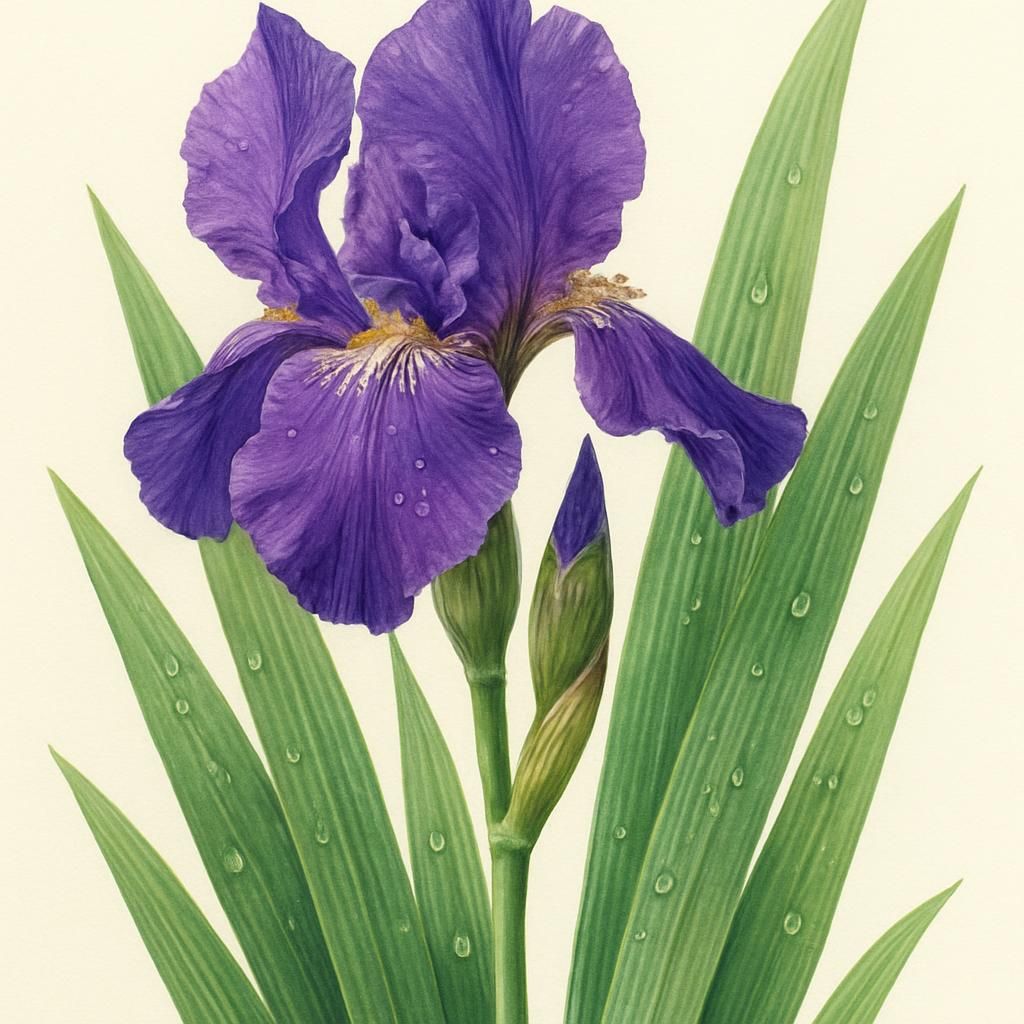
Introduction to Iris
Iris encompasses over 300 species and thousands of cultivars valued worldwide for their elegant, three-petaled flowers in nearly every color. Rhizomatous and bulbous types are grown commercially for cut flowers, landscape design, and essential oil extraction. Reliable performers in temperate climates, iris rhizomes store energy for rapid spring growth while tolerating periodic drought once established.
Commercial growers appreciate iris for low maintenance, high market value in early-season bouquets, and strong repeat demand from florists. Home gardeners favor iris for deer resistance and pollinator support. Successful production hinges on well-drained soils, proper rhizome depth, and timely division.
Botanical Profile of Iris
Iris belongs to the Iridaceae family. Plants produce fans of sword-shaped leaves arising from thick rhizomes or bulbs. Flowers feature three upright standards and three drooping falls, often displaying contrasting beards or signals. Pollination occurs via bees attracted to nectar guides.
Rhizomatous iris (I. germanica, I. pallida) spread horizontally and require summer dormancy for flower initiation. Bulbous iris (I. hollandica, I. reticulata) complete their cycle underground and suit container or forcing programs. Both types store carbohydrates in modified stems that also serve as propagation material.
Soil, pH, and Climate Requirements for Iris
Iris thrives in fertile, well-drained loam with moderate fertility. Heavy clay must be amended with coarse sand or pine bark to prevent rhizome rot. Raised beds improve drainage in regions with high rainfall.
| Parameter | Ideal Range | Notes |
|---|---|---|
| Soil Type | Loamy sand to sandy loam | Avoid compacted or waterlogged soils |
| Soil pH | 6.0–7.0 | Slightly acidic to neutral; test annually |
| Temperature Range | 15–25 °C daytime; hardy to –15 °C | Vernalization needed for flower induction |
| USDA Hardiness Zones | 3–9 | Select cultivars by zone |
| Sunlight | Full sun (6+ hours) | Afternoon shade in hot climates |
| Spacing | 30–45 cm between plants | 60–75 cm between rows for mechanical access |
Step-by-Step Planting & Propagation
- Site Preparation: Clear weeds, incorporate 5 cm of compost, and adjust pH if below 6.0 with dolomitic lime.
- Rhizome Division: Lift mature clumps in late summer, separate healthy rhizomes with at least one fan of leaves, and discard old or diseased sections.
- Planting Depth: Position rhizomes horizontally with tops just below soil surface; bulbs 8–10 cm deep.
- Spacing & Orientation: Place fans facing the same direction in rows for uniform light capture.
- Watering In: Irrigate immediately after planting to settle soil around roots.
- Mulching: Apply 5 cm of organic mulch to suppress weeds and moderate soil temperature.
Offsets and tissue-cultured plantlets provide rapid scale-up for commercial blocks. Saffron Crocus shares similar rhizome handling protocols.
Care & Maintenance regimes for Iris
Consistent moisture during active growth supports robust flowering, while reduced irrigation after bloom encourages summer dormancy. Side-dress with balanced organic fertilizer in early spring and again post-bloom.
| Growth Stage | Watering Schedule | Fertilizer Application | Pruning / Sanitation |
|---|---|---|---|
| Early Spring | 2.5 cm/week; keep evenly moist | 5-5-5 organic at 500 kg/ha | Remove winter debris; cut damaged foliage |
| Pre-Bloom | Maintain consistent moisture | Side-dress with compost tea | Stake tall cultivars if needed |
| Post-Bloom | Reduce to 1 cm/week | Light potassium boost (0-0-10) | Deadhead spent flowers; remove foliage at 10 cm when yellowing |
| Summer Dormancy | Withhold irrigation if rainfall adequate | None | Divide overcrowded clumps every 3–4 years |
| Autumn | Resume light watering in dry regions | Incorporate aged manure | Cut back to 15 cm before hard frost |
Pests, Diseases & Organic Management
Common insect pressures include aphids, thrips, and iris borers. Scout weekly; release lady beetles and apply neem oil at first sign of infestation. Rhizome rot caused by Pythium and Phytophthora is mitigated by raised beds and copper-based drenches.
Leaf spot from Alternaria and Botrytis is managed through sanitation, drip irrigation to keep foliage dry, and weekly applications of Bacillus subtilis. Viral mosaic symptoms warrant rogueing infected plants. Regular division prevents overcrowding that favors pests.
Harvesting, Curing & Optimal Storage
Cut iris stems when buds show full color but before petals unfurl. Harvest early morning, leaving 30 cm of stem. Bunch 10 stems, place in 4 °C water with floral preservative, and move to 2–3 °C cold storage. Rhizomes for replanting are lifted after foliage yellows, cured 3–5 days in shade, then stored at 15–18 °C with 50 % humidity.
Companion Planting for Iris
Iris pairs well with Thyme, Yarrow, and Nasturtium for pest deterrence and pollinator support. Low-growing Clover fixes nitrogen and suppresses weeds between rows. Avoid planting near shallow-rooted Lettuce that competes for moisture. Tall iris cultivars provide light shade beneficial to Spinach in summer.
Stop Treating Tomato Blight Like a Spray Problem: Here Is What Works Better