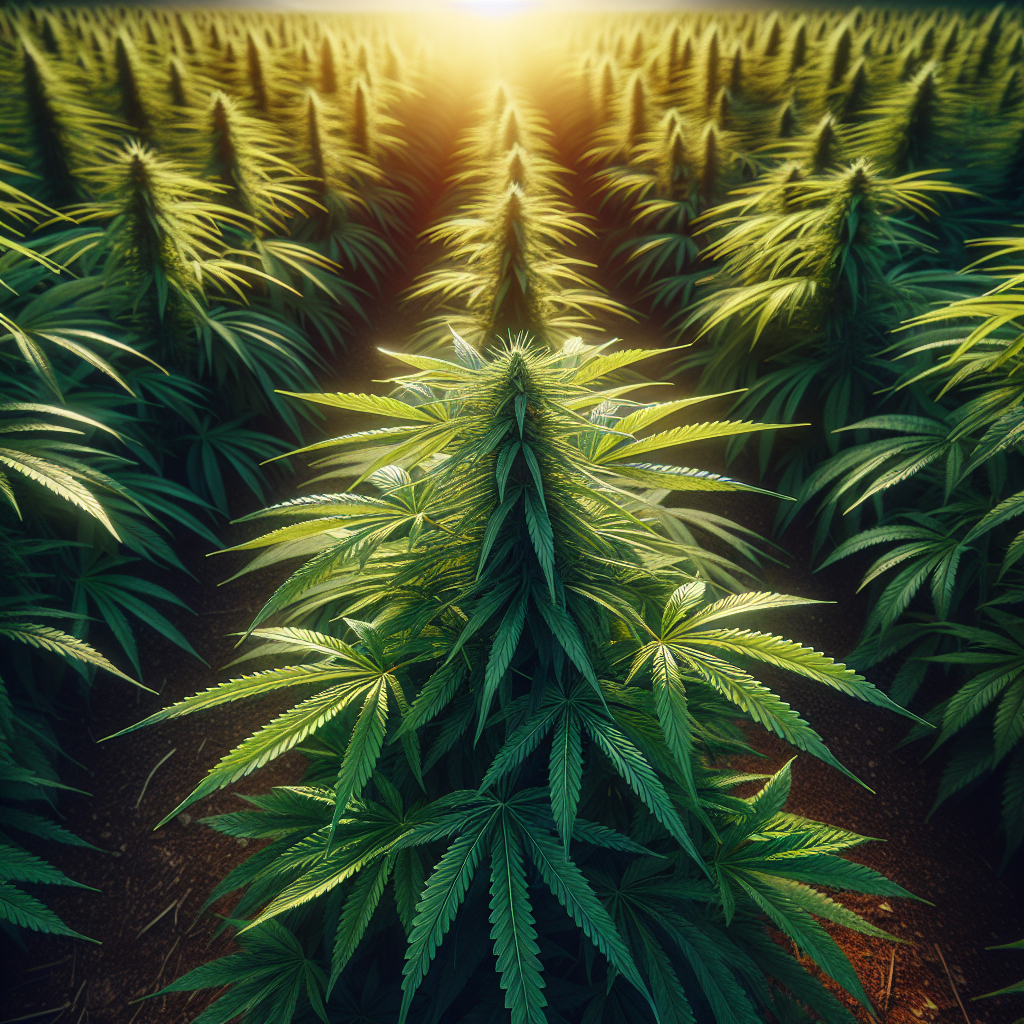
Introduction to Industrial Hemp
A highly versatile annual crop, industrial hemp has been cultivated for thousands of years for bast fiber, seed, oil, cordage, paper pulp, animal bedding, construction materials, and more recently for grain-based food ingredients and specialized phytochemical markets. Unlike narcotic cannabis types, industrial hemp is bred and regulated for very low tetrahydrocannabinol (THC) content, and its field management is closer to a dense, high-vigor broadleaf field crop than to a garden vegetable.
Historically, hemp was a strategic textile and naval crop in many temperate regions because of its long, durable fiber. Modern production has split into three broad categories: fiber hemp, grain/seed hemp, and dual-purpose hemp. Fiber types are usually tall, slender, and planted very densely to encourage long internodes and minimal branching. Grain types are shorter, more branched, and spaced more openly to support flower and seed development. Understanding which production goal you are targeting is the first major decision, because cultivar choice, fertility, stand density, and harvest timing all change with end use.
Industrial hemp is also notable for rapid canopy closure. Under good fertility and moisture, seedlings can transition from vulnerable emergence to aggressive vegetative growth quickly, suppressing many annual weeds. That said, strong early growth depends on warm soil, uniform seed placement, and well-drained ground. Hemp can be highly rewarding, but professional results depend on precision in field preparation and timing.
For rotation planning, it is often discussed alongside other large-acreage field crops such as soybeans, because both benefit from careful seedbed preparation, drainage, and harvest logistics. For broader rotation and soil-building concepts, see soil health strategies.
Botanical Profile of Industrial Hemp
This species belongs to the Cannabaceae family and is typically a short-day, wind-pollinated annual. Plants are usually dioecious in traditional populations, meaning male and female flowers occur on separate plants, though many modern cultivars are monoecious or bred for more uniform agronomic traits. Dioecious fiber cultivars often produce very tall stems, with males maturing slightly earlier and dying back sooner. Monoecious types can simplify stand uniformity and harvest scheduling, especially in European-style fiber and dual-purpose systems.
Morphologically, the crop produces a strong central taproot that can penetrate deeply if soil is loose and uncompacted, often extending beyond 60 cm and much deeper in favorable profiles. This root system helps exploit subsoil moisture, but hemp does not tolerate prolonged saturation. The stem contains outer bast fibers valued for strength and inner woody hurd used in animal bedding, biocomposites, and hempcrete. Leaves are palmately compound with serrated leaflets, typically broad in juvenile stages and narrower on vigorous, tall stems.
Photoperiod sensitivity is one of hemp's most important botanical nuances. Cultivars developed in northern latitudes may flower prematurely if moved too far south, while southern-adapted types may remain vegetative too long in shorter-season regions. This means latitude of origin matters almost as much as temperature. A cultivar ideal for fiber in France, Canada, or northern US states may behave very differently in subtropical environments.
Typical crop duration ranges from 70 to 120 days depending on end use and cultivar. Fiber harvest often occurs around early flowering for optimum bast quality, whereas grain crops are left until seed maturity. Fiber types may reach 2 to 4 meters tall under ideal conditions, while grain cultivars often remain between 1 and 2 meters. Branching is highly density-dependent: dense stands produce straighter stems and fewer side branches; wide spacing produces thicker stems and heavier seed set.
Soil, pH, and Climate Requirements for Industrial Hemp
The crop performs best in deep, fertile, well-aerated loams or silt loams with high organic matter and excellent drainage. A target soil pH of 6.0 to 7.5 is broadly ideal, with best nutrient availability and root growth typically around 6.3 to 7.0. It can tolerate slightly alkaline conditions, but acidic soils below about pH 5.8 often reduce vigor and nutrient uptake, especially calcium, magnesium, and phosphorus availability.
Avoid shallow, compacted, or waterlogged ground. Even though the plant is vigorous, seedling hemp is extremely sensitive to crusting and saturated seedbeds. Poorly drained soils increase the risk of damping-off, root disease, uneven emergence, and stunting. If you dig 20 to 30 cm and find a hardpan that roots cannot penetrate, yield potential drops sharply. Subsoiling or deep ripping before the season may be justified where compaction is chronic.
Industrial hemp prefers temperate to warm-temperate climates with a frost-free growing period of at least 100 days for many cultivars, though some early types finish faster. Ideal air temperatures for active vegetative growth are roughly 16 to 27°C. Germination begins around 8 to 10°C soil temperature, but faster and more uniform emergence occurs when the topsoil is closer to 10 to 12°C or warmer. Seedlings can survive light frost, yet repeated cold stress slows establishment. Extreme heat above 32 to 35°C during flowering may reduce pollen viability, seed set, or overall stress tolerance, especially under moisture deficits.
Water demand is moderate to high, especially during establishment and rapid stem elongation. A total seasonal water supply of roughly 300 to 700 mm may be sufficient depending on climate, soil type, and production objective. Fiber crops often need steady moisture during early vegetative growth and internode extension, while grain hemp is particularly sensitive to drought during flowering and seed fill. The ideal root-zone moisture is consistently moist but never anaerobic. In practical terms, soil should hold together when squeezed at 10 to 15 cm depth but not release free water or smear heavily across the palm. Overwatered hemp often shows slowed growth, pale lower leaves, root browning, and a field pattern of uneven, patchy plants in low spots.
Step-by-Step Planting & Propagation
Industrial hemp is almost always direct-seeded rather than transplanted. Start by choosing a legally compliant cultivar suited to your latitude, harvest goal, and daylength conditions. Match end use carefully:
- Fiber cultivars: tall, fast, low-branching, dense-stand adapted
- Grain cultivars: shorter, more branched, higher seed yield potential
- Dual-purpose cultivars: compromise between stem and seed output
Prepare a fine, firm, level seedbed similar to what would be used for small grains. Large clods, loose fluffy soil, and surface crusting all reduce emergence uniformity. Pre-plant tillage should incorporate residues well and eliminate perennial weeds. Hemp is a poor choice for fields with heavy infestations of quackgrass, bindweed, or established rhizomatous weeds because chemical rescue options may be limited in many jurisdictions.
Plant when the risk of hard frost has passed and soil temperature at seeding depth is consistently at least 10°C. Seeding too early into cold, wet ground is a common cause of stand failure. Depth should generally be 1.5 to 3 cm in medium-textured soil. In lighter, drier soils, seed may be placed slightly deeper, but avoid going beyond about 4 cm because emergence weakens rapidly.
Use calibrated grain drills for best uniformity. Broadcast seeding is possible but usually gives more variable stands and more difficult harvest management. Recommended seeding rates vary widely by purpose:
- Fiber: about 45 to 70 kg/ha, or enough to achieve roughly 200 to 400 plants per square meter
- Grain: about 20 to 35 kg/ha, often targeting 75 to 150 plants per square meter
- Dual-purpose: intermediate rates, often 30 to 45 kg/ha
Row spacing also depends on use. Fiber hemp is frequently drilled in 12 to 18 cm rows to force vertical growth and suppress weeds. Grain hemp may be planted in 18 to 30 cm rows, and sometimes wider where cultivation equipment or local practice favors it. Very wide spacing promotes excessive branching and can complicate uniform ripening.
After seeding, ensure good seed-to-soil contact. Rolling may help on rough seedbeds, but avoid creating a crust-prone surface on fine silty soils before heavy rain. Emergence usually occurs within 4 to 10 days under warm conditions. Scout plant populations early. If large sections are below target density, replanting decisions must be made quickly because delayed stands often suffer from uneven maturity and weed competition.
Care & Maintenance regimes for Industrial Hemp
Once established, the crop can be relatively competitive, but high performance requires disciplined management. Nitrogen demand is significant, though excessive nitrogen can increase lodging, delay maturity, and reduce fiber quality in some systems. A typical total fertility program might range around 60 to 150 kg/ha nitrogen depending on soil reserves, prior crop, organic matter, and whether the target is fiber or grain. Fiber hemp usually benefits from moderate to strong early nitrogen availability for stem growth, while grain hemp needs balanced fertility extending into reproductive development. Phosphorus and potassium should be based on soil tests; many successful programs fall in moderate ranges such as 40 to 90 kg/ha P2O5 and 75 to 150 kg/ha K2O where soils are not already well supplied.
Sulfur, boron, zinc, and calcium can matter on deficient soils. Sulfur deficiency may appear as generalized light green upper growth despite adequate nitrogen. Boron deficiency may affect reproductive success on sandy or low-organic-matter sites. Do not guess blindly; tissue tests during active growth can prevent expensive misinterpretation.
Irrigation is most important during three windows: germination/emergence, rapid vegetative elongation, and flowering to seed fill in grain crops. As a practical rule, maintain the upper 20 to 30 cm of soil evenly moist during establishment. On sandy soils, that may mean lighter, more frequent irrigation. On loams, deeper and less frequent irrigation is usually better. If leaves droop in early afternoon but recover by evening, mild temporary stress may be present; if drooping persists into the morning, the crop is under more serious moisture deficit. Drought during early growth reduces stand vigor and internode length; drought during flowering reduces grain set; drought near maturity may be tolerable for fiber quality but can cut seed yield sharply.
Weed control is mainly preventive and cultural. A dense, well-established stand can suppress many annual weeds after canopy closure, often within 3 to 5 weeks. The critical weed-free period is the establishment phase. Stale seedbed techniques, clean field selection, proper fertility placement, and rapid emergence are more reliable than trying to rescue a weedy crop later. In lower-density grain hemp, mechanical inter-row cultivation may be possible early, but only before roots spread and plants become too tall.
Lodging risk increases with high nitrogen, overly lush growth, storm exposure, and delayed harvest. Tall fiber cultivars are especially vulnerable on fertile ground if storms arrive near flowering. Avoid overirrigation and avoid late nitrogen applications that push soft tissue growth.
Because hemp is wind-pollinated, isolation from other cannabis populations may be important depending on production goals and local regulations. Unwanted pollen flow can affect uniformity in specialized seed production systems.
Pests, Diseases & Organic Management
Industrial hemp is often described as pest resistant, but that reputation is overstated. It is resilient in some environments, yet significant pest and disease outbreaks do occur, especially as acreage expands. The most reliable organic management strategy is integrated prevention: rotation, airflow, balanced fertility, sanitation, and cultivar adaptation.
Common insect issues include aphids, flea beetles, cutworms, armyworms, grasshoppers, and corn earworm in seed-producing stands. Seedlings are most vulnerable to cutworm clipping and flea beetle shot-holing. In vegetative stages, aphids may colonize undersides of leaves and growing tips, causing curling, sticky honeydew, and sometimes sooty mold. Threshold-based action is preferable to routine spraying because beneficial insects often regulate populations if insecticide use is minimized.
For organic control, emphasize:
- Crop rotation of at least 3 to 4 years away from hemp or related host pressure where possible
- Border mowing to reduce unmanaged weed hosts
- Early field scouting twice weekly from emergence through canopy closure
- Preservation of beneficial predators and parasitoids
- Targeted use of approved biocontrols such as Bacillus thuringiensis for caterpillars when small larvae are present
- Neem or insecticidal soap only when pressure is rising and coverage is feasible
Disease pressure increases in dense canopies, humid climates, and poorly drained fields. Important problems include Pythium damping-off, Fusarium root and crown rots, Botrytis gray mold, Sclerotinia white mold, powdery mildew, and various leaf spots. In seed crops, dense flower clusters can trap moisture and favor mold development, especially under prolonged dew or rainfall.
Early warning signs include poor emergence in wet zones, water-soaked stem bases, sudden wilt despite moist soil, fluffy white fungal growth, gray fuzzy sporulation on dying tissue, or powdery white coating on leaves late in the season. Overfertilized, overly dense canopies are especially susceptible to foliar disease.
Organic disease management depends on prevention more than cure:
- Use well-drained fields with no standing water after storms
- Avoid back-to-back hemp plantings
- Plant at the correct density for the intended use rather than excessively thick stands
- Keep nitrogen balanced, not excessive
- Improve airflow by matching row spacing and cultivar architecture to local humidity
- Destroy or compost infected residues properly if disease pressure was severe
- Clean harvest equipment to avoid moving contaminated debris between fields
Birds can be a serious issue in grain hemp near maturity, especially blackbirds and sparrows. Damage tends to escalate once seed heads become attractive and surrounding food sources decline. Large fields may tolerate some losses, but smaller acreages often need visual deterrents, perimeter disturbance, or synchronized harvest timing to reduce exposure.
Harvesting, Curing & Optimal Storage
Harvest timing depends entirely on market class. For fiber, the usual target is early flowering to full flowering, when bast fiber quality and fineness are generally superior. Delaying too long increases lignification, coarsens fiber, and may reduce value for fine textile applications, though some industrial uses tolerate later harvest. Males in dioecious stands often mature first; some traditional fiber systems cut at early male flowering.
Fiber is typically cut with sickle-bar mowers, disc mowers adapted for high-residue work, or specialized hemp harvesters. Ordinary equipment can wrap badly in long stems, so machine suitability matters. After cutting, stems are often left for retting in the field. Dew retting uses natural moisture and microbial action to separate bast fibers from the woody core. Proper retting may take 2 to 6 weeks depending on humidity, rainfall, temperature, and stem thickness. Turn windrows as needed for uniform retting. Under-retted stems are hard to process; over-retted stems lose fiber strength and color.
For grain production, harvest when the majority of seeds are mature and hard, often at 18 to 22% seed moisture in the field, then dry promptly. Waiting for every seed to ripen perfectly can increase shattering, bird loss, and weather damage. Because hemp often ripens unevenly from top to bottom, timing is a compromise between yield retention and grain quality. Combines may need adjustments for low drum speed, careful concave clearance, and frequent cleaning to handle fibrous residue.
Freshly harvested grain should be cleaned and dried as quickly as possible to around 8 to 10% moisture for safe storage. Above roughly 12% moisture, heating, rancidity, and mold risk rise sharply due to the oil-rich seed. Use ambient or low-temperature air drying where possible; excessive heat can damage seed viability and oil quality. Store in cool, dark, dry conditions in clean bins protected from rodents and insects. Grain intended for planting should be kept even more carefully, ideally cool and stable in humidity.
Baled fiber should be stored under cover with strong ventilation and protection from rain splash or ground moisture. Wet bales can heat and mold internally. Keep them off bare soil on pallets or a well-drained pad. If storing hurd or processed material, maintain low humidity to prevent odor, spoilage, and microbial growth.
Companion Planting for Industrial Hemp
In commercial field production, companion planting is less about tucking herbs between plants and more about designing whole-field ecology, border plantings, and rotational support species. The most useful companions are usually service plants that improve pollinator activity around farm edges, harbor beneficial insects, or protect soil between hemp seasons rather than sharing the row during peak hemp growth.
clover is one of the best support species in hemp systems, especially as an off-season living mulch or understory trialed in lower-density production. It can help protect soil, add biologically fixed nitrogen when used in rotation, and improve aggregate stability. In dense fiber hemp, however, understory companions often struggle because the canopy closes so aggressively.
buckwheat is valuable before hemp as a short-season smother crop. It suppresses weeds, flowers quickly, and supports beneficial insects, making it ideal when a field needs biological activity and weed reduction before spring hemp planting. It is more often used in sequence than directly interplanted.
yarrow works best in margins and insectary strips rather than within the production stand. Its umbels attract predatory wasps, hoverflies, and other beneficial insects that can help moderate aphid pressure in adjacent fields.
sunflower can serve as a biodiversity and beneficial-insect companion on field edges, though it should not be packed tightly with hemp in production rows. Edge plantings may also distract some bird movement patterns and diversify farm habitat, but growers should monitor whether sunflowers inadvertently attract additional bird pressure in grain systems.
In practice, the strongest companion strategy for industrial hemp is rotational: use pre-season smother crops, post-harvest cover crops, and insectary borders rather than intimate intercropping in the main stand. Dense, competitive hemp usually performs best when allowed to dominate its own rooting and light environment, while companion species provide support from the margins or shoulder seasons.