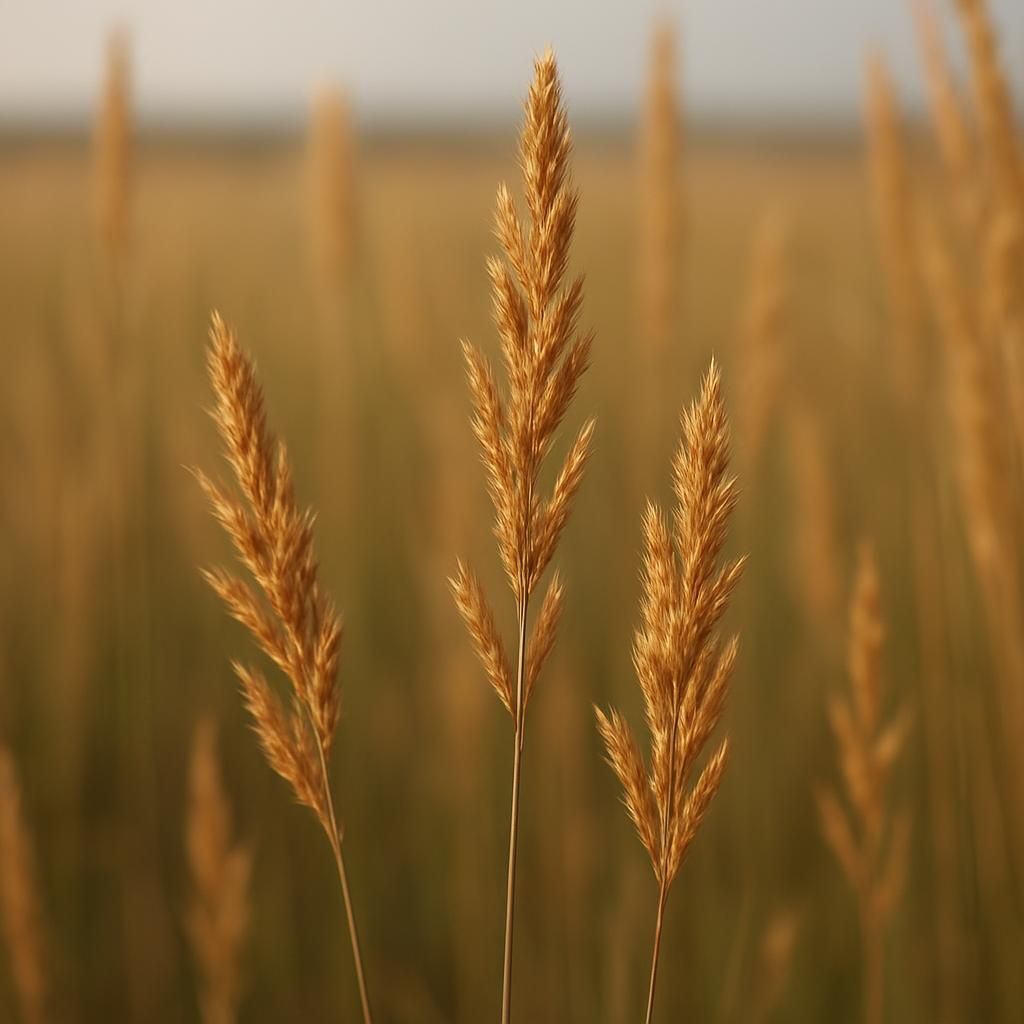
Introduction to indiangrass
Indiangrass (Sorghastrum nutans) is one of the four dominant tallgrass prairie species and remains a cornerstone of modern conservation plantings, pasture renovation, and biomass systems. Its deep fibrous root system improves soil structure, sequesters carbon, and provides year-round cover for wildlife. Because it matures later than many cool-season grasses, it supplies high-quality forage and standing winter cover when other species have gone dormant.
Farmers and land managers value indiangrass for its adaptability to marginal soils, low fertility requirements, and resistance to most pests. When established properly, stands persist 10–20 years with minimal inputs while delivering multiple ecosystem services.
Botanical Profile of indiangrass
Sorghastrum nutans is a native C4 perennial bunchgrass in the Poaceae family. Mature plants reach 3–8 ft (0.9–2.4 m) with bluish-green blades ¼–½ in (6–13 mm) wide that turn golden-orange in autumn. The inflorescence is a narrow, feathery panicle 4–12 in (10–30 cm) long bearing bronze to golden spikelets from August through October. Seeds are light and fluffy with twisted awns that aid wind dispersal.
The species is highly variable across its range, with ecotypes adapted to different latitudes and moisture regimes. Rhizomatous spread is minimal; reproduction occurs primarily by seed and tillering from the crown.
Soil, pH, and Climate Requirements for indiangrass
Indiangrass tolerates a wide range of conditions but performs best on well-drained soils with moderate fertility. It is extremely drought tolerant once established yet benefits from consistent moisture during the first growing season.
| Parameter | Ideal Range | Notes |
|---|---|---|
| Soil Texture | Loam to sandy loam | Tolerates clay if well-drained |
| Soil pH | 5.5–7.5 | Optimum 6.0–7.0 |
| Soil Organic Matter | 2–5 % | Higher OM improves establishment |
| USDA Hardiness Zones | 3–9 | Best performance in zones 5–8 |
| Growing Season | Warm-season (May–October) | Requires 120+ frost-free days |
| Annual Rainfall | 20–50 in (510–1270 mm) | Irrigation rarely needed after year 1 |
| Temperature Range | 70–95 °F (21–35 °C) daytime | Tolerates brief freezes to –20 °F (–29 °C) |
Step-by-Step Planting & Propagation
- Site preparation: Control existing vegetation with glyphosate or tillage 4–6 weeks before planting. Remove thatch and debris to ensure good seed-to-soil contact.
- Soil testing: Sample to 6 in (15 cm) depth; adjust pH above 5.5 with lime if necessary. Apply 30–40 lb N/acre only if soil tests show very low fertility.
- Seeding rate: Drill 6–8 lb pure live seed (PLS)/acre in 6–8 in (15–20 cm) rows at ¼–½ in (6–13 mm) depth. Broadcast rates are 8–12 lb PLS/acre followed by light cultipacking.
- Timing: Plant after soil reaches 60 °F (15.5 °C) in spring (late April–June) or dormant seed November–February in northern latitudes.
- Inoculation & cover: No legume inoculant required. Use a nurse crop of oats at 20 lb/acre if erosion risk is high.
- First-year management: Mow or graze at 8–10 in (20–25 cm) height in late summer to reduce weed competition; avoid grazing below 6 in (15 cm).
Care & Maintenance regimes for indiangrass
Established stands require minimal intervention. Focus on periodic fertility monitoring, strategic grazing or haying, and occasional prescribed fire to maintain vigor and reduce woody encroachment.
| Management Practice | Schedule | Rate/Details |
|---|---|---|
| Watering | Year 1: supplemental only if drought >14 days | 0.5–0.75 in (13–19 mm) per event |
| Fertilizer (N) | Established stands: every 2–3 years | 40–60 lb N/acre after first hay cut or post-graze |
| Fertilizer (P & K) | Based on soil test every 3–4 years | Maintain medium soil test levels |
| Mowing / Haying | Once or twice per season | Cut at boot stage or 50 % heading; leave 6–8 in stubble |
| Grazing | Rotational: move at 8–10 in height | Rest 30–45 days between cycles |
| Prescribed Fire | Every 2–4 years in dormant season | Late winter/early spring; 1–2 year fuel load |
| Weed Control | Spot-spray or wick applicators | Target broadleaf weeds only; avoid 2,4-D on young stands |
Pests, Diseases & Organic Management
Indiangrass is remarkably resistant to most insects and pathogens. Occasional outbreaks of grasshoppers or armyworms may occur in outbreak years but rarely require treatment. Rust fungi can appear under prolonged cool, wet conditions; resistant ecotypes and proper plant spacing reduce incidence.
Organic strategies include preserving beneficial insects through diverse plantings, using Bacillus thuringiensis for caterpillar pests, and maintaining stand density to outcompete weeds. Prescribed fire also destroys overwintering disease inoculum.
Harvesting, Curing & Optimal Storage
For hay, harvest at boot to early heading stage for highest protein (10–14 %). Cut with a sickle-bar or disc mower, windrow, and bale at 15–18 % moisture. For biomass or seed, allow full maturity (October–November) and combine with a stripper header.
Store bales under cover or in wrapped silage tubes. Seed should be cleaned to 95 % purity, dried to 10–12 % moisture, and kept in cool, dry conditions (40–50 °F / 4–10 °C) for up to 5 years with minimal viability loss.
Companion Planting for indiangrass
Pair indiangrass with big bluestem, little bluestem, and switchgrass in tallgrass prairie mixes to increase biodiversity and extend the grazing season. Legumes such as Illinois bundleflower or partridge pea improve soil nitrogen and attract beneficial insects. Avoid aggressive cool-season grasses that outcompete seedlings in the first two years.
For wildlife plantings, combine with sunflower and maximilian sunflower to provide late-season seed and pollinator resources. In biomass systems, interseeding with clover after year three can supply nitrogen without competing during establishment.