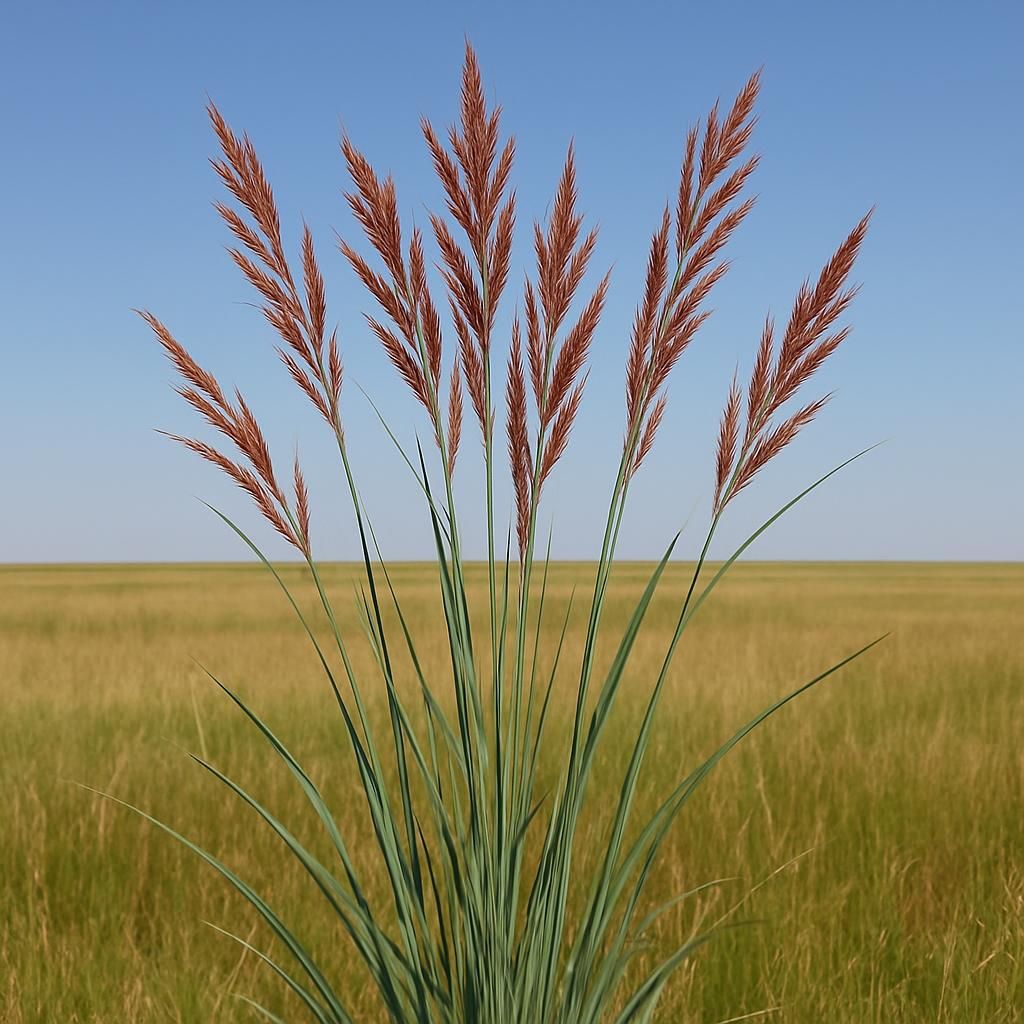
Introduction to big bluestem
Big bluestem (Andropogon gerardii) is a cornerstone warm-season perennial grass native to the tallgrass prairies of North America. Reaching heights of 4–8 feet, it provides exceptional forage quality, soil stabilization, and biodiversity support. Farmers, ranchers, and conservationists value it for low-maintenance pasture renovation, biomass feedstock, and pollinator habitat. Its extensive root system improves soil structure and sequesters carbon, making it a resilient choice for regenerative agriculture.
Botanical Profile of big bluestem
Andropogon gerardii belongs to the Poaceae family. It produces coarse, bluish-green leaves that turn copper-red in autumn and distinctive three-part seed heads resembling a turkey’s foot. The plant spreads slowly via short rhizomes and forms dense clumps. Flowering occurs from July to September, with wind-pollinated florets producing viable seed that germinates readily under warm, moist conditions. Its C4 photosynthetic pathway enables efficient growth during hot, dry summers.
Soil, pH, and Climate Requirements for big bluestem
Big bluestem thrives across USDA zones 3–9 in full sun. It tolerates a wide range of soils but performs best on deep, well-drained loams.
| Parameter | Ideal Range |
otes | |------------------------|------------------------------|--------------------------------| | Soil Type | Loam to sandy loam | Avoid heavy compacted clays | | Soil pH | 5.5 – 7.5 | Tolerates slightly acidic | | Temperature Range | 75–95 °F daytime | Minimum soil temp 60 °F | | Annual Rainfall | 20–40 inches | Drought tolerant once mature | | Drainage | Well-drained | Standing water reduces vigor |
Step-by-Step Planting & Propagation
- Test soil and correct pH or fertility six months prior.
- Remove existing vegetation with tillage or non-selective herbicide.
- Plant pure live seed (PLS) at 8–12 lb/acre in late spring when soil reaches 60 °F.
- Drill seed ¼–½ inch deep or broadcast and roll for good seed-to-soil contact.
- For plugs or divisions, space plants 12–18 inches apart in prepared beds.
- Keep seedbed moist for the first 3–4 weeks until germination (7–21 days).
- Avoid grazing or mowing during the establishment year.
Care & Maintenance regimes for big bluestem
Once established, big bluestem requires minimal intervention. A seasonal schedule optimizes productivity and stand longevity.
| Season | Watering | Fertilizer | Pruning / Mowing Schedule |
|---|---|---|---|
| Spring | Supplemental only if drought | 40–60 lb N/acre after green-up | Remove old growth to 4–6 inches |
| Summer | None after establishment | None unless tissue test indicates need | Hay at boot stage or graze rotationally |
| Fall | None | Optional 20 lb P & K if soil test low | Mow or burn after frost to manage thatch |
| Winter | None | None | Controlled burn every 2–3 years |
Pests, Diseases & Organic Management
Big bluestem faces few serious threats. Occasional grasshoppers and armyworms may defoliate young stands; monitor and use Bacillus thuringiensis or beneficial nematodes. Aphids can transmit viruses—encourage natural predators with flowering borders. Fungal leaf spots rarely warrant treatment in well-managed stands. Maintain plant diversity and avoid over-fertilization to prevent disease pressure.
Harvesting, Curing & Optimal Storage
Forage: Cut at boot stage for highest protein (12–14 %). Field-cure to 15–18 % moisture before baling. Store bales under cover to preserve quality.
Seed: Harvest when seed heads turn tan and seeds are hard. Combine or flail harvest at 12–15 % moisture. Clean to 95 % purity and store in cool, dry conditions (40 °F, 40 % RH) for up to three years.
Biomass: Late-fall or winter harvest after senescence yields maximum dry matter. Chip or bale and store under tarps.
Companion Planting for big bluestem
Pair with Sorghum or Millet in mixed warm-season pastures to extend grazing season. Interseed with legumes such as Clover to fix nitrogen and improve forage quality. Include Yarrow and Thyme at field edges to attract beneficial insects and suppress weeds naturally.