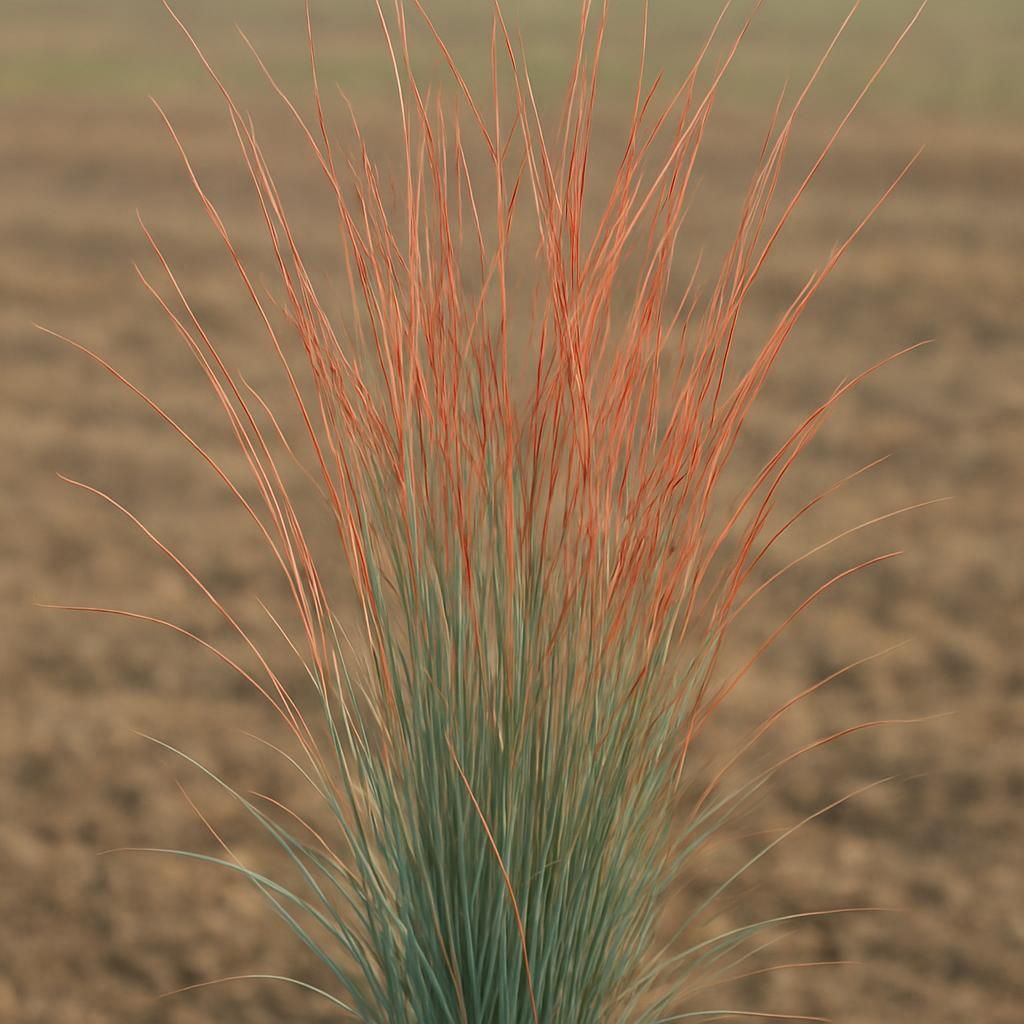
Introduction to little bluestem
Little bluestem (Schizachyrium scoparium) is a foundational native bunchgrass of the North American tallgrass and mixed-grass prairies. Valued by agricultural professionals for its extreme drought tolerance, deep fibrous root system, and low fertility requirements, it serves equally well in pasture mixes, conservation plantings, pollinator strips, and low-maintenance landscaping. Its blue-green summer foliage transitions to striking copper-red and purple tones in autumn, offering both functional and aesthetic benefits. Because it establishes slowly from seed but persists for decades once mature, little bluestem is an excellent long-term investment for soil health and biodiversity on working lands.
Botanical Profile of little bluestem
Little bluestem belongs to the Poaceae family and is a C4 warm-season grass. It forms dense, upright clumps 2–4 feet tall with fine-textured leaves that emerge blue-green and mature to shades of bronze and burgundy. The plant produces terminal racemes with paired spikelets; the lower glumes are often hairy, giving the seed heads a fluffy appearance. Roots extend 4–6 feet deep, enabling exceptional drought resistance and carbon sequestration. It is a long-lived perennial that spreads primarily by tillering rather than rhizomes, maintaining distinct bunch architecture. Flowering occurs from late summer into early fall, with seed maturing by October in most temperate regions.
Soil, pH, and Climate Requirements for little bluestem (MUST INCLUDE A MARKDOWN TABLE OF IDEAL CONDITIONS)
Little bluestem performs across an exceptionally broad edaphic range yet reaches maximum productivity on well-drained sites. It tolerates low fertility and drought but declines under prolonged waterlogging or high salinity.
| Parameter | Ideal Range | Notes |
|---|---|---|
| Soil Texture | Sandy loam to loam | Tolerates clay if well-drained |
| Soil pH | 5.5–7.5 | Prefers slightly acidic to neutral |
| Drainage | Excellent | Avoid compacted or frequently flooded soils |
| Organic Matter | 1–4% | Benefits from moderate native OM |
| Temperature Range | 60–95 °F daytime | Warm-season C4 metabolism |
| USDA Hardiness Zones | 3–9 | Fully winter hardy |
| Annual Precipitation | 15–40 inches | Thrives with supplemental irrigation in arid zones |
Step-by-Step Planting & Propagation
Site preparation begins with a soil test and correction of severe compaction through aeration or deep-ripping. Broadcast or drill seed at 6–8 lb pure live seed per acre in spring after soil temperatures reach 55 °F, or dormant-seed in late fall. Incorporate seed no deeper than ¼ inch; light harrowing or cultipacking ensures good seed-to-soil contact. For container or plug planting, space plants 12–18 inches apart in a staggered grid. Maintain weed-free conditions for the first two growing seasons; mowing at 6–8 inches suppresses annual weeds without damaging young crowns. Germination typically occurs in 14–21 days under adequate moisture.
Care & Maintenance regimes for little bluestem (MUST INCLUDE A MARKDOWN TABLE OF WATER, FERTILIZER, AND PRUNING SCHEDULES)
Once established, little bluestem requires minimal intervention. Strategic mowing and occasional fertility adjustments keep stands vigorous and productive.
| Season | Watering | Fertilizer | Pruning / Mowing Schedule |
|---|---|---|---|
| Spring | Supplemental only if <0.5 in/week | 0–30 lb N/acre if soil test indicates deficiency | Mow or burn to 4–6 in before new growth |
| Summer | None after establishment | None recommended | Spot-mow to control weeds at 8–10 in height |
| Fall | Cease irrigation by mid-September | None | Mow or prescribed burn to 4–6 in after frost |
| Winter | None | None | Leave standing for wildlife cover |
Pests, Diseases & Organic Management
Little bluestem is notably resistant to most insects and pathogens. Occasional damage from grasshoppers or armyworms may occur in outbreak years; early scouting and border trap crops of sunflower help reduce pressure. Fungal leaf spots are rare and usually cosmetic. Maintain stand density and avoid over-fertilization to prevent lodging that favors disease. Prescribed fire every 3–5 years reduces thatch buildup and naturally suppresses many pests.
Harvesting, Curing & Optimal Storage
For forage, cut at the boot stage or early heading for highest nutritional value; field-cure to 15% moisture before baling. Seed harvest occurs when florets turn tan and readily detach; combine or flail-vac at 25–30% seed moisture then dry to 12% for storage. Store seed in cool, dry conditions (40–50 °F, <50% RH) in sealed containers for up to five years with minimal viability loss.
Companion Planting for little bluestem
Little bluestem pairs well with other native warm-season grasses and forbs to create resilient polycultures. Recommended companions include big bluestem (new link), Indiangrass (new link), switchgrass (new link), and legumes such as partridge pea (new link) or purple prairie clover (new link). These mixtures enhance nitrogen fixation, pollinator support, and seasonal forage distribution while reducing pest and disease incidence through increased biodiversity.