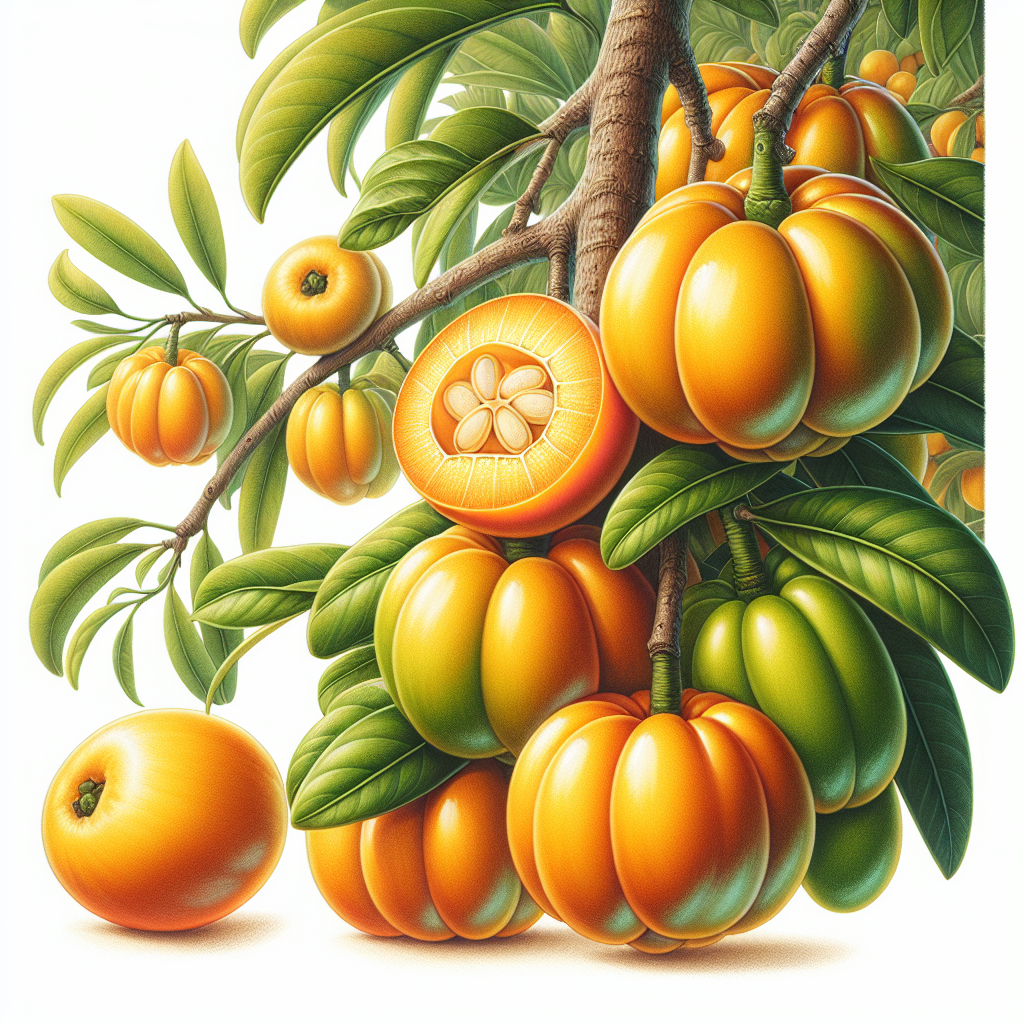
Introduction to Imbe (Garcinia livingstonei)
Imbe (Garcinia livingstonei), also known as African apple or Livingstone's garcinia, is an underutilized tropical fruit tree gaining attention for its delicious, vitamin-rich fruits. Native to the woodlands of southern Africa, from Mozambique to South Africa, this evergreen species produces clusters of small, orange-yellow fruits that are exceptionally juicy and flavorful. The fruit's unique taste—combining pineapple, mango, and citrus notes—makes it ideal for fresh eating, desserts, juices, and culinary applications.
Commercially, Imbe holds promise in niche markets, particularly in tropical regions where demand for exotic, antioxidant-packed fruits is rising. Trees can yield 50-100 kg of fruit per mature specimen annually, with peak production from years 5-15. Growers appreciate its low maintenance once established, though success requires attention to its specific tropical needs. This comprehensive guide equips farmers, horticulturists, and home growers with professional-grade advice on propagating, cultivating, and harvesting Imbe for maximum productivity and profitability. Whether integrating into orchards alongside mango or guava, Imbe diversifies tropical farming portfolios effectively.
Botanical Profile of Imbe (Garcinia livingstonei)
Garcinia livingstonei belongs to the Clusiaceae family, closely related to mangosteen (Garcinia mangostana). It is a medium-sized evergreen tree reaching 5-15 meters in height, with a dense, rounded canopy up to 10 meters wide. The smooth, grayish-brown bark exudes a yellowish latex when cut, a characteristic trait of the genus.
Leaves are opposite, glossy, dark green, lanceolate, measuring 5-12 cm long and 2-5 cm wide, with prominent midribs. New growth flushes are pinkish-red, adding ornamental appeal. Flowers are small (1-1.5 cm), unisexual or bisexual, borne in clusters on short peduncles. Male flowers have 15-20 stamens; female flowers feature a superior ovary with 4-5 locules. Pollination occurs via insects, primarily bees and flies.
Fruits are depressed-globose drupes, 2-4 cm in diameter, with thick, orange rind turning deep yellow at maturity. Inside, 1-5 large seeds are embedded in translucent, juicy, acidic pulp rich in vitamin C (up to 50 mg/100g), sugars (10-15% Brix), and antioxidants like xanthones. Seeds are recalcitrant, losing viability quickly if dried. The tree's deep taproot system supports drought tolerance once established, but young plants demand consistent moisture. Flowering typically occurs in spring (September-November in southern hemisphere), with fruits ripening 4-6 months later.
Soil, pH, and Climate Requirements for Imbe (Garcinia livingstonei)
Imbe thrives in deep, well-drained, fertile loamy soils with high organic matter content (at least 3-5%). Avoid heavy clays or waterlogged sites, as root rot risks increase. Ideal soil texture is sandy loam to clay loam, with good aeration and water-holding capacity. Incorporate compost or well-rotted manure at planting to enhance microbial activity and nutrient retention. For more on building fertile ground, see Soil Health Mastery: 5 Proven Strategies for Small Farms to Build Fertile Ground Without Breaking the Bank.
Optimal pH ranges from 5.5-7.0, slightly acidic to neutral. Test soil annually and amend with dolomite lime if below 5.5 or sulfur if above 7.5. Imbe tolerates moderate salinity but dislikes aluminum toxicity in acidic soils.
Climatically, Imbe requires tropical to subtropical conditions: USDA zones 10-12, with average temperatures of 20-30°C (68-86°F). It withstands brief dips to 5°C but suffers damage below 0°C. Annual rainfall of 1000-2000 mm is ideal, evenly distributed; supplemental irrigation is crucial in dry seasons. High humidity (60-80%) promotes fruit set, but excellent airflow prevents fungal issues. Full sun (6-8 hours daily) is essential for fruit quality; partial shade reduces yields. Wind protection is vital for young trees, using windbreaks like banana hedges.
Step-by-Step Planting & Propagation
Propagation is primarily via seeds or cuttings, as Imbe roots slowly from seed (germination 4-8 weeks at 25-30°C). Collect ripe fruits, extract seeds, and sow immediately in 50% sand:50% compost mix. Maintain 80-90% humidity under shade cloth. Seedlings reach transplant size (30-50 cm) in 6-12 months.
For clonal propagation (to preserve superior traits), use semi-hardwood cuttings (10-15 cm) treated with 5000 ppm IBA, rooted under mist in perlite:vermiculite. Grafting onto seedling rootstocks (cleft or veneer) succeeds at 70-80% rates. Air-layering mature branches yields plants in 2-3 months.
Planting Steps:
- Site preparation: Dig 60x60x60 cm pits, fill with topsoil + 10 kg compost + 200g superphosphate + 100g dolomite.
- Timing: Plant at rainy season onset (spring in tropics).
- Spacing: 8-10 m apart (100-150 trees/ha for orchards).
- Transplant: Water thoroughly, mulch with 10 cm organic matter, stake if needed.
- Initial care: Irrigate weekly for first year, fertilize monthly with NPK 10-20-20.
Care & Maintenance regimes for Imbe (Garcinia livingstonei)
Young trees need 50-100 L water weekly, reducing to biweekly for matures. Drip irrigation optimizes usage. Fertilize thrice yearly: young trees 200g NPK 12-6-18 + micronutrients (Zn, Mn, B); matures 1-2 kg/tree split applications. Foliar sprays boost fruit set.
Prune lightly post-harvest to open canopy, remove deadwood. Thin fruits to 10-20/tree for size. Intercrop with legumes or pineapple initially. Control weeds within 2 m radius; mulch suppresses growth. Monitor for nutrient deficiencies: yellow leaves indicate iron/zinc lack.
Pests, Diseases & Organic Management
Common pests include scale insects, mealybugs, and fruit flies. Use neem oil (2-5 ml/L) sprays weekly or introduce ladybugs. For borers, wrap trunks with burlap.
Diseases: Phytophthora root rot from poor drainage—improve with raised beds, apply Trichoderma. Anthracnose causes fruit rot; copper fungicides + airflow. Powdery mildew managed with potassium bicarbonate. Practice sanitation, resistant rootstocks. Learn more organic fixes in Why 90% of Small Farms Fail at Pest Management - And 8 Organic Fixes That Actually Work. Cultural IPM yields healthy crops sustainably.
Harvesting, Curing & Optimal Storage
Harvest when fruits turn deep orange-yellow, 4-6 months post-flowering. Hand-pick clusters to avoid rind damage; yield peaks November-February. Mature trees produce 50-100 kg.
No curing needed; sort, clean gently. Store at 10-13°C, 85-90% RH for 3-4 weeks; room temp 1-2 weeks. Process into juice/pulp immediately for longer storage (freeze at -18°C up to 12 months). Market fresh or value-added.
Companion Planting for Imbe (Garcinia livingstonei)
Pair Imbe with nitrogen-fixers like pigeon pea or gliricidia for soil enrichment. Underplant with shade-tolerant ginger, turmeric, or pineapples for weed suppression and income. Avoid water-hungry crops. Repel pests with marigolds, thyme, or nasturtium. Discover more strategies in Why Companion Planting Feels Like Guesswork for Small Farms - And How AI Makes It Foolproof. This boosts biodiversity, yields, and resilience.