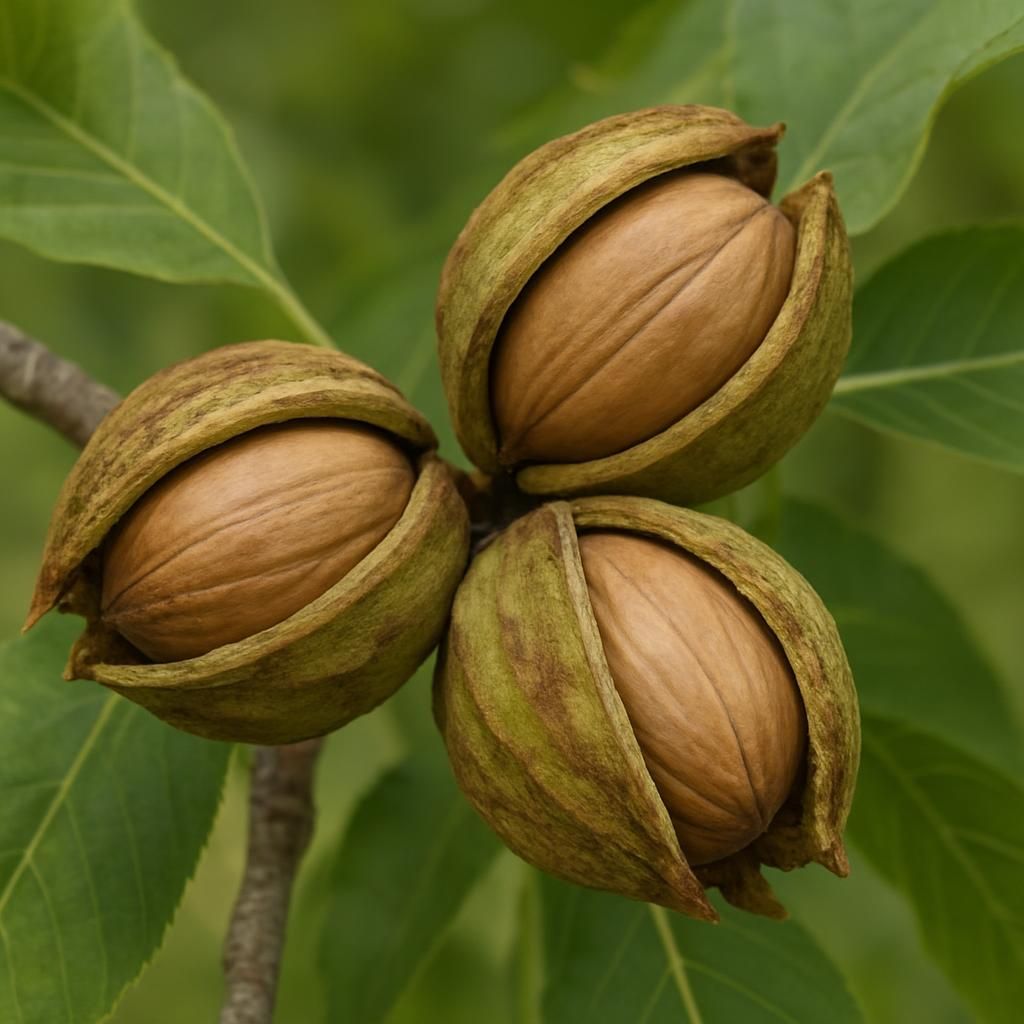
Introduction to Hickory (Shagbark)
Shagbark hickory (Carya ovata) is a majestic, deciduous tree native to eastern North America that produces some of the finest-flavored nuts among temperate species. Valued for both its edible nuts and high-quality wood, the tree is a long-term investment that can remain productive for over 200 years. Its shaggy, exfoliating bark and straight trunk make it an attractive addition to edible landscapes, agroforestry systems, and nut orchards. While slow to begin bearing, once established, mature trees can yield 50–100 pounds of nuts in good years.
Botanical Profile of Hickory (Shagbark)
Carya ovata belongs to the Juglandaceae family and is distinguished by its compound leaves with five leaflets and its characteristic bark that peels in long, curling strips. The tree reaches 60–90 feet at maturity with a 30–40 foot spread. Male flowers appear in catkins while female flowers develop into husked nuts that mature in autumn. The thin-shelled, sweet kernels are highly sought after for fresh eating, baking, and confectionery. Walnut and Pecan share the same family and similar cultural requirements.
Soil, pH, and Climate Requirements for Hickory (Shagbark)
Shagbark hickory thrives in deep, well-drained loamy soils with good moisture retention but will tolerate a range of textures if drainage is adequate. It prefers slightly acidic to neutral conditions and full sun exposure for optimal nut production.
| Parameter | Ideal Range | Notes |
|---|---|---|
| Soil Type | Deep loam to sandy loam | Avoid heavy clay without amendment |
| Soil pH | 6.0–7.0 | Slightly acidic to neutral preferred |
| Drainage | Excellent | Standing water causes root decline |
| USDA Hardiness Zones | 4–8 | Cold hardy to -30°F |
| Temperature Range | 60–85°F growing season | Requires 140–160 frost-free days |
| Annual Rainfall | 30–50 inches | Supplemental irrigation in drought years |
| Sun Exposure | Full sun (6+ hours) | Partial shade reduces nut yield |
Step-by-Step Planting & Propagation
- Site Selection: Choose a location with deep, fertile soil and full sun. Allow 40–50 feet between trees for mature canopy spread.
- Soil Preparation: Test soil and amend with compost or aged manure to improve organic matter. Ensure pH is within the target range.
- Propagation Methods: Plant stratified nuts 1–2 inches deep in fall or use grafted seedlings for faster production. Grafted trees begin bearing in 8–12 years versus 15–20 years for seedlings.
- Planting Time: Install bare-root or container-grown trees in early spring before bud break or in late fall after leaf drop.
- Watering: Provide 1 inch of water weekly during the first two growing seasons to establish roots.
Care & Maintenance regimes for Hickory (Shagbark)
Consistent care during the establishment phase ensures strong structure and high future yields. Focus on weed suppression, balanced nutrition, and formative pruning.
| Season | Watering Schedule | Fertilizer Application | Pruning Schedule |
|---|---|---|---|
| Spring | 1 inch/week if rainfall <1" | Apply 1 lb N per inch trunk diameter | Remove dead/diseased wood |
| Summer | Deep soak every 10–14 days | Avoid high-N fertilizers | Light tipping of vigorous shoots |
| Fall | Reduce to encourage dormancy | Compost top-dress (2–3 inches) | None; allow natural leaf drop |
| Winter | None unless extreme drought | Soil test and plan amendments | Dormant structural pruning |
Pests, Diseases & Organic Management
Shagbark hickory faces relatively few serious pests but can be affected by hickory shuckworm, pecan nut casebearer, and weevils. Regular monitoring and sanitation are key.
- Hickory shuckworm: Larvae bore into husks; remove and destroy fallen nuts.
- Nut weevils: Adults lay eggs in developing nuts; use pheromone traps and timely harvest.
- Aphids: Occasional on new growth; encourage predatory insects or apply insecticidal soap.
- Phytophthora root rot: Prevent by ensuring excellent drainage and avoiding overwatering.
Harvesting, Curing & Optimal Storage
Nuts mature in September–October when husks begin to split. Collect promptly to prevent mold and animal predation. Spread nuts in a single layer in a well-ventilated area for 2–3 weeks to cure. Store cured nuts in mesh bags or airtight containers at 32–40°F for up to two years. For longer storage, freeze in vacuum-sealed bags.
Companion Planting for Hickory (Shagbark)
Shagbark hickory integrates well into diverse agroforestry systems. Compatible understory species include clover for nitrogen fixation and thyme as a beneficial insect attractor. Avoid planting shallow-rooted crops directly beneath the drip line to minimize competition. Summer Companion Planting: 10 Organic Pairings to Boost Small Farm Resilience offers additional guidance on compatible species for nut orchards.