Introduction to Habanero Red Savina
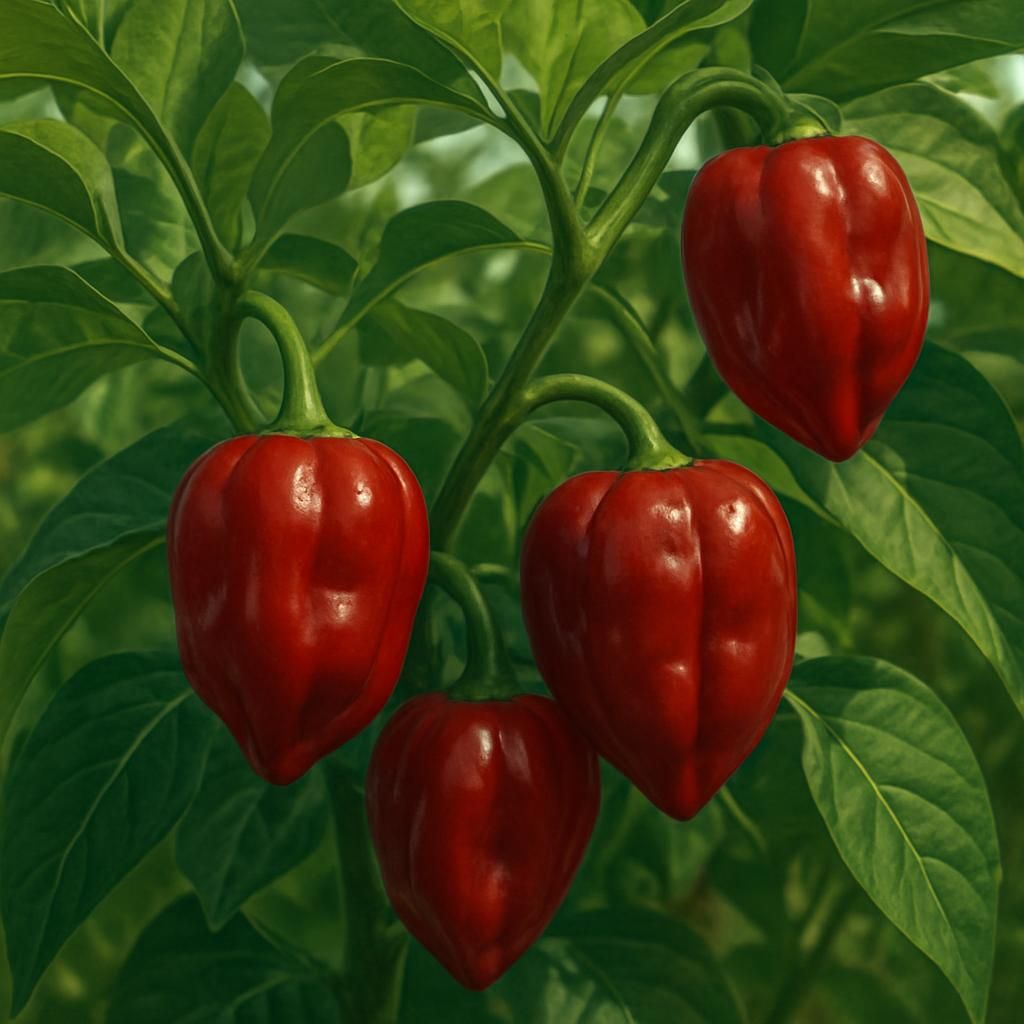
Habanero Red Savina stands out among Chili Pepper cultivars for its record-breaking Scoville rating of up to 577,000 units and distinctive cherry-wood smoke notes. Originally developed in the Caribbean and refined through selective breeding, this variety delivers both intense pungency and a rich tropical aroma that commands premium prices in fresh and processed markets. Professional growers value its vigorous growth habit, high yields, and reliable performance across subtropical and temperate greenhouse systems.
Botanical Profile of Habanero Red Savina
Capsicum chinense 'Red Savina' belongs to the Solanaceae family and produces small, lantern-shaped pods that ripen from green to a deep, glossy red. Plants reach 90–120 cm in height with a bushy, well-branched structure and dark green, ovate leaves. Flowers are small, white, and self-pollinating, typically setting fruit within 70–85 days after transplant. The cultivar exhibits moderate drought tolerance once established but remains highly sensitive to frost.
Soil, pH, and Climate Requirements for Habanero Red Savina
Successful commercial production begins with precise environmental matching. Red Savina performs best in deep, well-drained sandy loam or loam soils with high organic matter. Avoid compacted or saline soils that restrict root development and increase disease pressure.
| Parameter | Ideal Range | Notes |
|---|---|---|
| Soil Type | Sandy loam to loam | High drainage prevents root rot |
| Soil pH | 6.0–6.8 | Slightly acidic optimizes nutrient uptake |
| Temperature (Day) | 24–32 °C | Critical for fruit set and pungency |
| Temperature (Night) | 18–22 °C | Below 15 °C slows growth |
| Frost Tolerance | None | Protect below 10 °C |
| Sunlight | Full sun, 8+ hours | Essential for capsaicin production |
| Relative Humidity | 50–70 % | Higher humidity increases disease risk |
Step-by-Step Planting & Propagation
Start seeds indoors 8–10 weeks before the last frost date. Sow 6 mm deep in sterile seed-starting mix at 26–28 °C bottom heat. Germination occurs in 7–14 days. Transplant seedlings at the 4–6 true-leaf stage into 10 cm pots, then harden off for 7–10 days. Field spacing is 45–60 cm between plants and 75–90 cm between rows; greenhouse systems use 40 cm spacing in 20 L grow bags. Install drip irrigation and black plastic mulch at transplant to suppress weeds and conserve moisture.
Care & Maintenance regimes for Habanero Red Savina
Consistent fertility and water management maximize both yield and capsaicin content. Apply balanced organic fertilizers and maintain even soil moisture without waterlogging.
| Growth Stage | Water Schedule | Fertilizer Schedule | Pruning Schedule |
|---|---|---|---|
| Seedling (0–4 wks) | Keep evenly moist, 2–3×/week | ¼-strength fish emulsion weekly | Pinch at 4th node to encourage bush |
| Vegetative (4–8 wks) | 2.5 cm/week drip irrigation | NPK 5-3-3 every 14 days | Remove lower leaves for airflow |
| Flowering/Fruit | 3–4 cm/week, reduce before harvest | NPK 3-5-7 every 10 days, add calcium | Light tipping of vigorous shoots |
| Ripening | Reduce to 2 cm/week | Stop nitrogen; potassium sulfate top-dress | None; focus on sanitation |
Pests, Diseases & Organic Management
Major threats include Aphids, Spider Mites, Thrips, Whiteflies, and Fusarium wilt. Implement weekly scouting and release beneficial insects such as lady beetles and lacewings. Apply neem oil or insecticidal soap at first sign of infestation. Rotate crops every 3–4 years and solarize beds to reduce soil-borne pathogens. Mulch and drip irrigation minimize splash-borne disease.
Harvesting, Curing & Optimal Storage
Harvest when pods reach full red color and firm texture, typically 85–100 days after transplant. Use clean shears to cut stems, leaving 1 cm of peduncle. For fresh market, cool immediately to 7–10 °C. For drying, place in single layers at 35–40 °C with good airflow for 5–7 days until brittle. Store dried pods in airtight containers away from light; shelf life exceeds 18 months. Fresh pods maintain quality for 2–3 weeks under refrigeration.
Companion Planting for Habanero Red Savina
Pair Red Savina with Tomato, Basil, and Marigold to improve pollination and deter pests. Avoid planting near Fennel or members of the Brassica family that compete for nutrients. Interplant with Nasturtium as a trap crop for aphids. The Overlooked Art of Crop Rotation for Small Farm Resilience provides additional rotation strategies that complement these pairings and sustain long-term soil health.