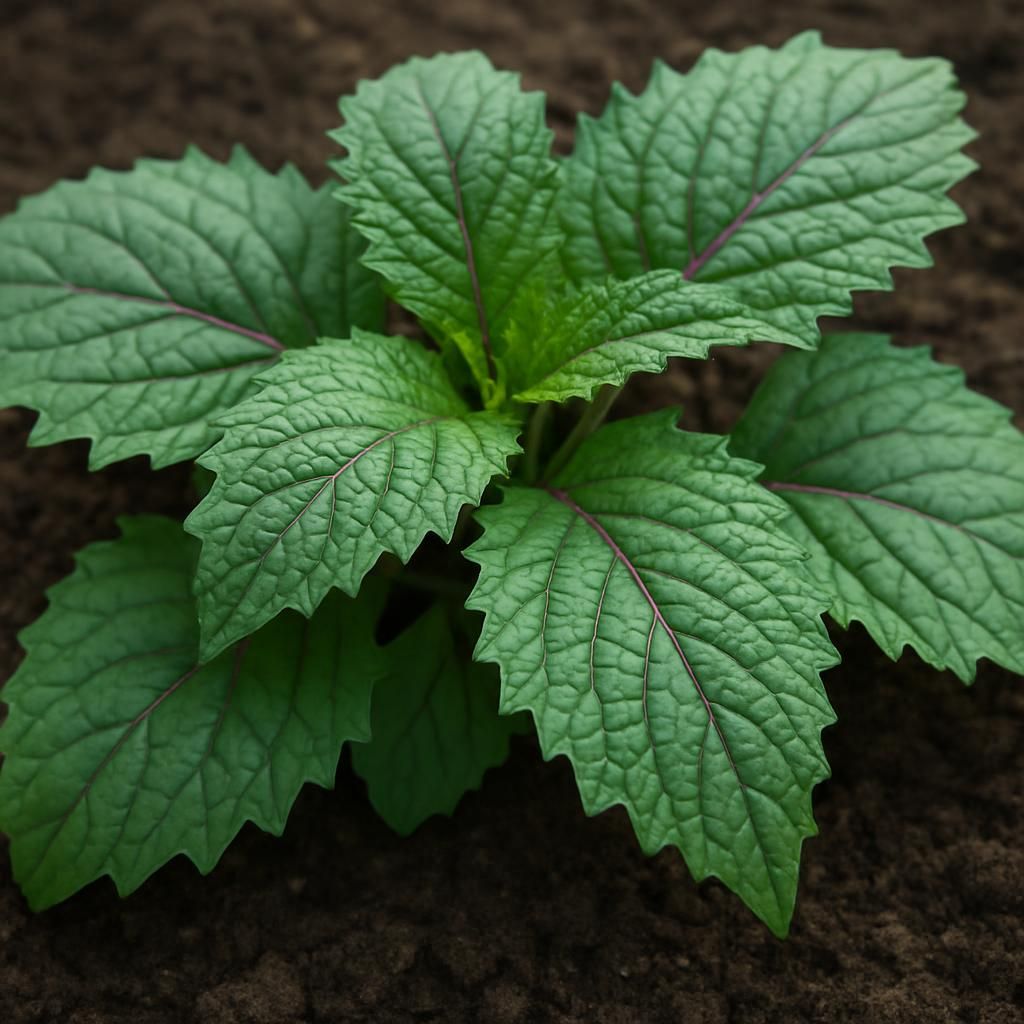
Introduction to Habanero Mustard
Habanero Mustard represents an innovative cross between traditional Brassica juncea varieties and the intense capsaicin profile of habanero peppers. Developed for home gardeners and commercial growers seeking novel flavor profiles, this crop delivers robust peppery greens with a distinctive lingering heat that elevates culinary applications from simple salads to complex fermented products.
The plant exhibits rapid growth, reaching harvestable size in 35-45 days under optimal conditions. Its distinctive serrated leaves display deep green coloration with subtle purple veining when stressed, signaling elevated capsaicinoid compounds. Commercial interest has grown due to its dual-purpose potential: both fresh market sales and value-added processing into specialty mustards and hot sauces.
Botanical Profile of Habanero Mustard
Habanero Mustard belongs to the Brassicaceae family, sharing ancestry with Chili Pepper and traditional mustard greens. The cultivar maintains the characteristic rosette growth habit of Brassica juncea while incorporating elevated capsaicin biosynthesis pathways typically found in Capsicum chinense.
Mature plants develop broad, deeply lobed leaves measuring 15-25 cm in length with prominent midribs and secondary veining. Flower stalks emerge after 50-60 days, producing small yellow cruciform blossoms that attract diverse pollinators. Seed pods develop as slender siliques containing 20-30 small round seeds per pod, enabling reliable seed saving for subsequent seasons.
Soil, pH, and Climate Requirements for Habanero Mustard
Successful cultivation requires precise environmental management to optimize both biomass production and capsaicinoid concentration. The crop thrives in well-drained loamy soils with consistent moisture availability but demonstrates notable drought tolerance once established.
| Parameter | Ideal Range | Notes |
|---|---|---|
| Soil Type | Loamy, well-drained | Sandy loam amendments improve drainage |
| Soil pH | 6.0 - 7.0 | Avoid acidic soils below 5.8 |
| Temperature Range | 15-28°C (59-82°F) | Heat stress above 32°C reduces leaf quality |
| Day Length | 12-14 hours | Long days accelerate bolting |
| Frost Tolerance | Light frost to -2°C | Seedlings tolerate brief freezes |
| Relative Humidity | 50-70% | High humidity increases disease pressure |
Step-by-Step Planting & Propagation
Begin propagation by sowing seeds directly into prepared beds ¼ inch deep at 2-inch spacing. Thin seedlings to 8-12 inches between plants once true leaves develop, allowing adequate airflow and nutrient access.
For extended harvests, implement succession planting every 14 days throughout the growing season. Transplanting nursery starts accelerates time-to-harvest by 7-10 days in cooler climates. Maintain soil temperature above 10°C (50°F) for optimal germination rates exceeding 85%.
Care & Maintenance regimes for Habanero Mustard
Consistent cultural practices maximize both yield and flavor intensity. Focus on balanced nutrition, proper irrigation timing, and strategic pruning to encourage bushy growth and delay bolting.
| Task | Schedule | Details |
|---|---|---|
| Watering | 1 inch/week; increase in heat | Morning irrigation prevents foliar disease |
| Fertilizer | Every 3 weeks | High-nitrogen organic blend (NPK 8-4-4) |
| Pruning | Weekly from week 4 | Remove lower leaves and flowering stalks |
| Mulching | At planting and mid-season | 2-inch organic mulch layer retains moisture |
| Weeding | Bi-weekly | Hand cultivation avoids root disturbance |
Pests, Diseases & Organic Management
Common challenges include Aphids, flea beetles, and Alternaria leaf spot. Implement integrated pest management combining row covers during early growth stages with beneficial insect releases including lady beetles and lacewings.
Organic controls emphasize neem oil applications at 7-day intervals during peak pest pressure and copper-based fungicides for bacterial and fungal leaf spot prevention. Crop rotation with non-Brassica species every third season significantly reduces soil-borne pathogen buildup.
Harvesting, Curing & Optimal Storage
Harvest outer leaves when 15-20 cm long for continuous production, or cut entire plants at soil level for bunch sales. Peak flavor develops 35-42 days after sowing when capsaicinoid levels stabilize.
Post-harvest, rinse leaves in cool water and spin dry before refrigeration at 0-2°C with 95% humidity. Greens maintain quality for 7-10 days. For long-term storage, blanch and freeze or ferment into spicy mustard preparations.
Companion Planting for Habanero Mustard
Strategic pairings enhance growth while deterring pests. Nasturtium and marigold provide natural aphid suppression through trap cropping. Thyme and rosemary improve soil health via allelopathic compounds.
Avoid planting near tomato or other Solanaceae crops to prevent shared disease vectors. Cucumber and lettuce make excellent understory companions, utilizing vertical space efficiently in intensive systems.