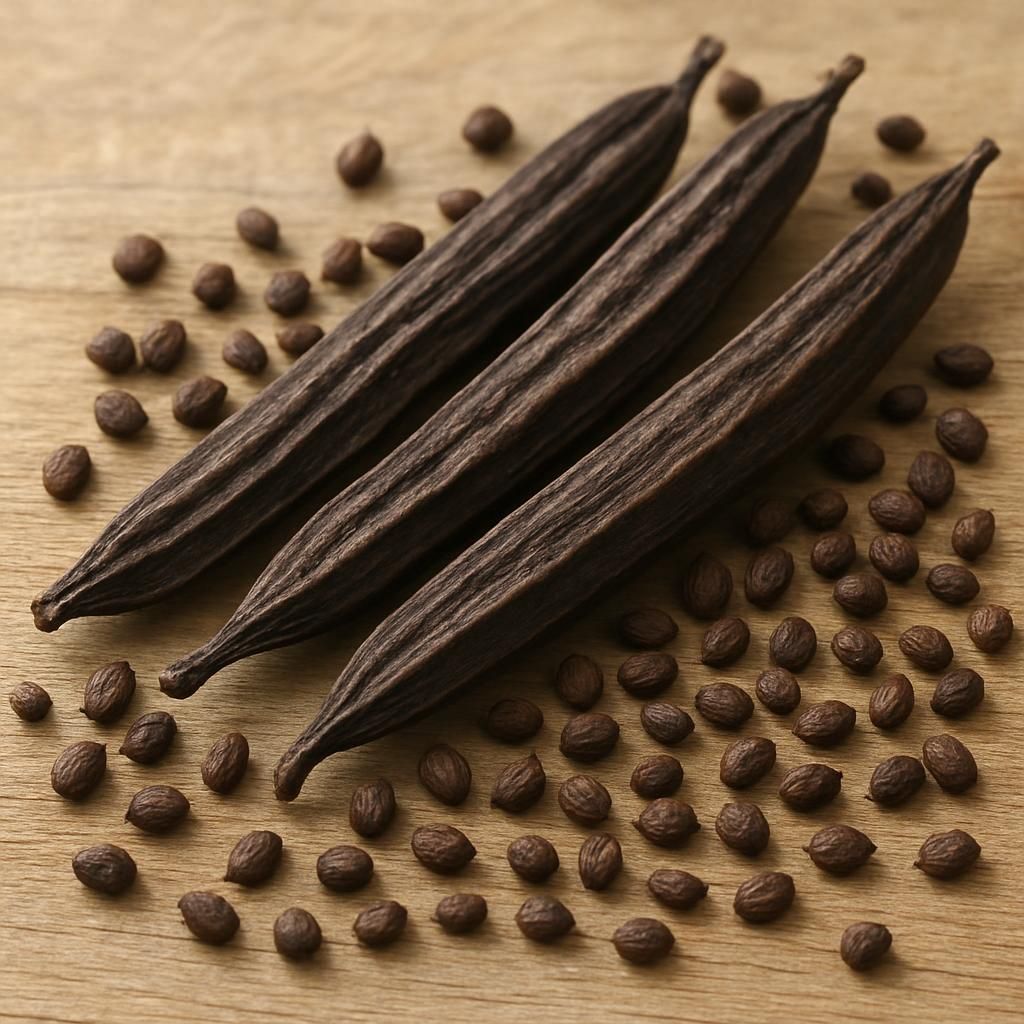
Introduction to Grains of Selim
Grains of Selim (Xylopia aethiopica) is a tropical evergreen tree native to the lowland forests of West and Central Africa. The small, dark brown seeds encased in dried pods deliver a distinctive spicy, peppery flavor with notes of nutmeg and clove, making them a staple in traditional African cuisine and herbal medicine. Commercial interest in this spice crop has grown due to demand for authentic African flavors and natural preservatives.
Cultivation of Grains of Selim offers smallholder farmers an opportunity to diversify income streams beyond staple grains such as Rice or Wheat. The tree tolerates marginal soils and provides both spice and timber products, supporting resilient farming systems across the humid tropics.
Botanical Profile of Grains of Selim
Xylopia aethiopica belongs to the Annonaceae family and grows as a slender evergreen reaching 15–25 meters in height. Its leaves are simple, alternate, and lanceolate with a glossy dark green surface. Small, fragrant yellow-green flowers appear in axillary clusters and develop into elongated, finger-like pods containing numerous aromatic seeds.
The plant produces a deep taproot system that aids drought tolerance once established. Seeds are oblong, 4–6 mm long, and release essential oils rich in α-pinene, β-pinene, and limonene when crushed. Flowering typically occurs twice annually in equatorial regions, with pod maturation taking 4–6 months.
Soil, pH, and Climate Requirements for Grains of Selim
Grains of Selim thrives in well-drained, fertile soils typical of secondary forest margins. It prefers slightly acidic to neutral conditions and moderate organic matter content.
| Parameter | Ideal Range | Notes |
|---|---|---|
| Soil Type | Loamy to sandy loam | Good drainage essential; avoid waterlogging |
| Soil pH | 5.5 – 7.0 | Optimal nutrient uptake in this range |
| Temperature | 22 – 32 °C | Sensitive to frost below 10 °C |
| Annual Rainfall | 1200 – 2500 mm | Evenly distributed; supplement in dry seasons |
| Altitude | 0 – 800 m | Performs best in lowland humid tropics |
| Sunlight | Full sun to partial shade | Young trees benefit from 30 % shade |
Step-by-Step Planting & Propagation
Propagation is primarily achieved through fresh seeds, though air-layering and root cuttings are possible. Collect ripe pods when they turn dark brown and split naturally. Extract seeds, wash off mucilage, and sow immediately for highest germination rates.
- Seed Preparation: Soak cleaned seeds in warm water for 24 hours to soften the hard seed coat.
- Nursery Sowing: Plant seeds 1 cm deep in a sterile, well-draining medium of river sand and compost (3:1 ratio). Maintain 25–28 °C and 70 % humidity.
- Germination Timeline: Expect 21–35 days for emergence; thin seedlings to one per cell when they reach 10 cm.
- Hardening Off: Reduce shade gradually over 4 weeks before transplanting.
- Field Planting: Space trees 4 m × 4 m in prepared holes 60 cm wide and deep. Incorporate 5 kg well-rotted manure per hole.
Transplant during the onset of the rainy season to minimize transplant shock. Mulch immediately with 10 cm of organic material to conserve moisture.
Care & Maintenance regimes for Grains of Selim
Consistent care during the first three years determines long-term productivity. Focus on weed suppression, balanced nutrition, and formative pruning.
| Growth Stage | Watering Schedule | Fertilizer Application | Pruning Schedule |
|---|---|---|---|
| Year 1 (Establishment) | 15–20 L per tree weekly in dry periods | 200 g NPK 15-15-15 at 3-month intervals | Remove lower branches at 6 and 12 months |
| Year 2–3 | 10–15 L weekly during dry spells | 300 g NPK + 100 g organic compost biannually | Shape canopy to single leader; tip prune |
| Mature Trees (Yr 4+) | Supplemental irrigation only in drought | 500 g NPK split into two applications yearly | Annual sanitation prune after harvest |
Monitor leaf color and soil moisture; yellowing indicates nitrogen deficiency. Maintain a 1 m weed-free ring around the trunk using manual weeding or shallow cultivation.
Pests, Diseases & Organic Management
Grains of Selim is relatively resilient but can suffer from Aphids, Mealybugs, and occasional fungal leaf spots. Early detection and cultural practices prevent major losses.
- Aphids and Mealybugs: Blast off with water jets; release ladybird beetles for biological control. Neem oil (0.5 %) sprays every 14 days during outbreaks.
- Fungal Leaf Spot: Improve airflow through pruning; apply copper-based fungicides only when infection exceeds 10 % leaf area.
- Root-knot Nematodes: Rotate with Sorghum or Millet and incorporate marigold residues before planting.
- Termites: Maintain soil moisture and apply wood ash around the base; avoid fresh mulch directly against the trunk.
Scout weekly during the rainy season and maintain orchard hygiene by removing fallen pods and debris.
Harvesting, Curing & Optimal Storage
Pods are ready when they turn dark brown and begin to split at the tip. Harvest by hand or with long-handled cutters to avoid damaging branches. Collect during early morning to minimize essential oil volatilization.
Post-harvest handling includes sun-drying pods on raised racks for 5–7 days until moisture content drops below 12 %. Once dry, thresh seeds and winnow to remove chaff. Store seeds in airtight containers with silica gel packets at 15–20 °C and <60 % relative humidity. Properly cured Grains of Selim retain aroma and pungency for up to 18 months.
Companion Planting for Grains of Selim
Interplanting with nitrogen-fixing species improves soil fertility and microclimate. Compatible companions include Pigeon pea, Sesame, and Marigold. These plants deter pests, provide light shade for young trees, and create habitat for beneficial insects.
Avoid planting near heavy feeders such as Corn or Cassava that compete aggressively for nutrients. Maintain 2 m buffers between Grains of Selim rows and taller companions to prevent shading of the spice crop canopy.
For more on strategic farm planning that supports resilient spice systems, read A Season of Strategic Planning for Small Farm Success.