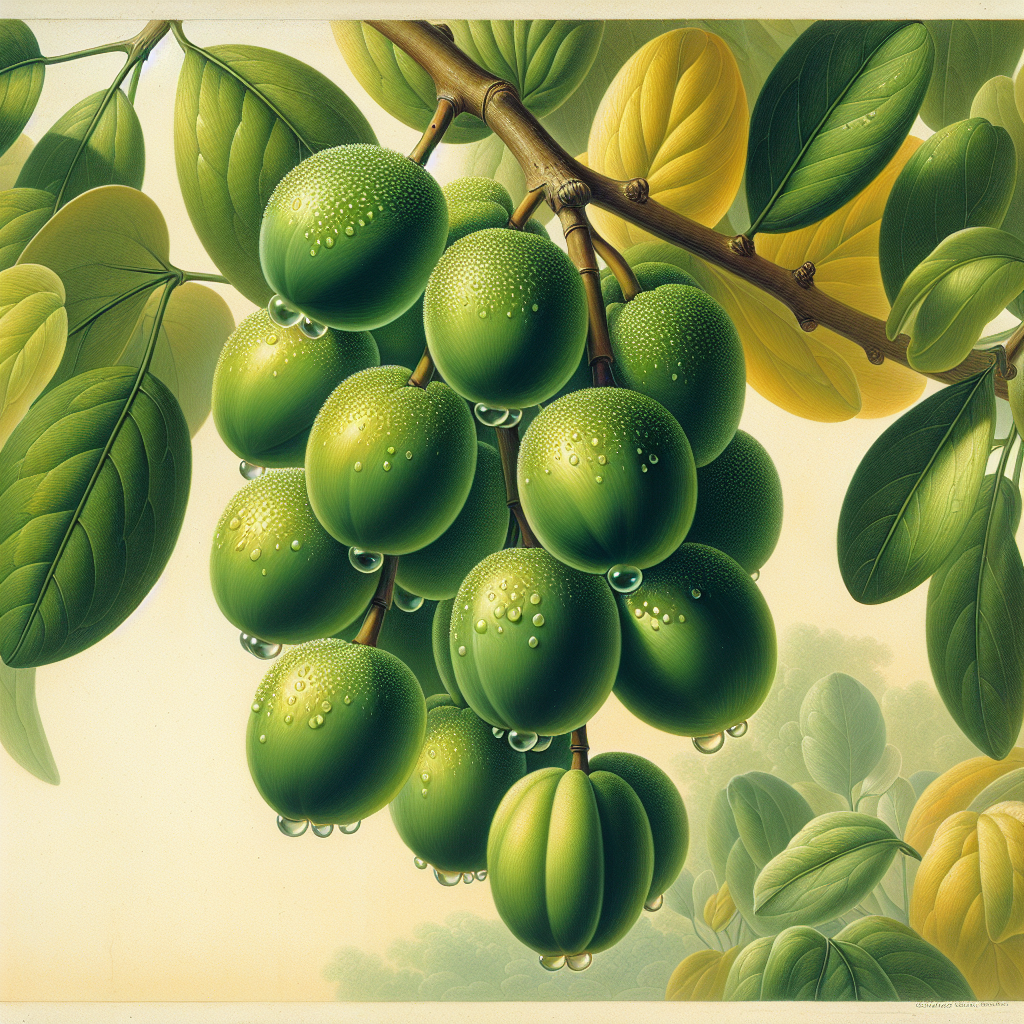
Introduction to Genip (Mamoncillo)
Genip (Melicoccus bijugatus), commonly called Mamoncillo, Spanish lime, or honeyberry, is a delightful tropical fruit tree that has captivated growers across the Americas for centuries. This evergreen species produces abundant clusters of small, round fruits with glossy green skin, translucent white pulp, and a unique citrusy-sweet flavor that explodes with juice upon biting. Native to the Caribbean, northern South America, and Central America, Genip trees are increasingly popular in home gardens, orchards, and small farms due to their low maintenance, drought tolerance once established, and ability to bear fruit year-round in ideal conditions.
The fruit's appeal lies in its refreshing taste—sweet like lime with hints of honey and garlic—and its versatility for fresh eating, juices, sorbets, and even fermented beverages. Trees can reach 20-50 feet tall, making them suitable for hedging or shade provision in agroforestry systems. With proper care, a single mature tree can yield 100-300 pounds of fruit annually, providing economic value in tropical agriculture. This comprehensive guide draws on botanical expertise to equip growers with professional strategies for successful cultivation, from propagation to harvest. Whether you're in Florida, Hawaii, or similar subtropical zones, mastering Genip cultivation can diversify your farm's offerings and enhance biodiversity.
Botanical Profile of Genip (Mamoncillo)
Genip belongs to the soapberry family (Sapindaceae), closely related to lychee and longan, sharing similar compound leaves and inflorescence structures. Melicoccus bijugatus is the sole species in its genus, characterized by pinnate leaves with 4-6 pairs of leaflets, each 2-6 inches long, arranged oppositely. The tree's smooth, grayish bark and dense canopy provide excellent shade, while its wood is durable for tool handles.
Flowers are small, greenish-white, and polygamous (both male and female on the same tree), borne in panicles up to 12 inches long. Pollination is primarily by bees and other insects, with dioecious varieties existing—ensure both male and female trees for fruit set if planting from seedless cultivars. Fruits mature in 3-4 months, clustering 10-40 per bunch, each 1-1.5 inches in diameter. The pulp is aromatic, with a single large seed that can be processed into inks or dyes. Growth habit is upright with a spreading crown; dwarf varieties exist for container growing. Root system is deep and extensive, aiding drought resistance but requiring space—plant at least 20 feet apart.
Soil, pH, and Climate Requirements for Genip (Mamoncillo)
Genip thrives in well-drained, fertile soils with a pH range of 5.5-7.5, tolerating slightly alkaline conditions better than acidic ones. Sandy loams or volcanic soils mimic its native habitats, where it grows wild on limestone outcrops. Avoid heavy clays prone to waterlogging, which can induce root rot. Incorporate 20-30% organic matter like compost during planting to boost microbial activity and nutrient retention.
Climatically, Genip demands frost-free environments with average temperatures of 70-85°F (21-29°C). It withstands brief dips to 28°F (-2°C) but suffers leaf drop below 32°F (0°C). Ideal rainfall is 40-60 inches annually, evenly distributed, though mature trees endure dry spells up to 6 months. Full sun (6-8 hours daily) is essential for fruiting; partial shade reduces yields. In marginal areas like coastal California or southern Texas, provide windbreaks. For more on heat management, see Why Summer Heatwaves Are Silently Killing Small Farm Yields - And 7 Organic Strategies to Fight Back. Humidity above 60% supports growth, but excellent drainage prevents fungal issues.
Step-by-Step Planting & Propagation
Propagation Methods: Seeds germinate readily (70-90% rate) within 2-4 weeks at 77-86°F, but seedlings take 5-7 years to fruit and may not match the parent. For faster, true-to-type trees, use air-layering (marcotting) or grafting onto seedling rootstock—veneer or cleft grafting in spring yields 80% success.
- Seed Propagation: Extract fresh seeds from ripe fruit, clean pulp, and sow 1-inch deep in 4-inch pots with 1:1 sand-compost mix. Keep moist at 80°F; transplant at 12-18 inches tall.
- Air-Layering: Select 1-year-old branches (pencil-thick), girdle 1-inch wide, apply rooting hormone, wrap in moist sphagnum moss and plastic. Roots form in 6-8 weeks; sever and pot.
- Site Preparation: Dig 3x3x3-foot holes, amend with 10 lbs compost, 1 lb bone meal, and 4 oz dolomite lime per hole. Plant in early rainy season.
- Planting: Space 20-25 feet apart; set graft union 4 inches above soil. Water deeply weekly for first year; mulch 4-6 inches deep with wood chips, keeping 12 inches from trunk.
- Initial Training: Prune to single trunk, select 4-6 scaffold branches at 2-3 feet height. Stake if needed.
Expect first fruit in 2-4 years from grafted trees.
Care & Maintenance regimes for Genip (Mamoncillo)
Water young trees 10-20 gallons weekly, reducing to monthly for established ones. Fertilize 3-4 times yearly: spring/summer NPK 10-5-20 at 1 lb/tree/year of age (max 10 lbs), plus micronutrients (zinc, iron). Foliar sprays bi-monthly enhance uptake.
Prune annually post-harvest to open canopy, remove deadwood, and shape for light penetration—thin to 50% density. Thin heavy fruit sets to 3-5 per cluster for larger fruits. Irrigate during flowering/dry spells to boost set (20-40% increase).
Weed control via mulch suppresses competition; cover crops like clover fix nitrogen. Monitor for nutrient deficiencies: yellow leaves indicate iron chlorosis—apply chelated iron. In high-wind areas, guy wires prevent uprooting. Trees live 50+ years with care, peaking at 15-20 years.
Pests, Diseases & Organic Management
Common pests include aphids, scale insects, and fruit-piercing moths; control with neem oil (2% solution weekly) or insecticidal soap. Mealybugs cluster on twigs—prune and release ladybugs. Birds and fruit flies damage clusters; use bird netting and sanitation.
Diseases like anthracnose cause fruit rot in wet conditions—improve air flow and apply copper fungicide. Phytophthora root rot hits waterlogged soils; ensure drainage and use biofungicides like Trichoderma. Powdery mildew responds to potassium bicarbonate sprays. For broader strategies, explore Why 90% of Small Farms Fail at Pest Management - And 8 Organic Fixes That Actually Work. Integrated pest management (IPM) emphasizes monitoring, beneficial insects (e.g., parasitic wasps), and resistant rootstocks.
Harvesting, Curing & Optimal Storage
Harvest when fruits turn dull green and clusters loosen (July-September in tropics). Twist bunches by hand or clip with shears; yield peaks mid-morning. Fruits don't ripen off-tree, so harvest mature.
For market, sort by size/color, hydro-cool to 50°F, and pack in ventilated crates. Refrigerate at 45-50°F (7-10°C) with 85-90% humidity for 3-4 weeks shelf life. Home storage: refrigerate in perforated bags up to 2 weeks. Process excess into juice (blend pulp, strain, freeze) or candy the rind. Avoid ethylene producers like banana in storage.
Companion Planting for Genip (Mamoncillo)
Genip pairs well with nitrogen-fixers like pigeon pea or gliricidia for soil enrichment. Underplant with pineapple, ginger, or turmeric to suppress weeds and utilize shade. Avoid water-hungry crops like corn. Flowers attract pollinators, benefiting nearby mango or avocado orchards. Intercrop with legumes early years for erosion control. See Why Companion Planting Feels Like Guesswork for Small Farms - And How AI Makes It Foolproof for optimization tips.