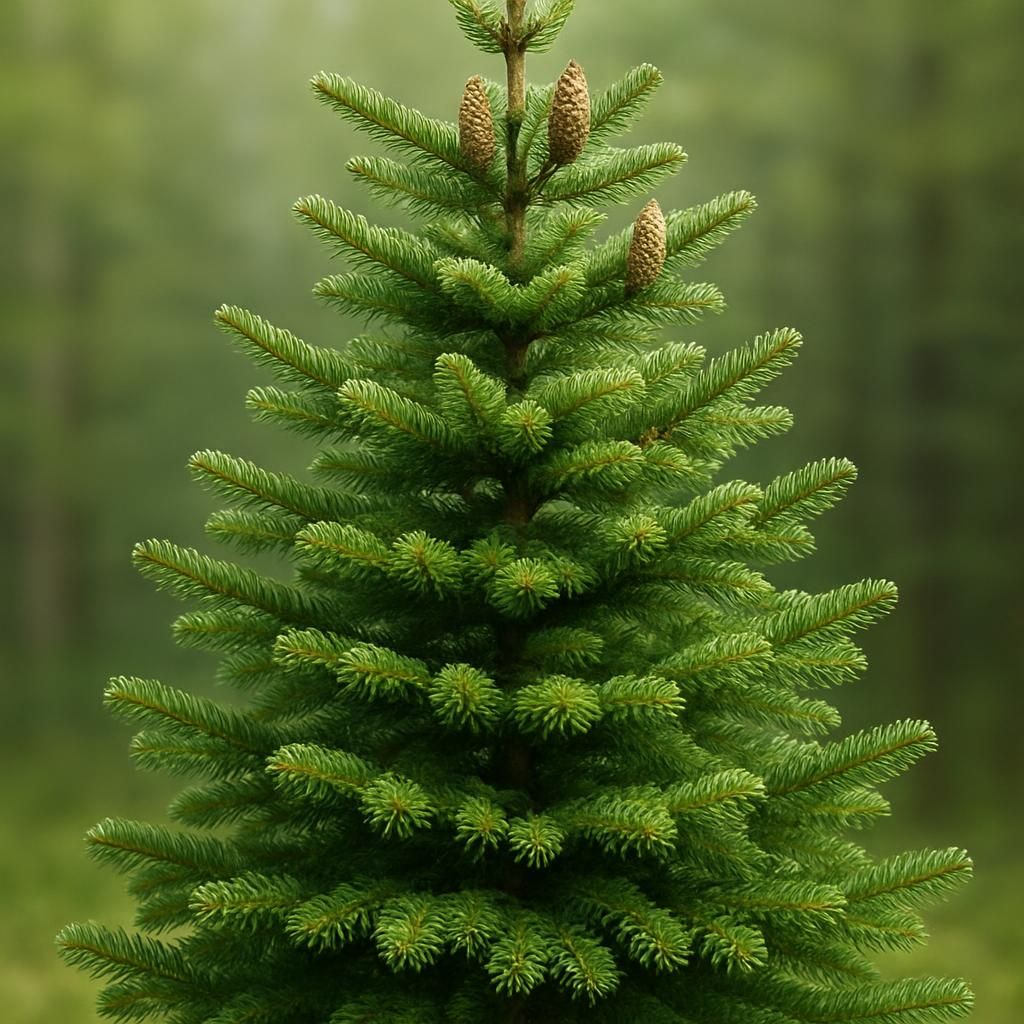
Introduction to Fir
Fir trees (Abies spp.) are stately evergreen conifers prized worldwide for their symmetrical form, aromatic foliage, and versatile wood. From commercial Christmas tree plantations to high-value timber stands and landscape specimens, firs deliver consistent economic returns when grown with professional agronomic practices. This definitive guide delivers actionable, research-backed advice for successful fir cultivation across temperate regions.
Botanical Profile of Fir
Firs belong to the genus Abies within the Pinaceae family. They are characterized by flat, needle-like leaves arranged in two ranks, upright cones that disintegrate at maturity, and smooth bark that becomes furrowed with age. Popular commercial species include Abies fraseri (Fraser fir), Abies balsamea (balsam fir), Abies procera (noble fir), and Abies grandis (grand fir). These species differ in cold hardiness, growth rate, and needle retention, making species selection critical for site-specific success.
Soil, pH, and Climate Requirements for Fir (MUST INCLUDE A MARKDOWN TABLE OF IDEAL CONDITIONS)
Firs thrive in well-drained, fertile soils with consistent moisture but never waterlogged conditions. They prefer cool, humid climates with distinct winters and moderate summers. Avoid heavy clay or compacted soils that restrict root development.
| Parameter | Ideal Range | Notes |
|---|---|---|
| Soil Type | Loamy, sandy loam, or silt loam | Excellent drainage essential |
| Soil pH | 5.5 – 6.5 | Slightly acidic; avoid alkaline soils |
| Temperature Range | -20°F to 75°F (-29°C to 24°C) | Cool summers improve needle color |
| Annual Precipitation | 30–60 inches (762–1524 mm) | Supplemental irrigation in dry periods |
| USDA Hardiness Zones | 3–7 | Species-specific tolerance varies |
| Elevation | 1,000–5,000 ft (300–1,500 m) | Higher elevations often yield better color |
Step-by-Step Planting & Propagation
- Site Selection: Choose a north- or east-facing slope with good air drainage to reduce frost pockets and disease pressure.
- Soil Testing & Amendment: Conduct comprehensive soil tests; incorporate organic matter and adjust pH with elemental sulfur if needed.
- Seedling Procurement: Source disease-free, certified bare-root or container-grown seedlings from reputable nurseries.
- Planting Window: Plant in early spring or early fall when soil temperatures are above 50°F (10°C).
- Spacing: Use 6–8 ft (1.8–2.4 m) between trees in rows 8–10 ft (2.4–3 m) apart for Christmas tree production; wider spacing (10×12 ft) for timber.
- Planting Technique: Dig holes twice the width of the root ball, set trees at original soil depth, backfill, and water thoroughly.
- Mulching: Apply 3–4 inches of organic mulch in a 3-foot radius, keeping mulch away from the trunk.
Care & Maintenance regimes for Fir (MUST INCLUDE A MARKDOWN TABLE OF WATER, FERTILIZER, AND PRUNING SCHEDULES)
Consistent irrigation during the first three growing seasons is essential for root establishment. Fertilization should be based on soil and foliar analysis rather than calendar schedules. Pruning shapes trees for market standards and improves air circulation.
| Season | Watering Schedule | Fertilizer Application | Pruning Schedule |
|---|---|---|---|
| Spring | 1 inch/week; increase during dry spells | 10-10-10 NPK at 1 lb per 100 sq ft | Remove dead/diseased branches; shape leader |
| Summer | Deep watering every 7–10 days | Side-dress with ½ rate if growth is slow | Light shearing for density (June–July) |
| Fall | Reduce to encourage hardening | No fertilizer after August 15 | Final corrective pruning before dormancy |
| Winter | Minimal; monitor for desiccation | None | None (dormant season) |
Pests, Diseases & Organic Management
Common fir pests include aphids, spider mites, and balsam woolly adelgid. Diseases such as Phytophthora root rot, Rhizoctonia, and needle cast fungi can devastate plantations if not managed proactively.
Organic strategies include:
- Regular scouting and early removal of infested branches
- Horticultural oil or insecticidal soap for soft-bodied insects
- Improving soil drainage and avoiding over-irrigation to suppress root rots
- Introducing beneficial nematodes for soil-dwelling pests
- Maintaining biodiversity with clover cover crops to support natural enemies
Harvesting, Curing & Optimal Storage
Christmas trees are typically harvested at 6–10 years when they reach 6–8 feet. Cut trees early in the morning during cool weather. For timber, harvest at 25–40 years depending on species and market. Immediately after cutting, stand trees in water for 24 hours to improve needle retention. Store upright in shaded, cool locations (35–40°F / 2–4°C) with high humidity. For wreaths and boughs, cure foliage in bundles for 7–10 days before processing.
Companion Planting for Fir
Firs benefit from strategic understory plantings that improve soil biology and suppress weeds. Compatible companions include clover for nitrogen fixation, thyme as a living mulch, and yarrow to attract beneficial insects. Avoid planting heavy feeders such as corn or tomato directly beneath fir canopies, as competition for moisture and nutrients can stress young trees. Diverse ground covers also reduce erosion on slopes common in fir plantations.