Introduction to balsam woolly adelgid
The balsam woolly adelgid (Adelges piceae) is a small, aphid-like insect native to central Europe that has become a major invasive pest of true firs (Abies spp.) in North America. First detected in the eastern United States in the early 1900s, it has since spread across much of the Appalachian Mountains and into the Pacific Northwest, where it threatens both native forest species and high-value Christmas tree plantations. Unlike many other adelgids, this species produces copious amounts of white, woolly wax that protects its sessile adults and signals heavy infestations.
The pest feeds exclusively on fir trees by inserting its piercing-sucking mouthparts into the bark, primarily at the nodes and branch tips. This feeding disrupts normal growth hormone balance, triggering the formation of abnormal swellings known as "gouting." Over successive years, repeated feeding leads to reduced photosynthesis, crown thinning, and progressive dieback that can kill mature trees within 3–7 years. Because the insect has no known natural enemies capable of providing effective population suppression in North America, proactive monitoring and management are essential.
Professional foresters and Christmas tree growers consider the balsam woolly adelgid one of the most economically damaging pests of Abies species. Its ability to kill trees rapidly and its resistance to many conventional insecticides make it a high-priority target for integrated pest management programs.
Identifying Symptoms & Damage
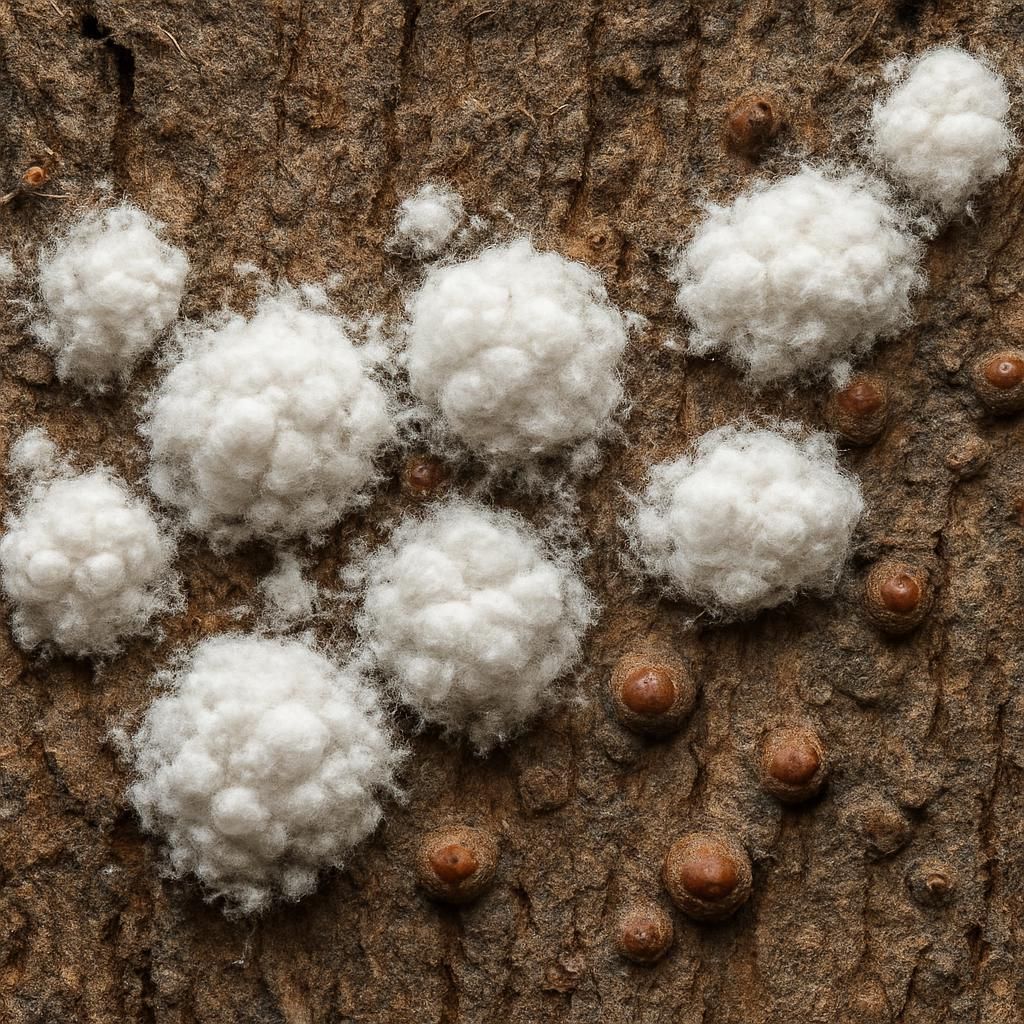
The most distinctive sign of balsam woolly adelgid is the presence of white, cottony masses of wax covering the bodies of adult females. These woolly tufts are usually found on the bark of the main stem, branches, and nodes. Close inspection often reveals tiny, reddish-brown, wingless adults and crawlers beneath the wax.
Gouting is the hallmark symptom caused by adelgid feeding. Infected nodes become swollen, rough, and distorted, with shortened internodes that give branches a "bottle-brush" appearance. As the infestation intensifies, needles turn yellow or reddish-brown and drop prematurely, leading to thin, sparse crowns.
On the lower trunk, heavy feeding can cause the bark to crack and ooze resin. Severe cases result in top-kill, where the leader and upper branches die while lower limbs may remain green for a short time. Over multiple seasons, the cumulative stress weakens the tree, making it susceptible to secondary pests and diseases such as Armyworms and various canker fungi.
Lifecycle and Progression of balsam woolly adelgid (MUST INCLUDE A MARKDOWN TABLE OF LIFECYCLE STAGES)
The balsam woolly adelgid has a complex lifecycle involving both sexual and parthenogenetic generations, although only females are present in North America. All stages are wingless except for a brief period when winged sexuales may appear in Europe. In North America, the insect completes two to three generations per year depending on climate.
| Stage | Description | Duration | Key Activity |
|---|---|---|---|
| Overwintering Nymph (Sistens) | Dark reddish-brown nymphs covered in white wax on bark and nodes | 6–8 months | Survive winter, resume feeding in spring |
| Spring Generation (Progrediens) | Wingless females produce live young (crawlers) that settle on new growth | 4–6 weeks | Rapid population increase |
| Summer Generation (Sistens) | Second generation sistentes form woolly masses; many enter diapause | 8–10 weeks | Heavy feeding and gouting |
| Crawler (Mobile Stage) | Tiny, orange-red first instars that disperse short distances before settling | 1–3 days | Only mobile stage; best time for control |
Eggs are rarely observed because females give birth to live young. The crawler stage is the only mobile phase and the most vulnerable to contact insecticides and horticultural oils.
Environmental Triggers & Risk Factors
Balsam woolly adelgid populations are strongly influenced by temperature and host vigor. Mild winters and warm, dry summers favor survival and reproduction, while extreme cold can reduce overwintering nymph populations. Stressed trees—those affected by drought, poor soil fertility, or mechanical injury—are significantly more susceptible.
Elevation and aspect also play roles. In the Appalachians, higher elevations with cooler temperatures often experience slower population growth, yet once established, the pest can persist for decades. Dense, pure fir stands facilitate rapid spread because crawlers can be carried short distances by wind and birds.
Soil conditions that limit root function, such as compaction or low pH, indirectly increase host susceptibility. Growers should monitor soil nutrient levels and maintain adequate moisture, especially during the first five years after planting, to reduce tree stress.
Organic Control & Treatment Plans (MUST INCLUDE A MARKDOWN TABLE OF TREATMENT OPTIONS AND FREQUENCIES)
Organic management of balsam woolly adelgid relies on a combination of cultural, mechanical, and biological tactics. Because the insect is protected by wax for most of its life, timing applications to coincide with the crawler stage is critical. Horticultural oils and insecticidal soaps provide effective contact control when crawlers are active.
| Treatment Option | Active Ingredient / Method | Application Timing | Frequency | Notes |
|---|---|---|---|---|
| Horticultural Oil (Summer) | 1–2% dormant or summer oil | When crawlers emerge (late spring–early summer) | 2–3 applications, 7–10 days apart | Thorough coverage of nodes and bark required |
| Insecticidal Soap | Potassium salts of fatty acids | Crawler stage | Repeat every 7–10 days | Safe for beneficial insects once dry |
| Beneficial Predators | Laricobius nigrinus beetles | Spring release | Annual releases recommended | Requires cool, moist conditions |
| Cultural Sanitation | Prune and destroy heavily infested branches | Late winter–early spring | As needed | Reduces local population pressure |
| Systemic Neem (Azadirachtin) | Soil drench or trunk injection | Early spring before bud break | Once per season | Limited translocation in fir; best on small trees |
Regular scouting with a hand lens during the crawler emergence window is the foundation of any successful program. Combining oil applications with predator releases has shown the best long-term suppression in organic Christmas tree systems.
Preventing balsam woolly adelgid in the Future
Prevention begins with purchasing certified pest-free nursery stock. Inspect all incoming fir seedlings for woolly masses or gouting before planting. Maintain a diverse species mix in plantations to reduce the proportion of highly susceptible Abies.
Proper site selection is crucial. Avoid planting true firs on compacted or poorly drained soils. Mulching and supplemental irrigation during establishment help maintain tree vigor and reduce stress-related susceptibility.
Long-term prevention includes annual monitoring programs and prompt removal of infested trees that serve as reservoirs for crawlers. In high-risk areas, consider planting less susceptible fir species or hybrids that show greater tolerance to adelgid feeding.
Crops Most Affected by balsam woolly adelgid
The balsam woolly adelgid primarily affects true firs used in Christmas tree production and forest plantings. The most commonly damaged species include balsam fir (Abies balsamea), Fraser fir (Abies fraseri), and noble fir (Abies procera). Other true firs such as grand fir and white fir can also be attacked, though susceptibility varies.
While the pest does not affect broadleaf crops or vegetables, its presence in fir plantations can indirectly impact nearby plantings through increased pesticide use and changes in local microclimates. Growers managing mixed operations should isolate fir blocks and maintain buffer zones of non-host species.
Related Blog provides additional seasonal strategies that complement adelgid management programs.