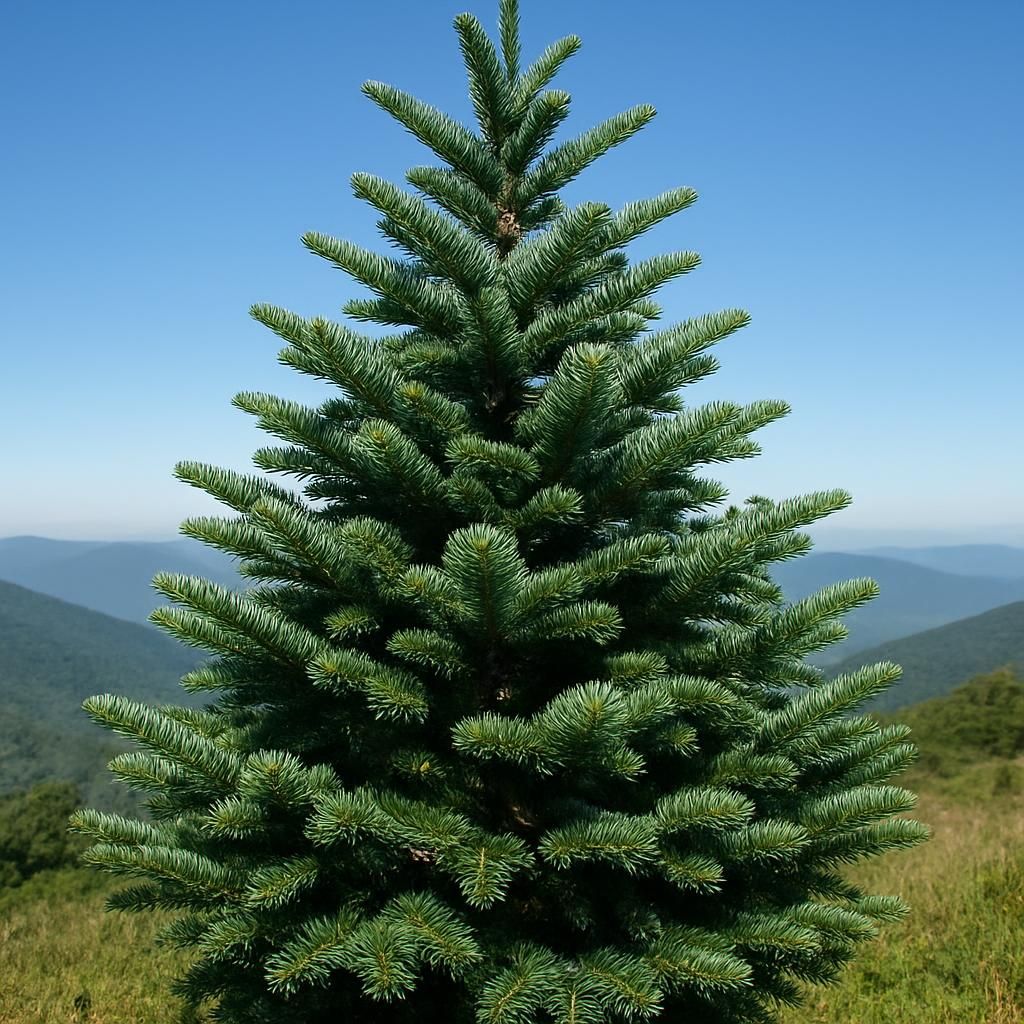
Introduction to Abies fraseri
Abies fraseri, commonly referred to as the Fraser fir, is a premium coniferous species native to the high elevations of the southern Appalachian Mountains. It is widely cultivated for Christmas trees, wreaths, and high-end landscape specimens because of its symmetrical form, soft needles, strong fragrance, and excellent needle retention after harvest. Professional growers value the species for its relatively fast growth rate among true firs and strong market demand that supports premium pricing. Successful commercial production requires precise attention to cool, moist microclimates, well-drained acidic soils, and integrated management of specific pests and diseases.
Botanical Profile of Abies fraseri
Abies fraseri belongs to the Pinaceae family and is closely related to Abies balsamea. Mature trees reach 30–50 feet in height with a pyramidal crown and dense branching. Needles are ½–1 inch long, dark green with two white stomatal bands on the underside, and arranged spirally. Cones are upright, 1.5–2.5 inches long, and disintegrate at maturity to release winged seeds. The species is monoecious, wind-pollinated, and typically begins cone production at 15–20 years of age in natural stands. Fraser fir exhibits moderate shade tolerance when young but performs best in full sun once established.
Soil, pH, and Climate Requirements for Abies fraseri (MUST INCLUDE A MARKDOWN TABLE OF IDEAL CONDITIONS)
Fraser fir demands cool, moist conditions and well-aerated, acidic soils. It performs poorly in heavy clay or waterlogged sites. The following table summarizes ideal growing parameters:
| Parameter | Ideal Range | Notes |
|---|---|---|
| Soil pH | 5.0–6.0 | Strongly acidic; avoid liming |
| Soil Texture | Sandy loam to loam | Excellent drainage critical |
| Organic Matter | 4–8% | Incorporate aged bark or leaf mold |
| Elevation | 3,000–6,000 ft | Cooler nights improve needle color |
| Annual Precipitation | 40–60 inches | Supplemental irrigation in dry spells |
| Temperature Range | 20–75 °F (day); winter lows to -10 °F | Protect from late spring frost |
| USDA Hardiness Zones | 4a–7a | Best in zones 5–6 for commercial production |
Step-by-Step Planting & Propagation
- Site Selection: Choose north- or northeast-facing slopes with good air drainage to reduce frost pockets.
- Soil Testing: Submit samples for pH, nutrient levels, and nematode counts 6–12 months before planting.
- Soil Amendment: Incorporate 2–3 inches of aged pine bark or leaf compost to improve structure and raise organic matter.
- Propagation: Fraser fir is primarily grown from seed. Collect cones in October, stratify seeds at 34–38 °F for 60–90 days, then sow in well-drained media under 50% shade.
- Transplanting Seedlings: Use 3–4 year-old transplants (18–24 inches tall) in early spring before bud break. Space trees 5–6 feet apart in rows 8–10 feet wide.
- Mulching: Apply 3–4 inches of organic mulch around each tree, keeping mulch 2 inches away from the trunk.
Care & Maintenance regimes for Abies fraseri (MUST INCLUDE A MARKDOWN TABLE OF WATER, FERTILIZER, AND PRUNING SCHEDULES)
Consistent moisture and balanced nutrition are essential for dense, dark-green foliage. The following schedule supports vigorous growth while minimizing nutrient runoff:
| Season | Watering Schedule | Fertilizer Application | Pruning Schedule |
|---|---|---|---|
| Spring | 1 inch/week; increase during dry spells | 10-10-10 NPK at 1 lb per 100 sq ft in April | Shape leaders and remove double leaders in May |
| Summer | Deep soak every 7–10 days | Side-dress with ½ lb ammonium sulfate in June | Light shearing in late June for density |
| Fall | Reduce to ½ inch/week | Apply slow-release 8-8-8 in September | Remove lower branches for clearance |
| Winter | Supplemental only if soil is dry | None | Dormant pruning of damaged wood |
Pests, Diseases & Organic Management
Key pests include Aphids, Spider mites, and Balsam woolly adelgid (new internal link required). Diseases of concern are Phytophthora root rot and Armillaria root disease (new internal link required). Implement an integrated approach:
- Monitor weekly with yellow sticky traps and hand-lens inspection.
- Encourage beneficial insects by planting flowering borders.
- Apply horticultural oil or insecticidal soap at first sign of aphids or mites.
- Improve drainage and avoid over-irrigation to prevent Phytophthora.
- Remove and destroy infected trees to limit Armillaria spread.
Harvesting, Curing & Optimal Storage
Harvest Fraser fir when needles are fully developed and the tree has reached desired height (usually 6–8 feet for retail). Cut trees at ground level in early morning when temperatures are cool. Stand trees in water for 24 hours immediately after cutting. For storage, keep trees in a shaded, well-ventilated area at 35–40 °F with high humidity. Trees can be held 4–6 weeks before sale with minimal needle drop when properly hydrated.
Companion Planting for Abies fraseri
Interplanting compatible species can improve biodiversity and reduce pest pressure. Consider Clover as a living mulch to fix nitrogen and suppress weeds. Rows of Thyme or Yarrow attract predatory insects that help control aphids. Avoid planting shallow-rooted vegetables that compete for surface moisture. Maintain a 3-foot buffer between fir rows and any companion crops to prevent shading and root interference.
For more information on integrated pest management strategies, see the Stop Treating Tomato Blight Like a Spray Problem: Here Is What Works Better post, which outlines similar organic principles applicable to conifer production.