Introduction to Fennel Seed (Indian Lucknow)
Fennel Seed (Indian Lucknow) is a premium variety of fennel cultivated for its aromatic seeds that are prized for their sweet, anise-like flavor. Grown extensively in northern India, particularly around Lucknow, this crop supports both domestic spice markets and international export. Farmers value it for relatively stable yields, drought tolerance once established, and strong market prices. The seeds are used in cooking, traditional medicine, and as a flavoring agent in beverages and confectionery.
Botanical Profile of Fennel Seed (Indian Lucknow)
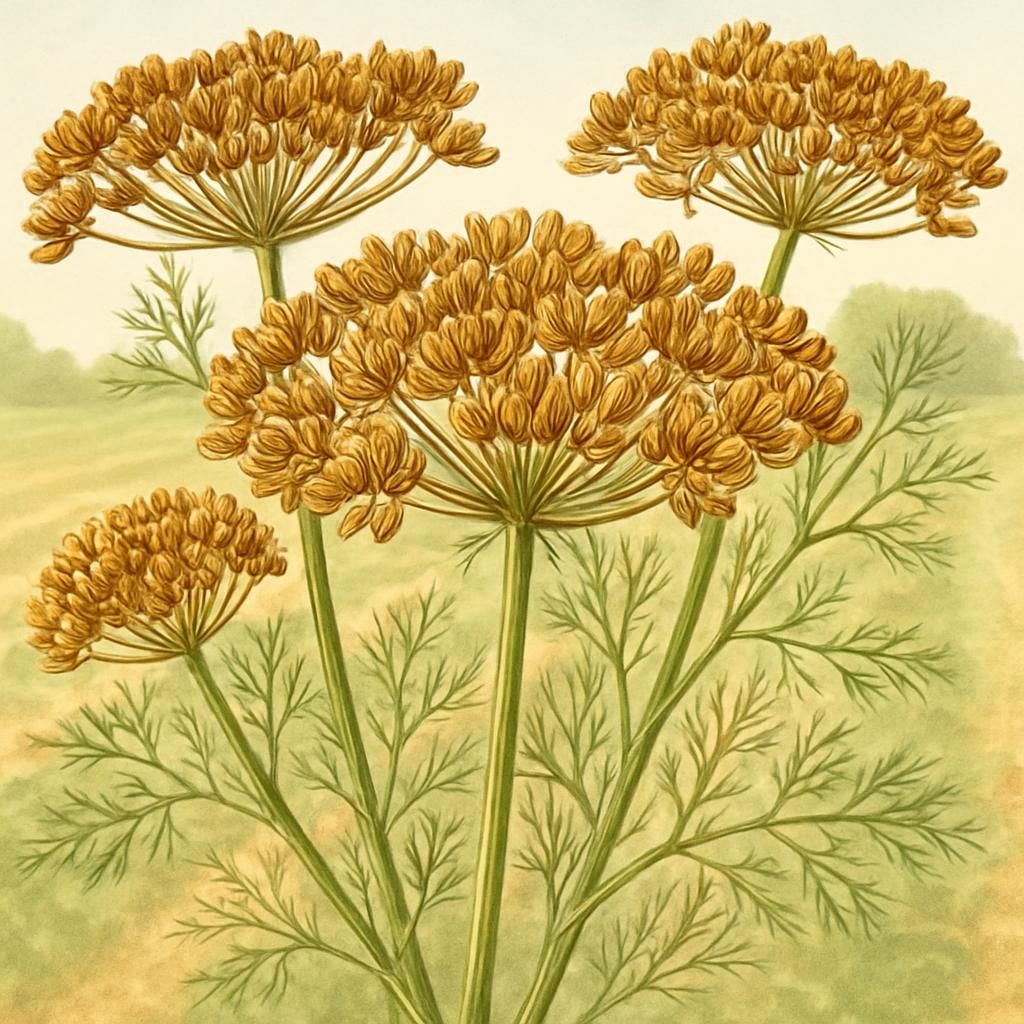
Foeniculum vulgare var. dulce 'Lucknow' belongs to the Apiaceae family. It produces feathery, blue-green foliage and umbels of small yellow flowers that develop into oblong, ridged seeds. The plant reaches 1.5–2.5 m in height and develops a deep taproot system. The 'Lucknow' selection is noted for its larger seed size, higher essential oil content (anethole 60–70%), and improved resistance to lodging compared to standard fennel types.
Soil, pH, and Climate Requirements for Fennel Seed (Indian Lucknow)
Successful cultivation requires well-drained sandy loam to loam soils with good organic matter. Avoid heavy clay or waterlogged conditions that promote root rot.
| Parameter | Ideal Range | Notes |
|---|---|---|
| Soil Type | Sandy loam to loam | Good drainage essential |
| pH | 6.5 – 8.0 | Slightly alkaline preferred |
| Temperature | 15–25 °C (day) | Optimal seed germination 18–22 °C |
| Annual Rainfall | 600–900 mm | Supplemental irrigation required |
| Altitude | 0–1,200 m | Performs well in subtropical plains |
Step-by-Step Planting & Propagation
- Select certified seed of the Lucknow variety with >85% germination.
- Prepare land by two to three plowings followed by leveling; incorporate 10–15 t/ha well-rotted FYM.
- Sow directly in rows 45 cm apart at 1–1.5 cm depth during October–November in northern India.
- Maintain plant spacing of 20–25 cm after thinning at 25–30 days after sowing.
- Ensure seedbed remains moist until germination (7–12 days).
Care & Maintenance regimes for Fennel Seed (Indian Lucknow)
Timely irrigation, balanced nutrition, and minimal pruning promote uniform growth and high seed yield.
| Stage | Water Schedule | Fertilizer (NPK kg/ha) | Pruning/Thinning |
|---|---|---|---|
| Germination (0–15 DAS) | Light irrigation every 3–4 days | Basal: 40 N, 40 P, 20 K | None |
| Vegetative (15–60 DAS) | Irrigation at 15–20 day intervals | Top-dress 30 N at 30 DAS | Thin to 20–25 cm spacing |
| Flowering (60–90 DAS) | Irrigation at flowering & seed set | 20 N + 20 K at 60 DAS | Remove weak stems |
| Seed Development (90–120 DAS) | Reduce frequency; avoid water stress | Foliar micronutrients if needed | None |
Pests, Diseases & Organic Management
Common threats include Aphids, Thrips, and Powdery mildew. Practice crop rotation with Onion or Garlic and use neem-based sprays or yellow sticky traps. Maintain field sanitation and remove infected plant debris promptly.
Harvesting, Curing & Optimal Storage
Harvest when 70–80% of umbels turn yellowish-brown (120–140 DAS). Cut plants at base and dry in shade for 4–6 days. Thresh seeds, winnow, and sun-dry to 8–10% moisture. Store in airtight containers or gunny bags with silica gel packets in cool, dry conditions to preserve essential oils for 12–18 months.
Companion Planting for Fennel Seed (Indian Lucknow)
Fennel pairs well with Tomato and Cucumber when planted at field edges. Avoid close proximity to Carrot and Dill to prevent cross-pollination and reduced seed quality. Marigold borders help deter nematodes and aphids.