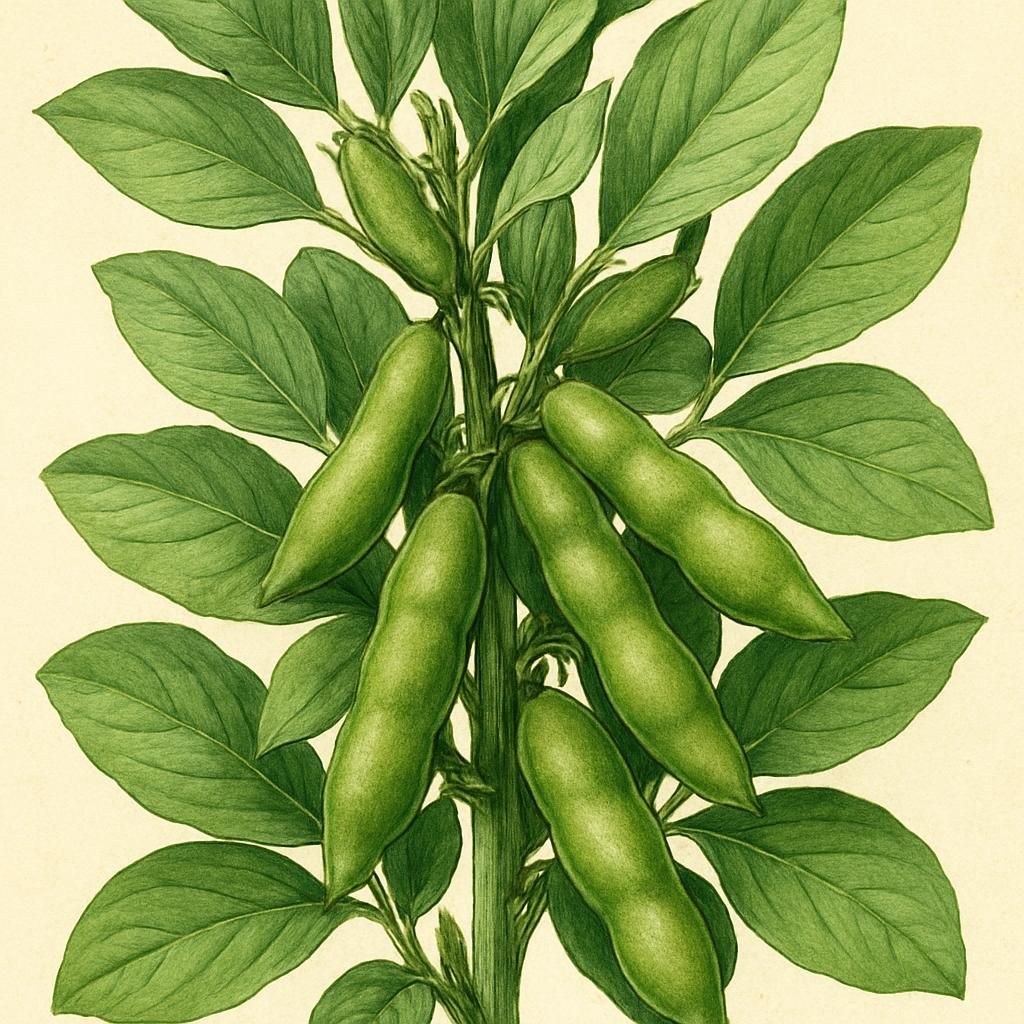
Introduction to Fava Bean (Robin Hood)
Fava Bean (Robin Hood), scientifically known as Vicia faba, is a compact variety favored for its ease of cultivation and prolific pod production. Originating from the Mediterranean region, this legume is valued for both its tender seeds and ability to fix nitrogen in soils, enhancing its fertility over time.
Botanical Profile of Fava Bean (Robin Hood)
The Fava Bean (Robin Hood) is an annual legume that can grow up to 50 cm in height. The plant features stout, hollow stems and broad leaves arranged in alternating pairs. Robin Hood produces elongated pods containing three to five large seeds that vary in color from pale green to light brown when mature.
Soil, pH, and Climate Requirements for Fava Bean (Robin Hood)
Fava Beans thrive in cool-season environments and can tolerate light frosts. For optimal growth, they require well-draining, loamy soils rich in organic matter.
| Requirement | Ideal Condition |
|---|---|
| Soil Type | Loamy, well-draining |
| Soil pH | 6.0 - 7.5 |
| Temperature | 15°C - 20°C (59°F - 68°F) |
| Climate | Cool-season, light frosts |
Step-by-Step Planting & Propagation
- Seed Selection: Choose fresh and disease-free Robin Hood seeds. Opt for certified seeds to minimize disease risks.
- Soil Preparation: Till the soil to a depth of 20 cm, incorporating well-rotted compost. A pH tester can ensure the soil is within the preferred range.
- Planting: Sow seeds directly in the garden 3-4 weeks before the last expected frost. Space seeds 15 cm apart in rows 45 cm apart.
- Irrigation: Water frequently but avoid waterlogging. Ensure the soil remains consistently moist, especially during flowering.
- Support: Short stakes can help support plants as they grow, preventing heavy pod-laden stems from drooping.
Care & Maintenance Regimens for Fava Bean (Robin Hood)
Fava Beans require moderate attention throughout their growing season, primarily focusing on hydration and pest prevention.
| Care Aspect | Schedule/Guidelines |
|---|---|
| Watering | Weekly (more if dry), consistent moisture maintenance |
| Fertilization | Liquid fertilizer every 4 weeks |
| Pruning | Remove yellowing leaves to promote airflow |
Pests, Diseases & Organic Management
Fava Bean (Robin Hood) faces pest challenges, notably from aphids and spider mites. Diseases include chocolate spot and rust. Organic management practices include:
- Aphids Control: Introduce ladybugs or neem oil sprays.
- Spider Mite Mitigation: Increase humidity and regularly wash plants.
- Chocolate Spot Prevention: Adequate spacing and selective pruning.
For comprehensive disease management, explore Crop Diseases Under the Microscope: 9 Organic Fixes for Small Farm Resilience.
Harvesting, Curing & Optimal Storage
- Harvesting: Pick pods when they are green and firm. Use gardening shears to avoid damaging the plant.
- Curing: Dry pods in a warm, ventilated area if saving seeds. For fresh use, store in a cool, dry location.
- Storage: Fresh beans are best used quickly but can be stored in a refrigerator for up to a week. Seed beans can be stored after drying completely in airtight containers.
Companion Planting for Fava Bean (Robin Hood)
Fava Beans pair well with a variety of crops such as spinach, lettuce, and Peas. Avoid proximity to garlic and onion, as these can hinder growth. For strategies, see Summer Companion Planting: 10 Organic Pairings to Boost Small Farm Resilience.