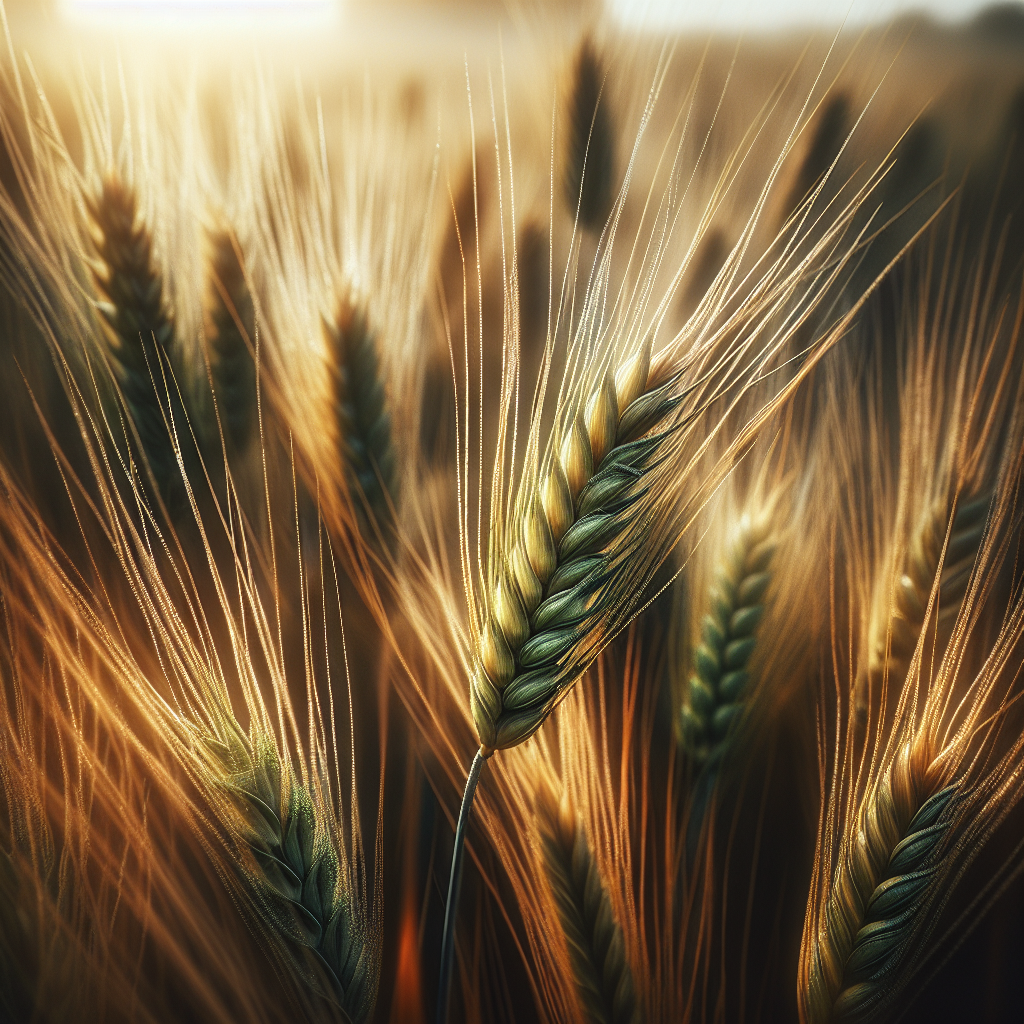
Introduction to Einkorn Wheat
One of humanity’s earliest cultivated cereals, einkorn has been grown for millennia from the Fertile Crescent into Europe and parts of western Asia. It is a hulled wheat, meaning the grain remains tightly enclosed in the glumes after threshing, which distinguishes it from most modern free-threshing wheats. That trait makes post-harvest processing a little more laborious, but it also helps protect the grain in storage and contributes to the crop’s reputation for hardiness.
For farmers and serious gardeners, einkorn is best understood as a specialty grain rather than a direct substitute for modern high-yield wheat. Plants are generally taller, less heavily bred for fertilizer responsiveness, and often better adapted to low-input or organic systems than intensive conventional grain production. Grain protein can be relatively high, but baking behavior differs from common wheat because gluten quality is weaker and doughs are often less elastic. For broader context on cereal management, see our Wheat guide.
Einkorn is especially attractive where growers want a heritage grain, a crop for poor or shallow soils, a rotational cereal in biologically active systems, or a niche market product for stone-milling and artisanal foods. It is not usually the first choice where maximum grain yield per hectare is the main objective. Instead, its strengths are flavor, ancient-grain market appeal, resilience, and adaptation to modest fertility.
Botanical Profile of Einkorn Wheat
This species belongs to the Poaceae family and is classified as Triticum monococcum. The name “monococcum” refers to the single grainlet character typical of the spikelet. Domesticated einkorn is closely related to wild einkorn, but the cultivated form was selected for reduced shattering and more reliable harvestability.
Key morphological features include narrow leaves, relatively delicate but upright stems, and slender seed heads compared with many modern wheats. Awns are commonly long and prominent, giving the heads a bristled appearance. Plant height often ranges from about 70 to 140 cm depending on cultivar, fertility, and moisture conditions. In low-fertility soils, the crop stays shorter and can remain quite manageable; in rich soils with excessive nitrogen, stems may elongate too much and become prone to lodging.
The root system is fibrous and capable of foraging effectively in lighter or less fertile ground. Tillering is moderate rather than aggressively high in many heirloom lines. The crop’s hulled grain is a defining agronomic trait: after threshing, the kernels remain enclosed by tough hulls, so an additional dehulling step is needed before milling or food use.
Einkorn is often grown as a winter annual in regions with cold winters and as a spring-sown cereal where winters are too severe or soils stay inaccessible. Growth stages follow the standard cereal pattern: germination, seedling establishment, tillering, stem elongation, booting, heading, flowering, grain fill, and maturity. Vernalization response varies by accession, so growers should confirm whether their seed lot is winter or spring type before planting.
Compared with modern bread wheat, einkorn often shows good tolerance to certain diseases and environmental stresses, but it is not immune to them. Its lower input demand should not be confused with neglect tolerance; strong stands still depend on correct sowing date, field sanitation, and balanced soil conditions.
Soil, pH, and Climate Requirements for Einkorn Wheat
This crop performs best in well-drained loam, sandy loam, or light clay loam with moderate organic matter and good soil structure. It is notably more forgiving of lean soils than many modern wheats, but the best grain fill and stand uniformity still come from biologically active soils with stable aggregates and moderate fertility. Heavy, compacted clays that remain waterlogged through winter are risky because they reduce root oxygen, encourage crown diseases, and can thin stands dramatically.
Ideal soil pH is generally 6.0 to 7.5, with a preferred range around 6.2 to 7.0. It can tolerate slightly more alkaline conditions than some garden crops, but strongly acidic soils below pH 5.8 can reduce nutrient availability, especially phosphorus, calcium, and magnesium. In acidic ground, liming several months before sowing is preferable to a last-minute application because the crop benefits from a stable root-zone reaction at establishment.
Climatically, einkorn is best suited to temperate environments with cool to cold establishment periods and a relatively dry finish at ripening. Optimal early growth occurs in cool conditions, roughly 10-18°C, while grain filling is best when temperatures remain moderate, often 18-24°C. Sustained heat above 30°C during flowering and grain fill can shorten the filling period, reduce kernel weight, and increase shriveling.
Moisture needs are moderate. A total seasonal water supply of roughly 300-500 mm can produce a respectable crop under good soil conditions, though exact needs vary by climate, sowing time, and soil water-holding capacity. The most critical periods for water availability are germination and establishment, tillering, stem elongation, heading, and early grain fill. During establishment, the top 5-8 cm of soil should remain evenly moist but never saturated. If squeezed soil forms a slick, airless ball that smears easily, it is too wet for healthy root respiration. If the seed zone turns dusty and powder-dry before emergence, stand gaps are likely.
Once plants are established, aim for moist-but-aerated soil at roughly 60-80% of field capacity. Practical field signs of adequate moisture include cool soil 5-10 cm below the surface, leaves that remain upright through midday, and steady tiller production. Underwatering often shows first as slowed tillering, blue-green or dull foliage, leaf rolling in dry wind, and shortened heads later. Overwatering appears as yellowing lower leaves, weak root anchorage, patchy growth in low spots, and increased lodging or fungal pressure.
Fertility should be modest and balanced. Excess nitrogen is a common mistake with einkorn because it can produce lush top growth that lodges before harvest and may dilute grain quality. Many successful organic growers target a moderate nitrogen regime rather than pushing maximum biomass. Soil phosphorus and potassium should be sufficient before sowing, especially where straw is removed from the field. Deficiencies in sulfur may reduce protein quality; zinc and manganese can become limiting in high-pH or heavily disturbed soils.
Step-by-Step Planting & Propagation
Propagation is by seed only. Use clean, viable grain intended for planting rather than food grain of uncertain germination, purity, or disease status. Because einkorn may be sold in hulled or dehulled form, verify that seed is suitable for sowing and not heat-treated or mechanically damaged.
Select the correct type. Confirm whether your seed is winter or spring einkorn. Winter types are usually planted in autumn and need cold exposure for proper development. Spring types are sown as soon as soil can be worked in spring.
Prepare the field. A fine, firm seedbed is ideal. Large clods create uneven seed depth and patchy emergence. In low-till systems, a stale seedbed or shallow pre-plant cultivation helps reduce early weed competition, which is especially important because einkorn seedlings are not as aggressively competitive as some modern cereals during the earliest weeks.
Correct drainage and fertility before sowing. If the field ponds after rain, install or repair drainage first. Incorporate compost only if it is mature and not excessively nitrogen-rich. Fresh manure is a poor choice immediately before sowing because it can drive lush growth and disease.
Time planting carefully. For winter einkorn, sow roughly 2-4 weeks before the average first hard freeze, allowing enough time for root establishment and perhaps 2-4 leaves before winter dormancy. In many temperate regions, that means mid-fall. For spring einkorn, sow as early as the ground is workable and no longer plastic or waterlogged.
Set seeding depth. Plant 2.5-5 cm deep, with 3 cm often ideal in medium-textured soils. Use shallower placement in heavy soils and slightly deeper placement in dry, lighter soils. More than 5 cm can weaken emergence, while seed left too shallow may desiccate or winterkill.
Choose seeding rate by goal. For grain production, use a moderate to fairly dense stand to suppress weeds and encourage upright growth. Broadcast systems often require higher seed rates than drilled plantings because placement is less precise. A typical professional approach is to target a final stand of roughly 250-350 plants per square meter, adjusting upward in late sowings or weedy fields.
Row spacing. Drill rows 15-20 cm apart for most grain systems. Narrower rows help close canopy sooner and reduce weed pressure. Wider row spacing is only useful when interseeding living mulches or conducting mechanical weeding.
Firm the seedbed after planting. Light rolling or cultipacking improves seed-soil contact, which is especially helpful in dry autumns or windy spring conditions.
Monitor emergence. Seedlings should emerge evenly if soil moisture is stable. Thin, erratic emergence usually points to crusting, birds, sowing too deep, poor seed vigor, or moisture fluctuation.
In small plots, hand sowing is possible, but precision improves dramatically with a small grain drill. Uniform placement matters because uneven stands mature inconsistently and complicate harvest timing.
Care & Maintenance regimes for Einkorn Wheat
Successful management starts with restraint. Einkorn generally rewards moderate inputs, stable soil biology, and good timing more than aggressive fertilization.
During the first 3-6 weeks after emergence, inspect fields for stand density, washouts, crusting, and weed flushes. If winter-sown, healthy plants should enter dormancy with a compact, well-rooted crown rather than tall, lush foliage. Excess top growth before winter often indicates too much nitrogen or overly early sowing.
Nitrogen management should be conservative. In low-input systems, residual fertility and legume rotation effects may supply much of what the crop needs. If supplemental nitrogen is required, apply it early, near tillering or green-up, rather than late in stem elongation. Late nitrogen tends to push straw growth, increase lodging risk, and delay maturity. A crop that is appropriately fed shows steady green color, moderate tiller formation, and strong upright leaves. A deficient crop looks pale, especially on older leaves, and develops reduced canopy density. An overfed crop becomes dark, lush, and soft-stemmed.
Irrigation is often unnecessary in climates with reliable cool-season rainfall, but where supplemental watering is used, aim for deep, infrequent applications rather than daily light sprinkling. Keep the root zone moist to about 15-30 cm depth during active growth. At heading and early grain fill, drought can sharply reduce kernel size, so moisture should not be allowed to swing from wet to severe dry stress. However, as the crop approaches maturity, irrigation should be reduced and then stopped to allow uniform dry-down and reduce disease pressure.
Weed control is critical early. Einkorn can compete reasonably well after canopy closure, but it is vulnerable during establishment. The best organic program combines stale seedbeds, proper seeding density, narrow rows, clean field borders, and timely tine weeding or light harrowing when seedlings are well anchored and weeds are at thread stage. Once weeds are taller than the crop base, mechanical intervention becomes riskier. Broadleaf weeds that escape early control can interfere with harvest and contaminate grain.
Lodging prevention depends on balanced fertility, moderate plant density, and avoiding overirrigation. Fields exposed to strong wind, rich manure, or fertile bottomland soils are at higher risk. If stems begin leaning before grain fill is complete, inspect for stem weakness, waterlogging, or excessive nitrogen.
Rotation is one of the most important maintenance tools. Avoid planting einkorn after another wheat or cereal if disease pressure has been high. A break of 2-3 years from cereals is ideal in many systems. Legumes, broadleaf cover crops, and clean-tilled root crops can all improve the rotation effect. For broader rotational fertility concepts, see soil health strategies.
Pests, Diseases & Organic Management
Einkorn often shows respectable resilience, but problems still emerge under humid conditions, poor rotation, or nutrient imbalance.
Common disease risks include rusts, powdery mildew, Septoria-type leaf blotches, Fusarium head blight in wet flowering periods, take-all, and various root or crown rots in poorly drained soils. Disease severity depends heavily on weather, seed health, and field history.
rusts appear as orange, brown, or yellow pustules on leaves and stems. Dense canopies, volunteer cereals, and susceptible genetics increase risk. Organic management relies on resistant seed sources when available, destroying volunteer hosts, widening rotations, and avoiding excessive nitrogen.
powdery mildew shows as white, dusty fungal growth on leaves, especially in humid, sheltered sites with lush growth. It is usually worsened by overfertilization and poor air movement.
Fusarium head blight is most damaging when rainy or highly humid weather coincides with flowering. Heads may bleach prematurely, and grain can become shriveled or contaminated with mycotoxins. Rotation away from infected cereal residues and avoiding overhead irrigation at heading are important preventive steps.
root rots and crown diseases are favored by saturated or compacted soils. Symptoms include patchy stunting, yellowing, weak tillering, and plants that pull up easily with discolored crown tissue. Good drainage is the first line of defense.
Insect pests vary by region but may include aphids, armyworms, cereal leaf beetles, wireworms, and grasshoppers. aphids are doubly important because they can transmit barley yellow dwarf virus. Scout field edges and sheltered areas first; infestations often begin there.
Organic management priorities:
- Start with clean seed and adapted genetics.
- Rotate out of cereals for at least 2 years where disease pressure is known.
- Control volunteer wheat and grassy weeds that serve as pest and virus reservoirs.
- Avoid overly lush growth from excess soluble nitrogen.
- Encourage beneficial insect habitat on margins with species such as Yarrow and Clover, while keeping those margins managed so they do not seed aggressively into the field.
- Use timely cultivation before canopy closure to reduce weed hosts and improve airflow.
- Harvest promptly when mature to reduce weathering and late disease spread.
Bird pressure is usually modest in large fields but can matter in small plots, especially near hedgerows. Rodents may damage newly sown grain or stored harvest if sanitation is poor.
Harvesting, Curing & Optimal Storage
Harvest timing is slightly more nuanced than with free-threshing wheat because einkorn’s hulls can mask visual maturity cues. The crop is usually ready when plants have fully senesced, stems have turned straw-colored, kernels are hard, and grain moisture has dropped to roughly 12-14% for safe combining, or lower if hand-harvested and stored without immediate drying.
A practical field test is to remove a spikelet and press the kernel with a fingernail after rubbing away enough hull to inspect it. At physiological maturity, the grain is firm and no longer milky or doughy. For safe storage, harvested grain should generally be dried to about 12% moisture or slightly lower. If long-term storage extends through warm months, 10-11% is safer.
In small-scale systems, cut by sickle or scythe when most heads are mature and allow bundled plants to dry under cover with strong airflow. Avoid leaving cut sheaves directly on damp soil because the heads can wick moisture and mold. In mechanized systems, combine when straw is dry enough to thresh cleanly but before shattering losses or lodging worsen.
Because einkorn is hulled, threshing produces spikelets rather than clean naked grain. Dehulling is then required using specialized small-grain dehullers or careful abrasive processing. This extra step should be factored into labor and equipment planning before planting commercially.
After threshing and dehulling, clean grain by screening and air separation to remove chaff, broken kernels, weed seeds, and dust. Grain going into food channels should be especially clean and uniform.
Storage conditions matter enormously. Keep grain cool, dry, and protected from insects and rodents. Ideal storage is below 15°C, with low relative humidity and good sanitation. In bins or sealed containers, monitor monthly for condensation, caking, insect activity, or off-odors. A musty smell indicates excess moisture or fungal activity and should be addressed immediately by drying, cleaning, or discarding affected lots.
If saving seed for replanting, store only the cleanest, best-formed grain from disease-free areas of the field. Maintain records on field origin, sowing date, performance, lodging tendency, and disease incidence, because local adaptation improves over time when selection is careful.
Companion Planting for Einkorn Wheat
In broadacre grain systems, “companion planting” usually functions more as intercropping, undersowing, border habitat design, or rotational association than the close mixed planting common in vegetable gardens. The goal is not to crowd the cereal, but to support fertility, weed suppression, beneficial insects, and soil structure.
One of the best partners is Clover, especially as an undersown living mulch in wider-row or lower-density systems. Clover fixes nitrogen, protects soil between cereal cycles, and contributes organic matter. The key is timing and density: if undersown too early or too thickly, it can compete for moisture in dry springs. In higher-rainfall or irrigated environments, it can be highly effective.
Peas can serve as a rotational or strip-intercrop companion in some small-scale systems, though true mixed grain-legume harvest requires careful planning because maturity and cleaning differ. Their greatest value is usually rotational nitrogen contribution and break-crop benefits rather than direct same-row companionship.
Yarrow is not a field companion in the sense of sharing the drill row, but it is valuable on margins, beetle banks, and pollinator strips. It attracts beneficial insects that help moderate aphid populations and improves biodiversity around cereal blocks.
Flax can also fit diversified grain plantings or rotational sequences. It offers a contrasting root pattern, breaks cereal disease cycles, and can help spread labor across the season. In mixed heritage grain systems, it is often valued more as a rotational partner than a tightly interplanted companion.
For einkorn specifically, the best companion strategy is usually this: keep the grain stand itself clean and adequately dense, then use companion species in margins, undersowing, or adjacent strips where they enhance soil and ecosystem function without reducing harvest efficiency. The most successful systems preserve the cereal’s access to light and airflow while using companion plants to improve the whole farm ecology.