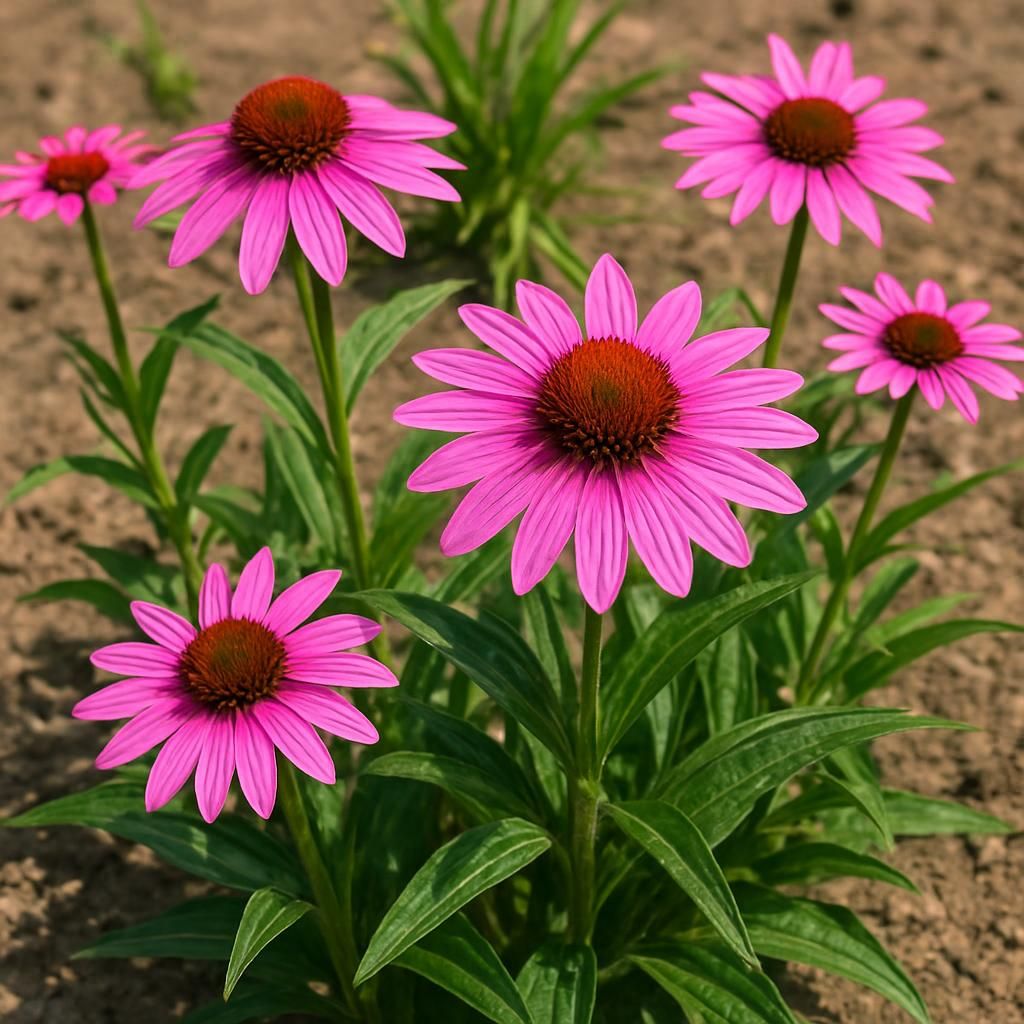
Introduction to Echinacea Root (Angustifolia)
Echinacea angustifolia, commonly known as narrow-leaved coneflower, is a North American native perennial valued for its potent medicinal taproot. Grown for both commercial herbal markets and small-farm diversification, the species thrives in well-drained prairie soils and produces high-value roots after 3–4 years. Professional growers focus on root quality, including alkamide and polysaccharide content, which directly influence market price. Sustainable cultivation practices also support pollinator habitat, making this crop an excellent choice for regenerative systems.
Botanical Profile of Echinacea Root (Angustifolia)
Echinacea angustifolia belongs to the Asteraceae family and features narrow, lance-shaped leaves and distinctive pinkish-purple ray flowers surrounding a spiny central disk. The plant develops a deep, fibrous taproot that can reach 30–50 cm in length under optimal conditions. Unlike the more common Echinacea purpurea, angustifolia exhibits greater drought tolerance and higher concentrations of bioactive compounds in the root. Mature plants reach 30–60 cm in height and form dense clumps over several seasons.
Soil, pH, and Climate Requirements for Echinacea Root (Angustifolia)
Successful commercial production begins with matching site conditions to the plant’s native prairie habitat. The crop performs best in deep, well-drained sandy loam or loam soils with moderate fertility. Heavy clay soils must be amended with organic matter to prevent waterlogging and root rot.
| Parameter | Ideal Range | Notes |
|---|---|---|
| Soil Type | Sandy loam to loam | Avoid compacted or waterlogged soils |
| Soil pH | 6.0–7.5 | Slightly acidic to neutral |
| Temperature Range | 15–30 °C daytime | Tolerates -25 °C winter lows |
| Annual Rainfall | 400–700 mm | Supplemental irrigation in dry periods |
| USDA Hardiness Zones | 3–9 | Full sun exposure required |
| Elevation | Up to 2,000 m | Good air circulation reduces disease |
Step-by-Step Planting & Propagation
Propagation is achieved primarily through seed, although root divisions of 3-year-old plants can accelerate stand establishment. Fresh seed exhibits physiological dormancy and benefits from 4–6 weeks of cold-moist stratification at 4 °C. Sow stratified seed in early spring at 5–8 mm depth and 30–45 cm row spacing, thinning seedlings to 20–25 cm in-row once true leaves appear. Maintain soil moisture at field capacity until germination (10–21 days). For root divisions, lift dormant crowns in late autumn, section into 5–8 cm segments with at least one bud, and replant immediately at the same depth.
Care & Maintenance regimes for Echinacea Root (Angustifolia)
Consistent cultural practices maximize root biomass and bioactive compound concentration. Mulch with 5–8 cm of clean straw or wood chips to suppress weeds and conserve moisture. Irrigate deeply but infrequently to encourage deep rooting; avoid overhead watering after canopy closure to reduce foliar disease pressure.
| Growth Stage | Water Schedule | Fertilizer (NPK) | Pruning / Other |
|---|---|---|---|
| Establishment (Yr 1) | 25 mm/week if rainfall <15 mm | 5-10-10 at 200 kg/ha pre-plant | Remove flower buds to direct energy to roots |
| Vegetative (Yr 2) | 15–20 mm every 10–14 days | Side-dress 3-6-6 at 150 kg/ha | Deadhead spent blooms |
| Pre-Harvest (Yr 3+) | Withhold 4 weeks before lift | No additional fertilizer | Cut back foliage to 10 cm after frost |
Pests, Diseases & Organic Management
Major pests include Aphids, cutworms, and Japanese beetles. Scout weekly and release beneficial insects such as lady beetles for aphid control. Root-knot nematodes can be managed through 3–4 year rotations with Garlic or Onion. Fungal issues such as Powdery mildew and Botrytis are mitigated by wide spacing and drip irrigation. Apply neem oil or Bacillus subtilis products at first sign of infection.
Harvesting, Curing & Optimal Storage
Harvest roots in the third or fourth autumn after planting when alkamide levels peak. Dig carefully with a modified potato digger or broadfork to preserve root integrity. Wash gently under low-pressure water, then cure at 25–30 °C with 40–50 % relative humidity and good airflow for 7–10 days. Slice larger roots lengthwise for uniform drying. Store finished product in food-grade containers at 10–15 °C and <60 % RH; maintain darkness to preserve medicinal potency for up to 24 months.
Companion Planting for Echinacea Root (Angustifolia)
Strategic companions enhance biodiversity and reduce pest pressure. Pair with Yarrow and Thyme to attract beneficial insects and improve soil microbial activity. Interplant with Clover as a living mulch to fix nitrogen and suppress weeds. Avoid planting near Potato or Tomato to limit shared disease vectors. Rotate out of Asteraceae family crops for at least three years to break pest and disease cycles.