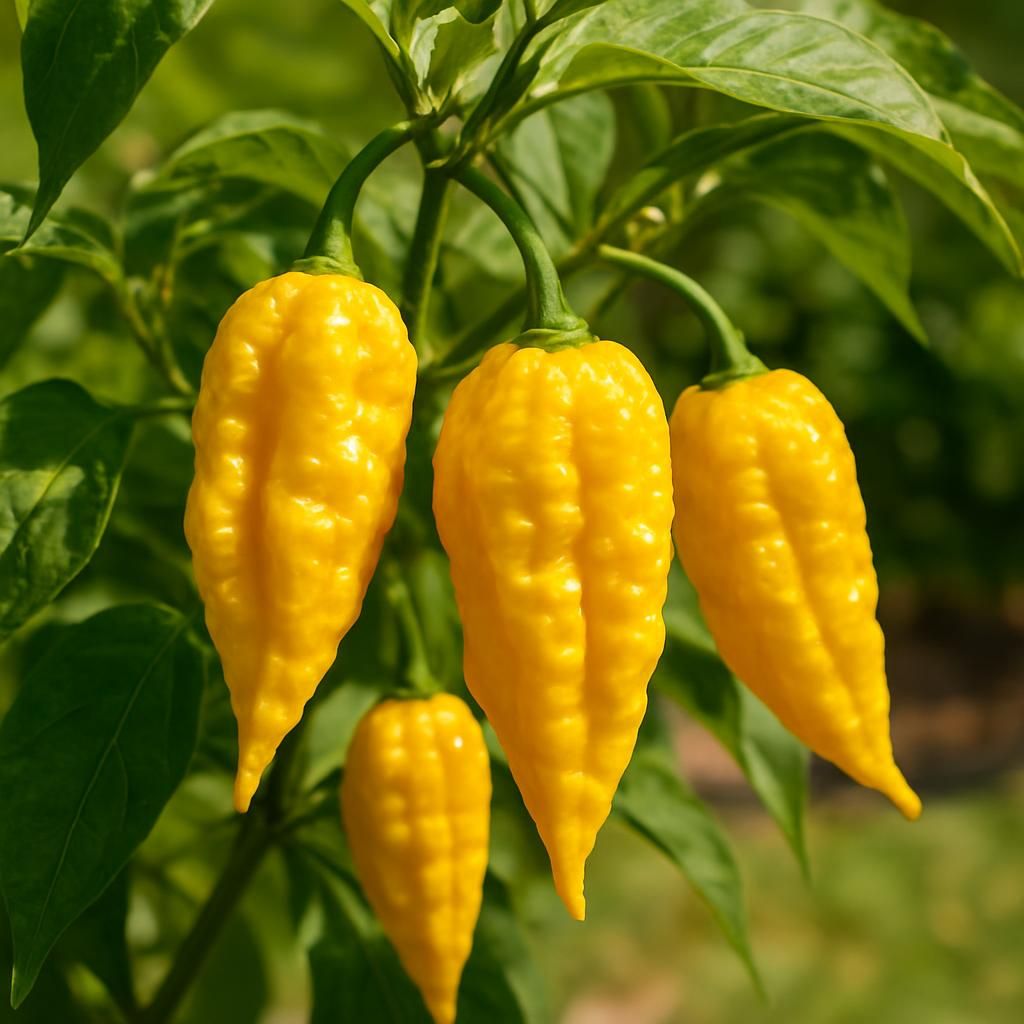
Introduction to Devil's Tongue Yellow
Devil's Tongue Yellow is a distinctive member of the Capsicum chinense species, offering both exceptional heat and a bright, citrus-forward flavor that sets it apart from standard habaneros. The cultivar produces slender, tongue-shaped pods that reach 2–3 inches in length and develop a vivid yellow hue at full maturity. Heat levels typically range from 200,000 to 300,000 Scoville Heat Units, making it a favorite among chili enthusiasts and commercial hot-sauce producers. Its vigorous, bushy growth habit and heavy fruit set make it suitable for both home gardens and small-scale commercial production in suitable climates.
The pepper's name derives from its elongated, slightly curved shape and intense pungency. Growers value it for its reliable yields, disease resistance relative to other C. chinense types, and versatility in culinary applications. When harvested green, the flavor is sharper and more vegetal; full yellow ripeness brings out sweeter, tropical notes that balance the extreme heat. Because of its productivity and visual appeal, Devil's Tongue Yellow has become a staple in specialty pepper collections worldwide.
Botanical Profile of Devil's Tongue Yellow
Devil's Tongue Yellow belongs to the nightshade family, Solanaceae, and shares the characteristic growth pattern of other Capsicum chinense cultivars. Plants typically reach 24–36 inches in height with a spreading habit and dense foliage that protects developing fruit from sunscald. Leaves are ovate to lanceolate, medium green, and slightly pubescent on the undersides.
Flowers are small, white to cream-colored with five petals and appear in clusters at stem nodes. The fruits are pendulous, elongated, and distinctly wrinkled with a pointed tip, resembling a curved tongue. Immature pods are glossy green and transition through pale yellow to a saturated golden-yellow at maturity. The thin-walled pods contain numerous small, cream-colored seeds embedded in placental tissue rich in capsaicinoids.
The cultivar exhibits moderate branching and responds well to pruning for improved airflow and light penetration. Under optimal conditions, individual plants can produce 40–60 pods over a 10–12 week harvest window. Like other hot peppers, Devil's Tongue Yellow contains high concentrations of capsaicin and related alkaloids primarily located in the placenta and seed attachments.
Soil, pH, and Climate Requirements for Devil's Tongue Yellow
Successful cultivation of Devil's Tongue Yellow depends on providing warm temperatures, consistent moisture, and fertile, well-drained soil. The crop performs best in regions with long, hot summers and minimal risk of late spring or early fall frosts. Soil should be rich in organic matter yet free-draining to prevent waterlogging, which quickly leads to root diseases.
| Parameter | Ideal Range | Notes |
|---|---|---|
| Soil Type | Sandy loam to loam | High organic content improves fertility |
| Soil pH | 6.0–6.8 | Slightly acidic to neutral |
| Temperature (Day) | 75–90°F (24–32°C) | Critical for fruit set |
| Temperature (Night) | 60–70°F (15–21°C) | Below 55°F reduces flowering |
| Frost Tolerance | None | Protect or transplant after last frost |
| Sunlight | Full sun (8+ hours) | Essential for high capsaicin levels |
| Spacing | 18–24 inches between plants | Rows 30–36 inches apart |
| Growing Season | 90–120 days to maturity | Start indoors 8–10 weeks before transplant |
Adequate soil fertility supports vigorous vegetative growth and sustained fruit production. Incorporate well-rotted compost or aged manure prior to planting. Raised beds or containers with high-quality potting mix amended with perlite or coarse sand improve drainage in heavy soils.
Step-by-Step Planting & Propagation
Start seeds indoors 8–10 weeks before the expected last frost date. Use a sterile seed-starting mix and maintain soil temperature between 80–85°F for rapid, uniform germination, which typically occurs in 7–14 days. Provide bright light or supplemental grow lights to prevent leggy seedlings.
Harden off seedlings for 7–10 days by gradually exposing them to outdoor conditions. Transplant into the garden only after nighttime temperatures consistently remain above 60°F and soil has warmed. Dig planting holes twice the width of the root ball and incorporate a handful of compost. Space plants 18–24 inches apart in rows 30–36 inches wide.
Direct sowing is possible in warm climates once soil reaches 70°F, but starting indoors ensures an earlier harvest. For container growing, select pots at least 5 gallons in volume with excellent drainage. Use a high-quality, well-draining potting mix amended with aged compost.
Care & Maintenance regimes for Devil's Tongue Yellow
Consistent care throughout the season maximizes both yield and fruit quality. Water deeply but infrequently to encourage deep root development while avoiding water stress that can cause blossom drop. Mulch with organic material to conserve moisture and suppress weeds.
| Growth Stage | Watering Schedule | Fertilizer Application | Pruning/Maintenance |
|---|---|---|---|
| Seedling/Transplant | Keep evenly moist; water daily if hot | Dilute balanced liquid fertilizer weekly | Remove lower leaves touching soil |
| Vegetative | 1–1.5 inches per week | High-nitrogen every 2 weeks | Pinch growing tips at 12 inches for bushiness |
| Flowering | Maintain even moisture | Switch to low-nitrogen, high-phosphorus | Remove suckers below first flower cluster |
| Fruiting | Deep watering 2–3 times weekly | Balanced or potassium-rich every 3 weeks | Prune interior branches for airflow |
| Late Season | Reduce watering as plants slow | Stop fertilizing 3 weeks before frost | Remove damaged or diseased foliage |
Regular scouting for pests and diseases combined with proper spacing reduces the need for intervention. Support tall plants with stakes or cages in windy areas to prevent lodging.
Pests, Diseases & Organic Management
Devil's Tongue Yellow can be affected by common pepper pests including Aphids, Thrips, and Spider Mites. Early detection and cultural controls such as reflective mulch, water sprays, and introduction of beneficial insects like lady beetles and lacewings are effective. Neem oil or insecticidal soap provides additional control when populations exceed thresholds.
Diseases of concern include Phytophthora, Fusarium wilt, and Bacterial spot. Practice crop rotation, avoid overhead irrigation, and remove infected plant material promptly. Soil solarization and resistant rootstocks can reduce soil-borne disease pressure in problem areas.
Harvesting, Curing & Optimal Storage
Harvest Devil's Tongue Yellow pods when they reach full yellow color and desired size, typically 70–85 days after transplant. Use clean shears to cut stems, leaving a short peduncle attached. Frequent picking encourages continued production.
For fresh use, store pods in the refrigerator for up to two weeks. For longer storage, dry whole pods in a dehydrator at 125°F until brittle, then store in airtight containers away from light. Peppers can also be frozen whole or pureed into sauces for extended preservation.
Companion Planting for Devil's Tongue Yellow
Pair Devil's Tongue Yellow with aromatic herbs such as Thai Basil and Rosemary to deter pests and attract pollinators. Marigolds and nasturtiums provide additional pest-repellent benefits when interplanted. Avoid planting near Fennel or members of the Brassica family, which may compete for nutrients or harbor shared pests.
Tomato and Eggplant are compatible nightshade companions that share similar growing requirements. Strategic rotation with legumes such as Peas improves soil nitrogen for subsequent pepper crops.