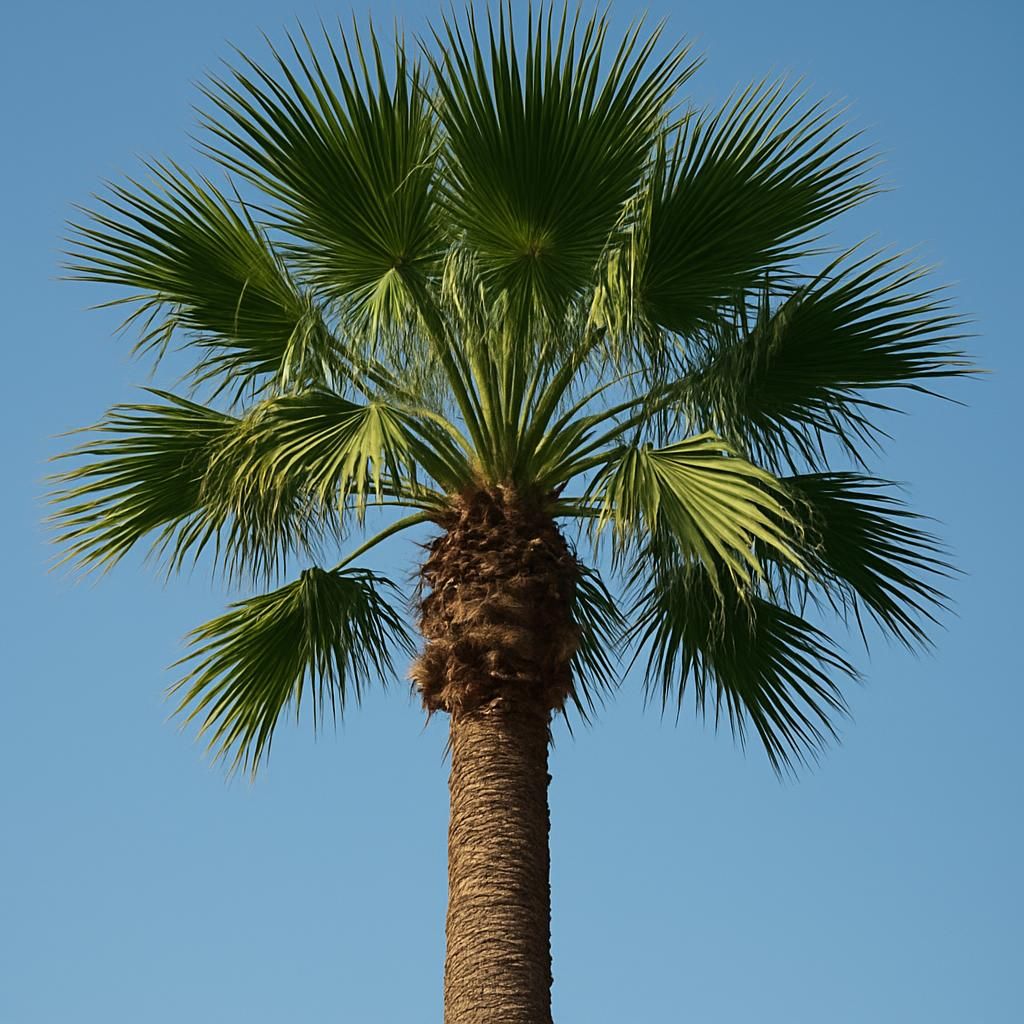
Introduction to Washingtonia
Washingtonia is a genus of two species of fan palms native to the deserts and coastal regions of the southwestern United States and northwestern Mexico. The most commonly cultivated species, Washingtonia robusta, is prized for its tall, slender trunk and dense crown of fan-shaped leaves that provide striking vertical accent in landscapes and commercial plantings. Professional growers value Washingtonia for its rapid growth rate, tolerance of heat, wind, and poor soils, and relatively low maintenance requirements once established.
Botanical Profile of Washingtonia
Washingtonia robusta belongs to the Arecaceae family and is characterized by a solitary, gray-brown trunk that can reach 60–100 feet (18–30 m) in height with a diameter of 12–18 inches (30–45 cm). The trunk is often covered with persistent leaf bases that form a distinctive “shag” or “skirt” in younger specimens. Mature fronds are 3–5 feet (0.9–1.5 m) wide, deeply divided into 40–60 segments, and borne on long petioles armed with sharp spines. The palm produces small, creamy-white flowers in long panicles followed by small black drupes containing a single seed.
Soil, pH, and Climate Requirements for Washingtonia
Washingtonia performs best in well-drained sandy loam or loamy sand soils. It tolerates a wide range of textures provided drainage is excellent. The palm is highly salt-tolerant, making it suitable for coastal plantings. The following table summarizes ideal growing conditions:
| Parameter | Ideal Range | Notes |
|---|---|---|
| Soil Type | Sandy loam to loamy sand | Heavy clay requires amendment with coarse sand or gravel |
| Soil pH | 6.0–8.0 | Slightly acidic to moderately alkaline |
| Temperature Range | 25–115 °F (–4–46 °C) | Mature palms tolerate brief light frost |
| USDA Hardiness Zones | 8b–11 | Protect young plants below 25 °F |
| Annual Rainfall | 4–20 inches (100–500 mm) | Supplemental irrigation required in drier regions |
| Sun Exposure | Full sun | Minimum 6–8 hours direct sunlight daily |
| Wind Tolerance | High | Strong winds help keep crown clean |
Step-by-Step Planting & Propagation
- Site Selection: Choose a location with full sun and excellent drainage. Avoid low spots where water may pool.
- Soil Preparation: Dig a planting hole twice the width of the root ball and equal in depth. Amend heavy soils with 30–50 % coarse sand or gravel.
- Planting Depth: Set the palm so the top of the root ball is level with or slightly above surrounding grade. Backfill and firm soil gently.
- Watering In: Apply 5–10 gallons (19–38 L) of water immediately after planting to settle soil and eliminate air pockets.
- Mulching: Apply a 2–3 inch (5–8 cm) layer of organic mulch in a 3-foot (0.9 m) radius, keeping mulch 4–6 inches (10–15 cm) away from the trunk.
- Staking: Use two or three stakes and flexible ties for the first 6–12 months on windy sites.
Propagation is achieved almost exclusively by seed. Fresh seed germinates in 4–12 weeks when kept at 80–90 °F (27–32 °C) with consistent moisture. Scarification or soaking in warm water for 48 hours can improve germination rates.
Care & Maintenance regimes for Washingtonia
Once established, Washingtonia requires minimal intervention. The following table provides recommended water, fertilizer, and pruning schedules for commercial and landscape plantings:
| Growth Stage | Irrigation Frequency | Fertilizer Program | Pruning Schedule |
|---|---|---|---|
| Establishment (0–12 mo) | Weekly deep watering until root zone is moist | 8-4-12 palm fertilizer at 1 lb per 100 sq ft every 8 weeks | Remove only dead or damaged fronds |
| Young (1–5 yr) | Every 10–14 days in summer; monthly in winter | 8-4-12 slow-release at 2 lb per 100 sq ft every 12 weeks | Annual removal of oldest 2–3 fronds |
| Mature (>5 yr) | Every 3–4 weeks in summer; none in winter | 8-4-12 at 3 lb per 100 sq ft in spring only | Annual “skirt” removal in late winter |
Pests, Diseases & Organic Management
Washingtonia is relatively resistant to pests but can be affected by spider mites, scale insects, and mealybugs during hot, dry periods. Regular inspection of the crown and frond undersides allows early detection. Organic management includes strong water sprays to dislodge mites, horticultural oil applications, and introduction of predatory mites. Root rot caused by Phytophthora species may occur in poorly drained soils; prevention through proper siting and soil amendment is the most effective control.
Harvesting, Curing & Optimal Storage
Washingtonia is primarily grown as an ornamental rather than a food crop. When seed collection is desired, harvest mature black drupes in late fall. Clean seeds by removing pulp, then air-dry for 3–5 days at 70 °F (21 °C) before storage in breathable paper bags at 40 °F (4 °C) with 30–40 % relative humidity. Viability remains high for 12–18 months under these conditions.
Companion Planting for Washingtonia
Washingtonia pairs well with drought-tolerant species that share similar cultural requirements. Recommended companions include Agave, Yucca, and Bougainvillea for visual contrast and pollinator support. Ground covers such as Dymondia margaretae help suppress weeds and reduce soil evaporation while tolerating reflected heat from the palm’s trunk.