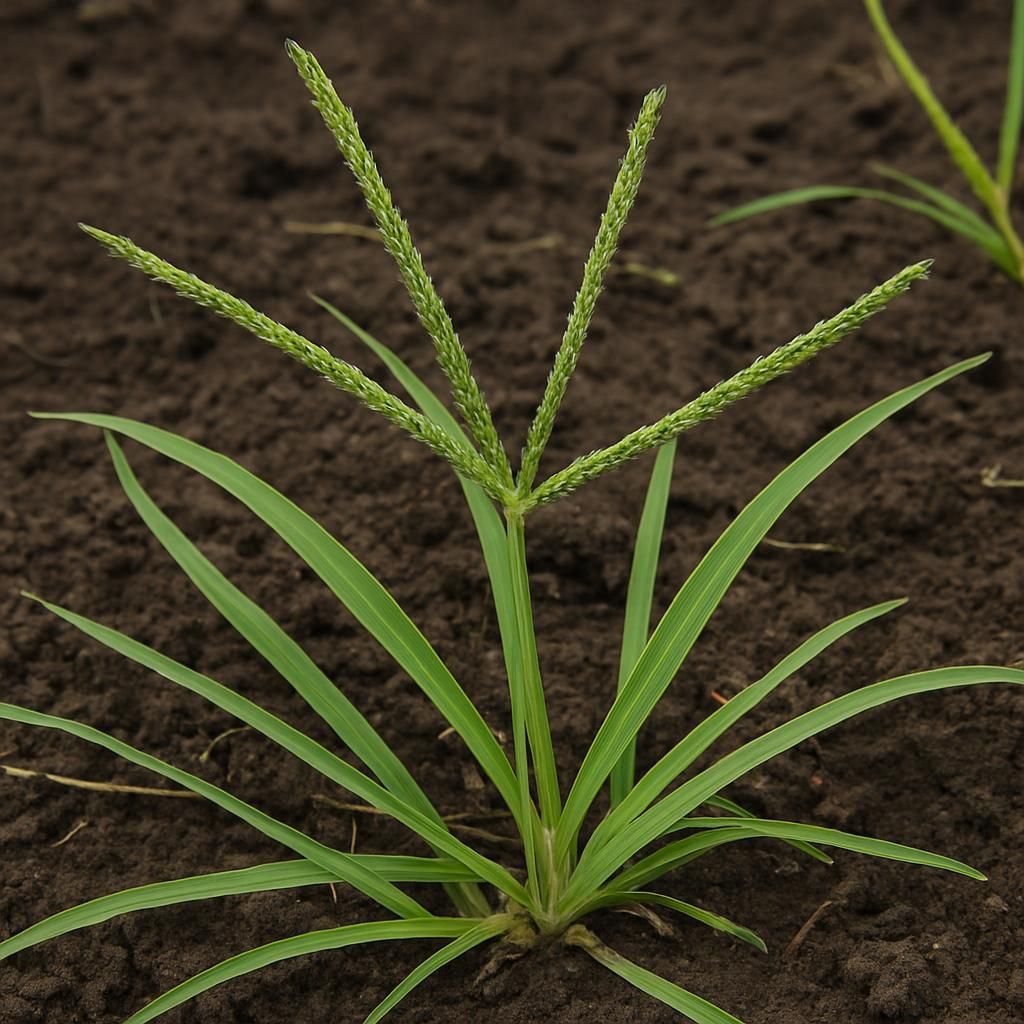
Introduction to crabgrass
Crabgrass (Digitaria sanguinalis) is one of the most problematic annual grassy weeds in temperate and subtropical agricultural systems. It thrives in disturbed soils, open canopies, and areas with high light intensity, quickly outcompeting desirable crops and turf species for water, nutrients, and space. Left unmanaged, it can reduce yields in Corn, Wheat, and vegetable crops while degrading pasture quality. Its aggressive growth habit and prolific seed production make it a persistent challenge for both commercial growers and home gardeners.
Identifying Symptoms & Damage
Early detection of crabgrass is critical for successful control. Seedlings emerge with narrow, light-green leaves that quickly develop the characteristic prostrate growth habit with stems radiating from a central point, resembling crab legs. Mature plants produce finger-like seed heads with 3–13 spikes, each containing hundreds of tiny seeds. In crop fields, crabgrass causes visible stunting of neighboring plants, yellowing from nutrient competition, and reduced stand density. In turf, it creates patchy, coarse-textured areas that disrupt uniformity and lower aesthetic value.
Lifecycle and Progression of crabgrass (MUST INCLUDE A MARKDOWN TABLE OF LIFECYCLE STAGES)
Crabgrass follows a classic summer annual lifecycle, germinating when soil temperatures reach 55–65 °F (13–18 °C). Seeds remain viable in the soil seedbank for up to three years, allowing rapid reinfestation if control measures are incomplete.
| Stage | Timing | Key Characteristics | Management Window |
|---|---|---|---|
| Germination | Spring (soil 55–65 °F) | First shoots appear in thin or bare spots | Pre-emergent herbicides or mulch |
| Vegetative Growth | Late spring–early summer | Rapid tillering and prostrate spreading | Mowing, cultivation, post-emergent |
| Flowering | Mid to late summer | Seed heads form; pollination occurs | Remove plants before seed set |
| Seed Production | Late summer–fall | Up to 150,000 seeds per plant | Sanitation and soil solarization |
| Seedbank Persistence | Fall–winter | Seeds overwinter in top 2 inches of soil | Deep tillage or cover cropping |
Environmental Triggers & Risk Factors
Crabgrass germination and establishment are strongly influenced by soil temperature, moisture, and light. Compacted or poorly drained soils, thin turf stands, and frequent irrigation that keeps surface moisture high favor rapid colonization. Low mowing heights (<2 inches) and excessive nitrogen applications without adequate potassium further increase susceptibility. Climate change is extending the growing season in many regions, allowing multiple flushes of germination and higher seed production.
Organic Control & Treatment Plans (MUST INCLUDE A MARKDOWN TABLE OF TREATMENT OPTIONS AND FREQUENCIES)
Integrated organic management combines cultural, mechanical, and biological tactics. Success depends on timing applications to interrupt the lifecycle before seed set.
| Treatment Option | Application Frequency | Notes & Best Practices |
|---|---|---|
| Corn gluten meal (pre-emergent) | Early spring, repeat in 6–8 weeks | Apply 20 lb/1,000 sq ft when forsythia blooms; water in lightly |
| Mulching (3–4 inch layer) | At planting and after cultivation | Use wood chips or straw to block light and suppress germination |
| Hand pulling / hoeing | Weekly during peak emergence | Remove entire root crown before flowering; best in moist soil |
| Mowing at 3+ inches | Every 5–7 days | Prevents seed head formation and shades soil surface |
| Solarization (clear plastic) | 4–6 weeks in summer | Effective on fallow beds; raise soil temps to kill seeds |
| Overseeding with competitive cover crops | Fall or early spring | Dense stands of Clover or rye outcompete seedlings |
Preventing crabgrass in the Future
Long-term prevention focuses on building dense, competitive plantings and maintaining healthy soil biology. Core practices include proper soil testing and amendment, maintaining mowing heights above 3 inches for turf, and using thick organic mulches in vegetable beds. Implementing Crop Rotation Realities: 6 Organic Patterns That Deliver for Small Farms helps break weed cycles while improving soil structure. Regular aeration reduces compaction, and prompt repair of thin spots with appropriate grass or cover crop seed prevents invasion.
Crops Most Affected by crabgrass
Crabgrass is especially damaging in warm-season row crops and vegetable plantings where open canopy and frequent cultivation create ideal conditions. High-value crops such as Tomato, Pepper, Cucumber, Squash, Corn, and Soybeans suffer significant yield losses when crabgrass is allowed to mature. It also invades Potato fields and small-grain cereals, competing aggressively during early crop establishment stages.