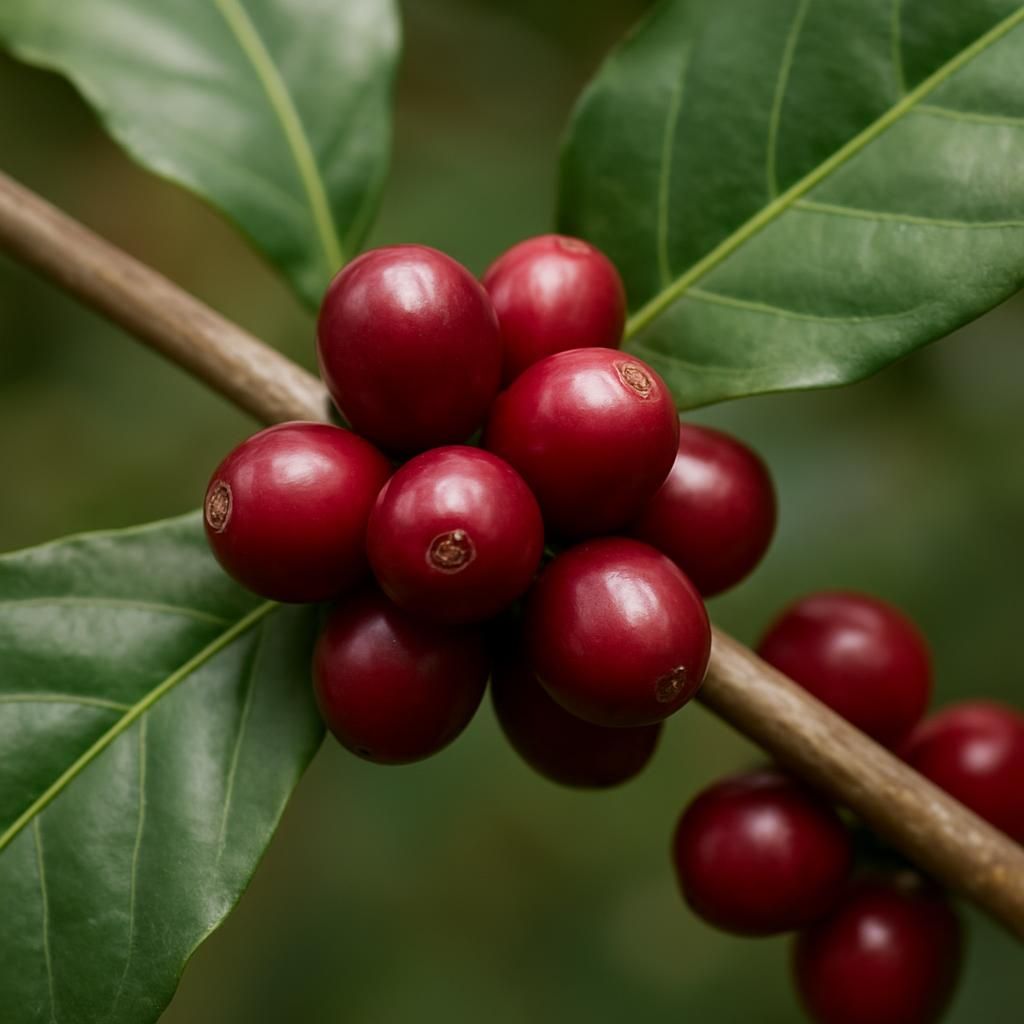
Introduction to Coffee (Arabica - Pacamara)
Pacamara is a hybrid Arabica cultivar developed in El Salvador, resulting from a cross between Pacas and Maragogipe. It is renowned for producing exceptionally large beans and delivering complex, high-scoring cup profiles that command premium prices in specialty markets. Commercial growers and home enthusiasts alike value its combination of vigor, disease resistance relative to many pure Arabicas, and the potential for outstanding flavor when grown and processed correctly.
Botanical Profile of Coffee (Arabica - Pacamara)
Pacamara plants are compact to medium-sized shrubs reaching 1.5–2.5 m in height under cultivation. Leaves are dark green, glossy, and elliptical with prominent veins. The cultivar produces large, elongated cherries that contain oversized beans often exceeding 17 mm in length. Flowers are white, fragrant, and typically appear in clusters along the branches after periods of rainfall or irrigation. The plant’s genetic background confers moderate resistance to certain leaf rust strains while maintaining classic Arabica flavor potential.
Soil, pH, and Climate Requirements for Coffee (Arabica - Pacamara)
Pacamara performs best in well-drained, fertile soils with high organic matter. The following table summarizes ideal growing conditions:
| Parameter | Ideal Range | Notes |
|---|---|---|
| Soil Type | Loamy to sandy loam | Excellent drainage essential |
| Soil pH | 5.8 – 6.5 | Slightly acidic; avoid alkaline conditions |
| Temperature | 15–24 °C (day); 10–18 °C (night) | Frost-free; avoid prolonged heat above 30 °C |
| Altitude | 900–1,800 m | Higher elevations improve bean density |
| Annual Rainfall | 1,500–2,500 mm | Even distribution; supplemental irrigation in dry seasons |
| Relative Humidity | 60–80 % | Moderate humidity reduces disease pressure |
Step-by-Step Planting & Propagation
- Seed Selection: Choose fresh, fully ripe cherries from high-yielding, disease-free mother plants. Remove pulp and ferment seeds for 24–48 hours, then wash and dry in shade.
- Nursery Preparation: Sow seeds in raised beds or polybags filled with a sterilized mix of 50 % forest soil, 30 % well-rotted manure, and 20 % sand. Maintain 60–70 % shade.
- Germination: Seeds germinate in 4–8 weeks at 20–25 °C. Transplant seedlings at the two-leaf stage into larger polybags.
- Vegetative Propagation (optional): Take semi-hardwood cuttings from selected clones during the rainy season; treat with 0.3 % IBA and root in mist chambers.
- Field Planting: Harden seedlings for 4–6 weeks. Plant at 2.0 m × 2.5 m spacing in prepared pits (60 cm × 60 cm × 60 cm) enriched with compost and rock phosphate. Provide temporary shade for the first 12–18 months.
Care & Maintenance regimes for Coffee (Arabica - Pacamara)
Consistent cultural practices are essential for sustained productivity. The following table outlines recommended schedules:
| Operation | Frequency / Timing | Details |
|---|---|---|
| Irrigation | Every 7–10 days in dry season | 20–30 L per mature plant; drip irrigation preferred |
| Fertilizer | 3 applications/year (Mar, Jun, Oct) | NPK 18-6-12 at 150–250 g/plant/year plus micronutrients; split doses |
| Pruning | Annual after harvest + light trim | Remove suckers, dead wood, and crossing branches; maintain open canopy |
| Mulching | Renew twice yearly | 10–15 cm layer of coffee pulp or grass clippings to conserve moisture |
| Weeding | Monthly during growth season | Manual or mechanical; avoid deep cultivation near feeder roots |
Pests, Diseases & Organic Management
Pacamara is susceptible to Coffee Berry Borer, Coffee Leaf Rust, and Root-knot nematodes. Implement integrated management:
- Monitor regularly for berry borer entry holes; release parasitoids (Cephalonomia stephanoderis) and use ethanol traps.
- Apply copper-based fungicides or Bacillus subtilis formulations at first sign of rust lesions.
- Solarize nursery soil and use resistant rootstocks to manage nematodes.
- Encourage beneficial insects by planting Thai Basil and Marigold borders.
Harvesting, Curing & Optimal Storage
Harvest cherries when they reach full color (deep red to purple) and float test confirms ripeness. Selective hand-picking every 10–14 days maximizes quality. Process within 6–8 hours:
- Wet processing: Depulp, ferment 24–36 h, wash, and dry to 10–12 % moisture on raised beds with frequent turning.
- Dry processing: Spread whole cherries on patios for 10–14 days, turning regularly. Store parchment coffee in jute bags inside cool, ventilated warehouses at 18–22 °C and <65 % RH. Maintain moisture below 12 % to prevent mold and preserve cup quality for 12–18 months.
Companion Planting for Coffee (Arabica - Pacamara)
Strategic companions improve biodiversity and microclimate:
- Leguminous shade trees such as Gliricidia and Pigeon pea fix nitrogen and moderate temperature.
- Banana and Papaya provide temporary shade during establishment.
- Aromatic herbs including Rosemary and Coriander deter pests and attract pollinators.
- Nasturtium and Marigold act as trap crops for aphids and nematodes.