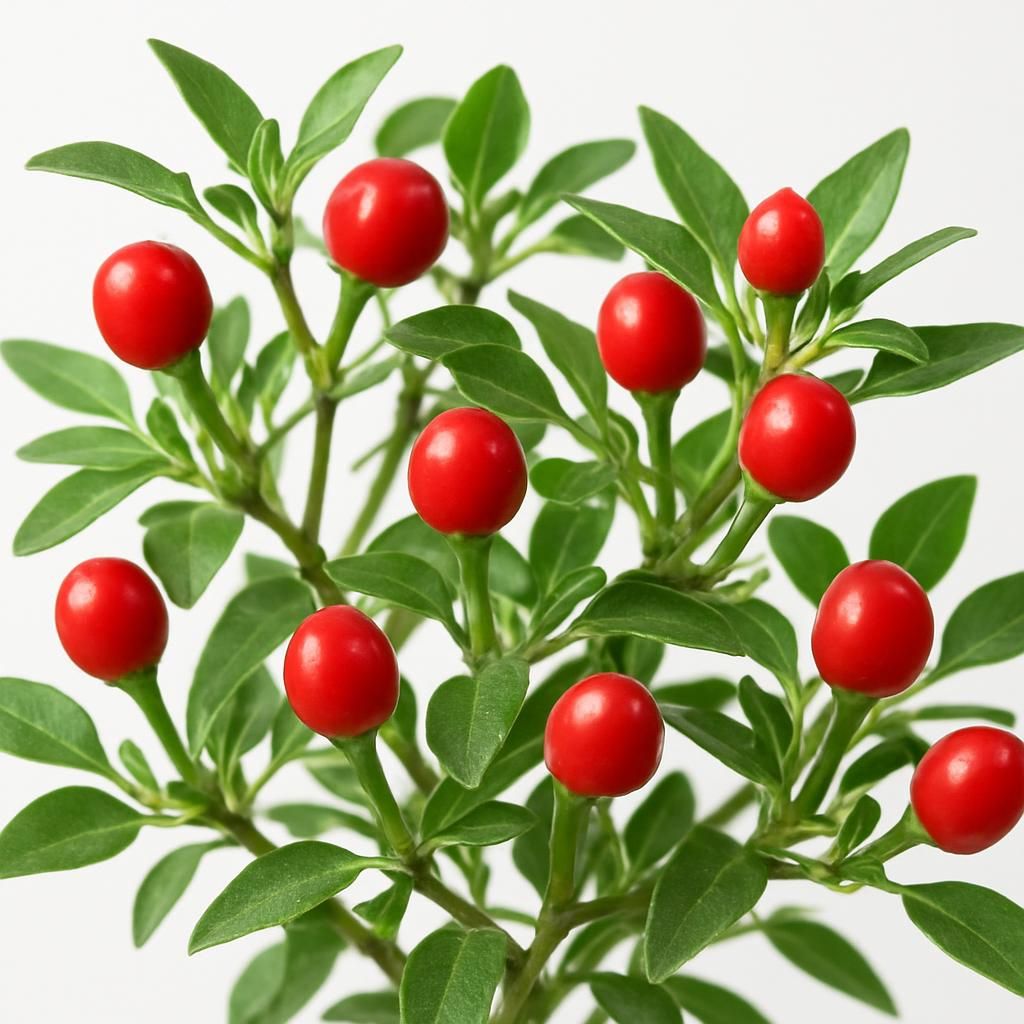
Introduction to Chiltepin (Wild Chili)
Chiltepin (Capsicum annuum var. glabriusculum) is the wild ancestor of many domesticated peppers and one of the few chilies still harvested from truly wild stands. Native to arid canyons and foothills of the southwestern United States and northern Mexico, this small-fruited perennial produces pea-sized red berries with a rapid, clean heat measured at 50,000–100,000 Scoville units. Its drought tolerance, disease resistance, and ability to thrive on marginal soils make it increasingly valuable for climate-resilient small farms and home gardens.
Commercial interest has grown because chefs and processors seek authentic wild flavor profiles that differ from cultivated varieties such as Thai Chili. Because plants can live five to seven years under good management, Chiltepin offers a long-term, low-input crop once established. This guide provides detailed, field-tested recommendations for soil preparation, propagation, irrigation scheduling, organic pest control, and harvest timing to maximize both yield and plant longevity.
Botanical Profile of Chiltepin (Wild Chili)
Chiltepin forms a compact, multi-stemmed shrub reaching 30–90 cm in height with a similar spread. Leaves are ovate to lanceolate, dark green, and slightly pubescent. Small white flowers appear in late spring through early autumn; each flower typically sets one or two berries. The fruits are round to slightly ovoid, 6–10 mm in diameter, turning from green to brilliant scarlet at maturity. Seeds are small (2.5–3.5 mm), tan to light brown, and number 8–15 per fruit.
The plant exhibits a strong taproot with extensive lateral feeder roots that explore surface soil layers after monsoon rains. This root architecture contributes to exceptional drought tolerance once established. Flowering is day-length neutral but accelerates with warm nights (above 18 °C). Unlike many domesticated peppers, Chiltepin retains the ability to self-sow, producing volunteer seedlings that maintain genetic diversity in wild populations.
Soil, pH, and Climate Requirements for Chiltepin (Wild Chili)
Chiltepin prefers well-drained, sandy loam to gravelly soils with moderate fertility. Heavy clay soils should be amended with coarse sand and organic matter to prevent waterlogging. The species tolerates a wide pH range but performs best in slightly acidic to neutral conditions.
| Parameter | Ideal Range | Notes |
|---|---|---|
| Soil Type | Sandy loam, gravelly loam | Excellent drainage essential |
| Soil pH | 6.0–7.2 | Tolerates 5.5–8.0 but growth slows outside ideal |
| Temperature (Day) | 24–35 °C | Optimal fruit set above 21 °C night temp |
| Temperature (Night) | 15–22 °C | Frost kills top growth; roots may survive |
| Annual Rainfall | 300–600 mm | Supplemental irrigation needed in drier areas |
| USDA Hardiness Zones | 8b–11 | Protect below −5 °C |
| Sun Exposure | Full sun (6–8+ hours) | Afternoon shade in extreme heat (>38 °C) |
| Elevation | 300–1,800 m | Higher elevations produce more intense flavor |
Step-by-Step Planting & Propagation
- Seed Collection & Scarification: Harvest fully ripe red fruits in autumn. Remove seeds, rinse, and air-dry. Lightly nick the seed coat with fine sandpaper to improve germination rates from 60 % to over 85 %.
- Sowing Time: Start seeds indoors 8–10 weeks before last frost. Maintain soil temperature at 24–28 °C using a heat mat.
- Germination Medium: Use a sterile, well-draining mix of 50 % coconut coir and 50 % perlite. Sow seeds 3 mm deep; keep consistently moist but not saturated.
- Seedling Care: Provide 14–16 hours of light daily. Transplant seedlings to 7 cm pots when they have two true leaves. Harden off for 10–14 days before outdoor planting.
- Field Spacing: Plant 45–60 cm apart in rows 75–90 cm wide. In containers, use minimum 10 L volume per plant.
- Direct Seeding Option: In frost-free zones, sow directly after soil warms to 20 °C. Thin to final spacing once seedlings reach 5 cm.
Care & Maintenance regimes for Chiltepin (Wild Chili)
Chiltepin requires minimal inputs once established but benefits from a structured schedule during the first two seasons.
| Season | Watering Schedule | Fertilizer Program | Pruning Schedule |
|---|---|---|---|
| Spring | Deep soak every 7–10 days; 15–20 L/plant | Apply 5-5-5 organic at 30 g/plant at bud break | Remove dead wood; tip-prune to encourage branching |
| Summer | Increase to every 5–7 days in extreme heat; mulch heavily | Side-dress with aged compost (2 cm layer) mid-June | Light selective pruning after first fruit set |
| Autumn | Reduce to every 10–14 days as temperatures drop | No additional fertilizer after mid-September | Remove diseased or crossing branches |
| Winter | Minimal irrigation (every 3–4 weeks) in mild climates | None unless leaf yellowing occurs | Dormant pruning to shape and remove 20 % of oldest stems |
Mulch with 5–8 cm of wood chips or gravel to suppress weeds and conserve moisture. Avoid high-nitrogen fertilizers that promote excessive vegetative growth at the expense of fruiting.
Pests, Diseases & Organic Management
Chiltepin is generally more resistant than domesticated peppers, yet several pests and diseases warrant attention.
Common pests include Aphids, Spider Mites, and Thrips. Monitor weekly; release lady beetles or lacewings at first sign of infestation. For mites, apply insecticidal soap or neem oil in early morning.
Diseases such as Phytophthora root rot and Powdery Mildew can occur in poorly drained soils. Improve drainage and avoid overhead irrigation. Remove and destroy infected plant material. Copper-based fungicides provide organic control when applied at first symptoms.
Harvesting, Curing & Optimal Storage
Harvest when berries reach full red color and begin to soften slightly. Pick every 4–7 days during peak production. Wear gloves; capsaicin can irritate skin.
Spread fresh chilies in a single layer on screens in a warm, shaded, well-ventilated area for 5–7 days until brittle. For longer storage, freeze whole dried pods in airtight containers or grind into powder. Properly dried and stored chilies retain pungency for 12–18 months.
Companion Planting for Chiltepin (Wild Chili)
Chiltepin benefits from strategic pairings that enhance pollination, deter pests, and improve soil health. Interplant with Thai Basil to repel aphids and attract beneficial insects. Marigold and nasturtium provide additional pest deterrence while improving biodiversity. Avoid planting near Tomato or Eggplant to reduce shared disease pressure. Deep-rooted Garlic planted at row ends helps suppress nematodes.
For more on strategic crop timing, see The Overlooked Art of Seasonal Harvest Timing for Small Farm Profit.