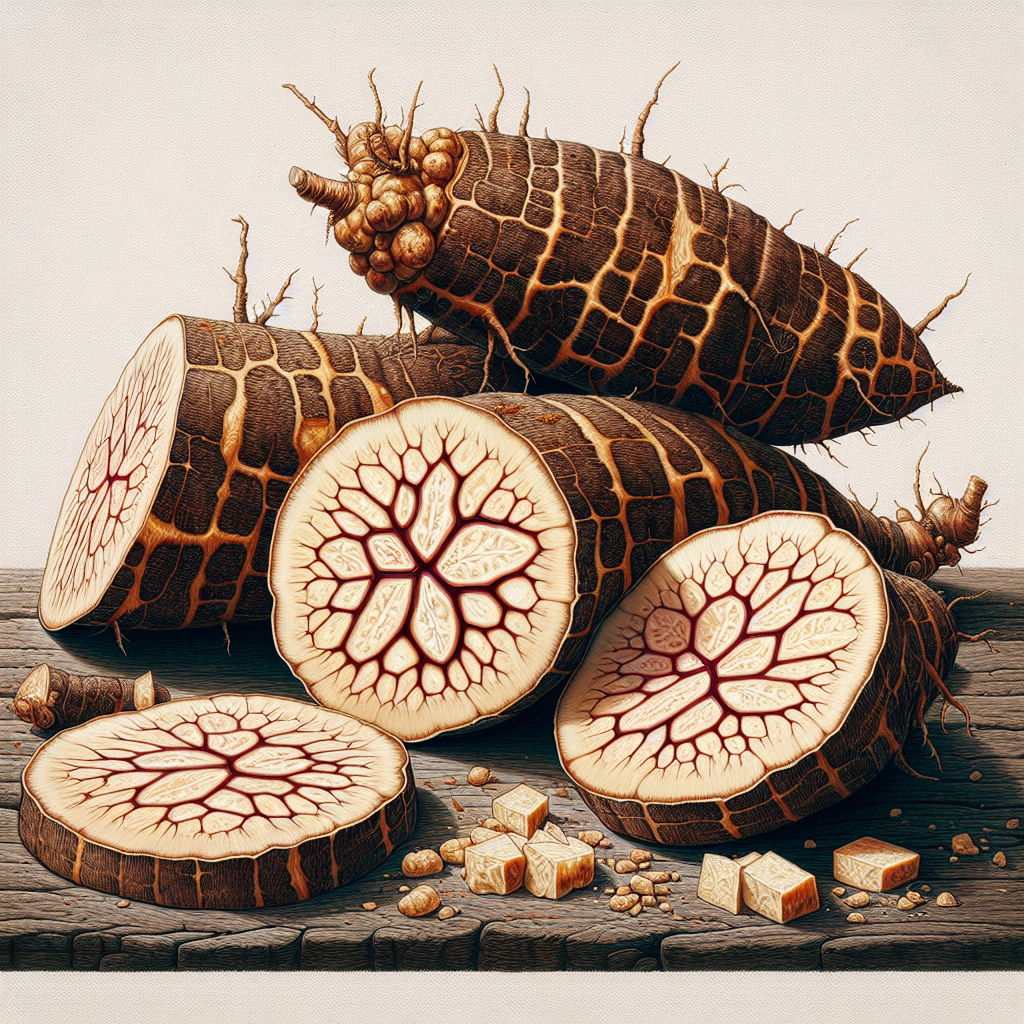
Definitive Diagnostic and Management Guide for Cassava Brown Streak Disease
Introduction to Cassava brown streak disease
Cassava brown streak disease (CBSD) represents one of the most critical threats to food security in sub-Saharan Africa, where cassava serves as a staple crop for over 300 million people. First identified in the 1930s in East Africa, CBSD has surged in prevalence since the 1990s, spreading from coastal regions to inland areas across Tanzania, Uganda, Kenya, Malawi, Mozambique, and the Democratic Republic of Congo. Caused by two potyviruses—Cassava brown streak virus (CBSV) and Ugandan cassava brown streak virus (UCBSV)—the disease manifests as chlorotic spots on leaves progressing to severe necrosis in storage roots, often resulting in complete crop failure.
The economic impact is staggering: CBSD, alongside cassava mosaic disease (if mentioned, link appropriately but none available, so avoid), causes annual losses exceeding $1 billion USD in the region. Unlike foliar symptoms that may be visible early, the true damage lies hidden underground, where brown streaks and corky necrosis render tubers inedible and unmarketable. Smallholder farmers, who produce 80% of Africa's cassava, bear the brunt, exacerbating poverty and malnutrition. This guide provides professional-grade diagnostics, lifecycle insights, organic management strategies, and prevention tactics to safeguard yields. Early detection through field scouting and lab confirmation via ELISA or PCR is essential, as no chemical cures exist—management hinges on integrated cultural, biological, and resistant variety approaches. For small farms struggling with disease identification, tools like AI-powered plant diagnosis can prevent thousands in losses, as detailed in this blog post.
Identifying Symptoms & Damage
Accurate diagnosis of CBSD begins with recognizing its distinctive symptoms, which differ from other cassava ailments like bacterial blight or fungal rots. Foliar signs appear 3-6 months post-infection: initial chlorotic spots (1-4 mm) on lower, older leaves evolve into yellow patches with brown centers, often along veins. Unlike cassava mosaic disease (no link, avoid), CBSD lacks mosaic mottling; instead, it features necrotic lesions that may drop out, creating shot-hole effects.
Stem symptoms include brown streaks or 'corky cambium'—raised, necrotic lines under the bark, most evident on green stems. Vigorously rub stems; if brown flecks appear without oozing, suspect CBSD. The hallmark damage occurs in tubers: cross-section reveals brown necrotic strands radiating from vascular tissues, progressing to dry rot and cavities. Severity scales (0-5) rate foliar (leaf necrosis coverage) and root (necrosis depth) damage; scores >3 indicate >50% yield loss.
Damage quantification: Mild infections reduce yields by 20-30%; severe cases cause 70-100% loss, with unmarketable roots showing >20% necrosis. Differentiate from root rots by dry, corky texture (vs. soft, wet rot) and absence of fungal mycelia. Field diagnosis: Scout 4-6 month-old plants in zigzag pattern, checking 40+ plants/acre. Lab confirmation: RT-PCR detects CBSV/UCBSV with 95% accuracy. Yield impacts compound with whiteflies, the primary vector, amplifying spread. Economic threshold: Remove plants with >25% foliar necrosis to curb transmission.
Lifecycle and Progression of Cassava brown streak disease
CBSD follows a persistent circulatory transmission cycle via whitefly vectors (Bemisia tabaci), with no seed or mechanical transmission. Viruses overwinter in infected cuttings and collateral hosts like wild Ipomoea species. Infection timeline: Whiteflies acquire virus from symptomatic plants (acquisition access 1-24 hours), incubate 10-14 days, then inoculate healthy plants (inoculation access 15-30 min). Latency period: 4-12 weeks for foliar symptoms; root necrosis lags 2-3 months.
Progression phases: Early (chlorosis, 1-3 months); mid (necrosis, stem corking, 4-6 months); late (tuber rot, harvest, 9-12 months). Virus multiplies systemically via phloem, titer peaking in roots during dry seasons. Epidemiological models show polycyclic spread: R0 (basic reproduction) 2-5 in high-vector areas. Cutting propagation perpetuates: 90% of farmer-saved stems carry latent virus. Environmental cues accelerate: High temperatures (>28°C) boost vector flight, doubling incidence. Management interrupts at acquisition/inoculation via vector control or clean planting material.
Environmental Triggers & Risk Factors
CBSD thrives in warm, humid tropics (25-32°C, 60-80% RH), correlating with bimodal rainfall zones. Key triggers: Whitefly population explosions during dry spells (<50 mm rain/month), favoring alate morphs. Altitude <1000m heightens risk; above 1500m, incidence drops 80%. Soil factors: Poor drainage exacerbates root necrosis, mimicking phytophthora. Variety susceptibility: Sweet cassava landraces succumb faster than bitter types.
Risk multipliers: Monoculture >1 ha, farmer-saved cuttings (80% infected), proximity to infected fields (<500m). Climate change projections: +2°C warming expands range 200-300 km northward, increasing outbreaks 30-50% by 2050. Vector synergy with cassava mosaic begomoviruses synergizes damage. IPM risk index: Score vector density + infection % + variety; >15 = high risk, deploy controls.
Organic Control & Treatment Plans
No curative treatments exist; focus on IPM suppressing vectors and virus. Core strategy: Deploy CBSV-resistant varieties (e.g., Kiroko, Namikonga, Uzima) yielding 20-40 t/ha vs. 10 t/ha susceptible. Source virus-indexed cuttings from certified nurseries; hot-water treat (49°C/15 min) reduces latency 70%.
Vector management: Reflective mulches deter 50%; intercropping with marigold or legumes repels whiteflies 40%. Organic sprays: Neem oil (5 ml/L) + soap weekly during peaks, achieving 60-80% mortality. Biologicals: Release Encarsia predators; plant nasturtium traps. Cultural: Rogue infected plants weekly (remove >10% symptomatic); 3-year rotation with non-hosts like [cowpeas](/wiki/cowpeas if avail, else peas). Fertilize balanced NPK to boost resilience; mulch suppresses weeds harboring vectors.
Treatment timeline: Plant clean stock; scout biweekly; apply neem at first chlorosis. Efficacy: Resistant varieties + IPM yield 70% higher. Monitor via farmer field schools; integrate with downy mildew protocols for holistic defense.
Preventing Cassava brown streak disease in the Future
Prevention emphasizes clean stock and barriers. Establish community nurseries producing 100% virus-free stems via shoot-tip meristem culture + thermotherapy. Quarantine new introductions 6 months. Farm hygiene: Disinfect tools (1% bleach); burn debris. Landscape buffers: 100m non-cassava hedges (e.g., banana). Policy: National certification schemes mandate indexing.
Long-term: Breed multi-resistant hybrids stacking CBSV + CMD tolerance. Farmer training: Use apps for symptom ID, vector trapping. Climate adaptation: Early planting evades peaks. ROI: Prevention costs $50/ha vs. $500/ha loss. Track via AI scheduling to optimize timings, as in this blog. Success stories: Uganda's NAROCD program cut incidence 60% via clean seed.
Crops Most Affected by Cassava brown streak disease
CBSD targets cassava exclusively among major crops, with no natural wild reservoirs beyond Ipomoea spp. All varieties susceptible, but landraces (NAR 1, Mbundumali) suffer >90% loss; improved resistants (Nase 3, KME 1) <20%. Regional hotspots: Coastal Tanzania (90% fields), Lake Victoria basin. Co-infection with CMD doubles damage. No impact on sweet potato, yam, or taro, but shared whitefly vectors risk spillover. Global spread risk low outside Africa due to vector specificity.