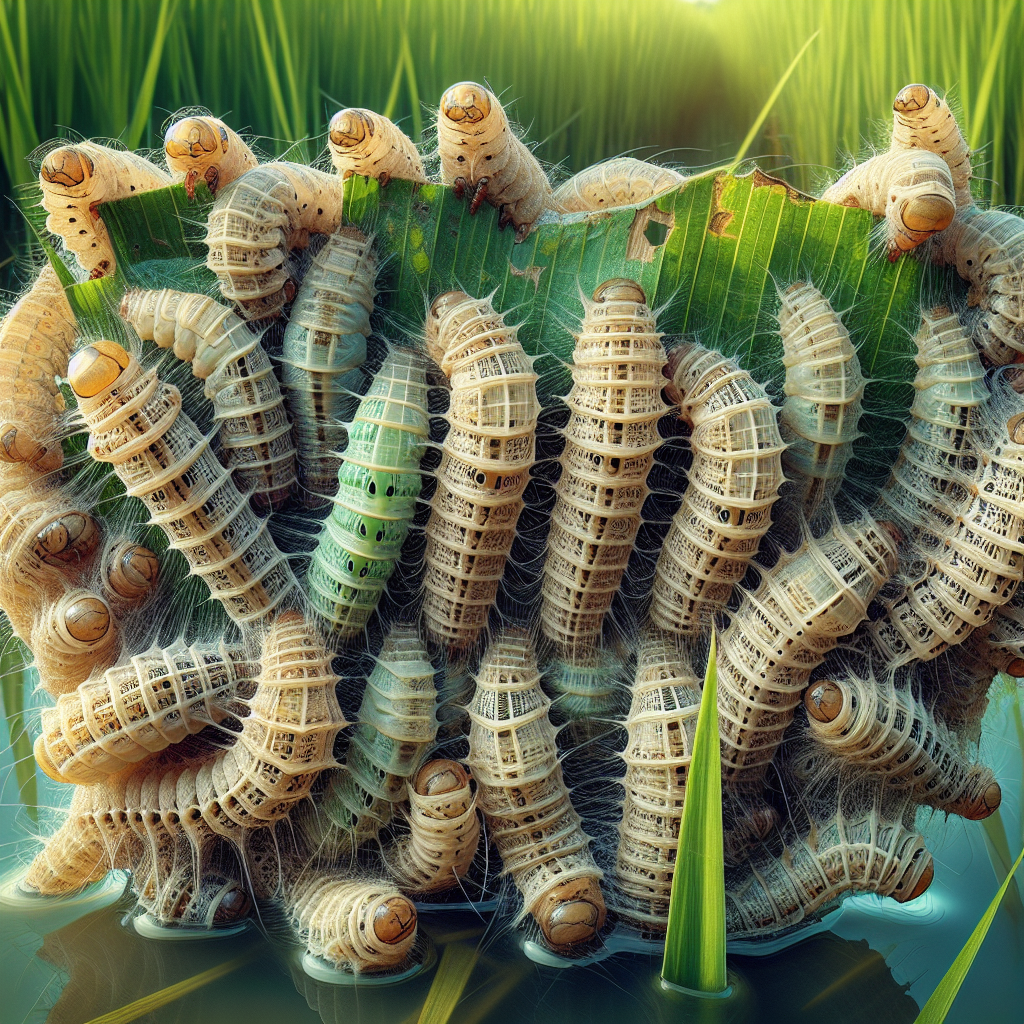
Introduction to Caseworms
Caseworms, scientifically known as Nymphula depunctalis and related species in the Crambidae family, represent a significant threat to aquatic and semi-aquatic crops worldwide. These pests are particularly notorious in rice paddies, where their larvae construct portable cases from leaf fragments and silk, enabling them to feed voraciously on foliage while remaining protected from predators and environmental stresses. Originating from tropical and subtropical regions, caseworms have spread to major rice-producing areas in Asia, Africa, and parts of the Americas, causing yield reductions of up to 30-50% in severe infestations.
Understanding caseworms is crucial for rice farmers and those cultivating similar wetland crops. These insects thrive in flooded fields, exploiting the moist conditions to complete their lifecycle rapidly. Early detection and intervention are key, as mature larvae can skeletonize leaves, leading to reduced photosynthesis and weakened plants. This definitive guide equips agricultural professionals with diagnostic tools, lifecycle knowledge, and proven organic management strategies to safeguard harvests. By integrating cultural, biological, and mechanical controls, growers can achieve sustainable suppression without relying on synthetic chemicals. For more on rice cultivation challenges, see our detailed overview on Rice (crop).
Identifying Symptoms & Damage
Recognizing caseworm damage begins with scouting flooded fields during the tillering to panicle initiation stages of crop growth. The hallmark sign is the presence of tubular cases attached to leaf undersides or floating on water surfaces. These cases, typically 10-20 mm long, are constructed from bits of leaf tissue bound with silk, giving them a mottled green-brown appearance that camouflages them effectively.
Early symptoms include longitudinal cuts along leaf blades, where larvae have scraped away the green tissue, leaving transparent windows. As feeding progresses, leaves develop a skeletonized look with only veins remaining, often curling or wilting. Severe infestations result in 'dead hearts'—dead central leaves in young plants—or complete defoliation in tillering rice. Unlike armyworms, which leave ragged edges, caseworm damage is more precise and associated with cases.
Damage assessment involves counting cases per square meter: 5-10 cases indicate low pressure, 20+ signals action needed. Yield impacts are profound; a 1% increase in caseworm density can reduce grain yield by 0.5-1%. Differentiate from leafhoppers, which cause yellowing without cases, or whirlworms (related but web-spinning). Use a hand lens to confirm larvae inside cases—small, pale green with dark heads and thoracic legs. Regular monitoring at dawn or dusk, when larvae are active, enhances detection accuracy.
Lifecycle and Progression of Caseworms
Caseworms complete 3-5 generations per rice crop, aligning with flooding cycles. Adult moths are small (15-20 mm wingspan), pale brown with white hindwings marked by dark spots. Females lay 100-200 eggs singly or in clusters on leaf undersides near water level, hatching in 3-5 days into tiny larvae.
Larvae (1st-5th instars) immediately build protective cases, growing from 1 mm to 15 mm over 10-20 days. They feed nocturnally, cutting leaf sections to enlarge cases and propel themselves by jet propulsion through water. Pupation occurs within the case, lasting 5-7 days, before adults emerge to mate and oviposit. Total lifecycle: 25-40 days at 25-30°C, accelerating in warmer conditions.
Progression peaks during vegetative stages, with overwintering as diapausing pupae in dry soil or plant debris. Multiple generations overlap, complicating control timing. Monitor egg masses (pinhead-sized, greenish) for prediction; larvae are vulnerable pre-case stage. Understanding this cycle informs precise interventions, such as flooding disruption during pupation.
Environmental Triggers & Risk Factors
Caseworms flourish in warm (25-35°C), humid environments with standing water >5 cm deep. High nitrogen fertilization promotes lush foliage, ideal for larval feeding—fields with >150 kg N/ha see 2-3x higher infestations. Prolonged flooding beyond tillering stage sustains populations, while direct-seeded rice faces higher risk than transplanted due to extended vulnerability.
Risk escalates with ratoon crops or continuous rice systems, harboring overwintering stages. Weedy fields attract adults for oviposition, and nearby unmanaged paddies serve as reservoirs. Climate change exacerbates issues: erratic monsoons create perfect moist-warm windows. Poor drainage traps humidity, while downy mildew weakens plants, making them susceptible. Scout high-risk zones like field edges and low-lying areas weekly.
Organic Control & Treatment Plans
Integrated organic management emphasizes prevention and thresholds. Cultural Controls: Maintain water depth at 3-5 cm during tillering to strand cases; alternate wetting-drying cycles disrupt lifecycle. Use resistant varieties like IR36 or TKM6. Hand-collect cases (>20/m²) at dawn, drowning in soapy water.
Biological Agents: Encourage natural enemies—dragonfly nymphs, spiders, and parasitic wasps (Trathala flavoorbitalis) reduce populations by 40-60%. Release Trichogramma japonicum at 1,00,000/ha pre-oviposition. Neem oil (5 ml/L) or Bacillus thuringiensis (Bt) var. kurstaki (1 kg/ha) targets larvae effectively, applied evenings. For severe cases, Spring Pest Patrol: Organic AI Strategies to Shield Your Crops from Common Invaders offers tech-enhanced scouting tips.
Treatment Plan:
- Scout weekly; act at 15-20 cases/m².
- Drain fields 24-48 hrs to expose larvae.
- Apply Bt + neem 7 days post-reflood.
- Monitor 5-7 days; repeat if needed.
- Introduce ducks (20/ha) for predation. Yields recover 20-30% with timely action.
Preventing Caseworms in the Future
Long-term prevention hinges on cultural disruption. Destroy stubble post-harvest via deep plowing (15-20 cm) to expose pupae to predators/sun. Rotate with non-hosts like soybeans or legumes for 1-2 seasons. Time planting to avoid peak moth flights (scout regional data).
Enhance biodiversity: Intercrop with mustard or border plantings of grasses to trap adults. Balanced fertilization (<120 kg N/ha) reduces attractiveness. Clean irrigation channels to eliminate refugia. Use yellow sticky traps (20/ha) for monitoring adults. Certified clean seeds/transplants minimize introduction. Annual field sanitation and resistant cultivars cut recurrence by 70%.
Crops Most Affected by Caseworms
Rice dominates as the primary host, with paddy fields suffering most—especially Basmati and Indica varieties. Water chestnuts (Trapa natans) and taro (Taro) face similar devastation in wetlands. Less common: lotus, water lilies in ornamental ponds. In diversified systems, proximity to rice heightens risk for cabbage or lettuce in flooded beds. Global losses exceed $500M yearly, underscoring rice's vulnerability.