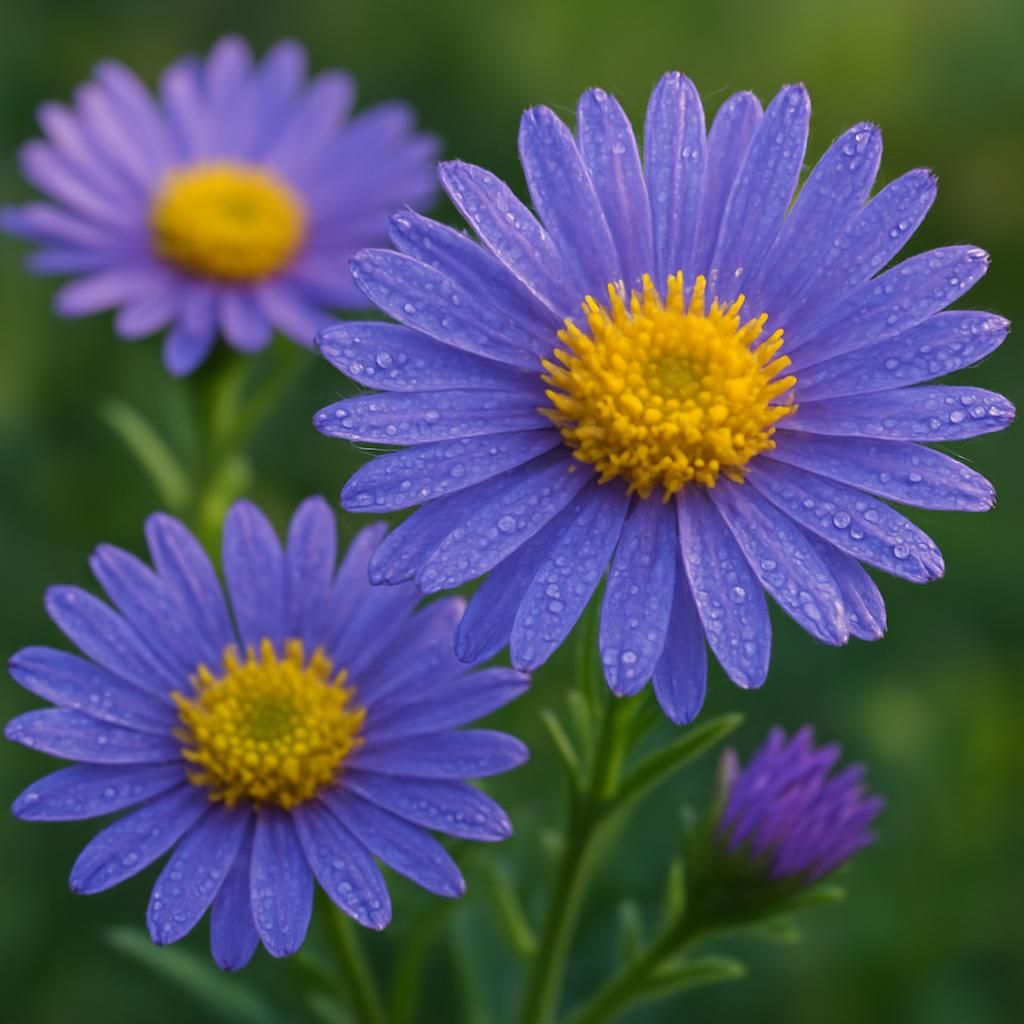
Introduction to Aster
Asters are late-blooming perennials that deliver vibrant color when most garden plants have finished flowering. Grown commercially for cut flowers and landscape use, they attract bees and butterflies while providing reliable fall interest. Professional growers appreciate their relatively short production cycle and strong market demand for both fresh and dried stems.
Botanical Profile of Aster
Modern garden asters belong primarily to the genus Symphyotrichum, previously classified under Aster. These clump-forming perennials produce daisy-like composite flowers with yellow centers surrounded by ray florets in shades of purple, blue, pink, and white. Plants typically reach 30–120 cm in height with alternate, lanceolate leaves and fibrous root systems. Flowering occurs from late summer through autumn, triggered by shortening day length.
Soil, pH, and Climate Requirements for Aster
Asters thrive in well-drained loam with moderate fertility. Heavy clay soils should be amended with organic matter to improve structure and drainage. The following table summarizes ideal growing conditions:
| Parameter | Ideal Range | Notes |
|---|---|---|
| Soil Type | Loamy, well-drained | Avoid waterlogged sites |
| Soil pH | 6.0–7.0 | Slightly acidic to neutral |
| Temperature | 15–24 °C daytime | Hardy to -15 °C once established |
| USDA Zones | 3–8 | Choose cultivars suited to local winters |
| Sunlight | Full sun to partial shade | Minimum 6 hours direct light |
| Spacing | 30–45 cm between plants | 60–90 cm between rows for commercial beds |
Step-by-Step Planting & Propagation
- Site Preparation: Clear weeds and incorporate 5–8 cm of well-rotted compost. Conduct a soil test and adjust pH if needed.
- Division: In early spring or fall, divide established clumps every 2–3 years. Each division should contain 3–5 shoots and healthy roots.
- Cuttings: Take 8–10 cm basal cuttings in spring; root in a 1:1 perlite-sand mix under mist.
- Seed: Sow fresh seed in late winter under controlled conditions at 18–20 °C. Transplant seedlings when they have 4–6 true leaves.
- Field Planting: Set transplants at the same depth they were grown; water thoroughly and apply a light mulch layer.
Care & Maintenance regimes for Aster
Consistent moisture and balanced nutrition support strong stems and abundant blooms. The table below outlines a professional schedule:
| Growth Stage | Watering | Fertilizer | Pruning / Pinching |
|---|---|---|---|
| Establishment (0–4 weeks) | Keep evenly moist; 2.5 cm/week | 10-10-10 at 50 g/m² after 2 weeks | Pinch at 15 cm to encourage branching |
| Vegetative (weeks 5–10) | 2.5–3.8 cm/week; reduce if rainy | Side-dress with 5-10-10 at 75 g/m² | Remove lower leaves for airflow |
| Flowering (weeks 11+) | Maintain even moisture | Light potassium boost (0-0-10) | Deadhead spent blooms; stake tall cvs |
| Post-Harvest / Dormancy | Reduce to 1 cm/week | None; apply compost top-dress | Cut back to 10 cm after frost |
Pests, Diseases & Organic Management
Common pests include Aphids, Spider Mites, and Thrips. Monitor weekly and release beneficial insects such as lady beetles or apply insecticidal soap at the first sign of infestation. Fungal issues such as Powdery Mildew and Botrytis are managed through proper spacing, morning irrigation, and removal of infected foliage. Crop rotation with non-hosts every three years reduces soil-borne pathogen buildup.
Harvesting, Curing & Optimal Storage
Harvest stems when 50–75 % of florets are open but centers remain tight. Cut early morning into buckets of clean water with floral preservative. Strip lower foliage and recut stems under water. Store upright at 2–4 °C with 85–90 % relative humidity for up to 7 days. For drying, bundle stems and hang in a dark, well-ventilated area at 20–25 °C for 2–3 weeks.
Companion Planting for Aster
Asters pair well with late-season vegetables and herbs. Plant near Tomato or Pepper beds to attract beneficial insects that also prey on vegetable pests. Interplant with Marigold to deter nematodes and with Yarrow to increase pollinator diversity. Avoid planting near Sunflower which can shade shorter aster cultivars.