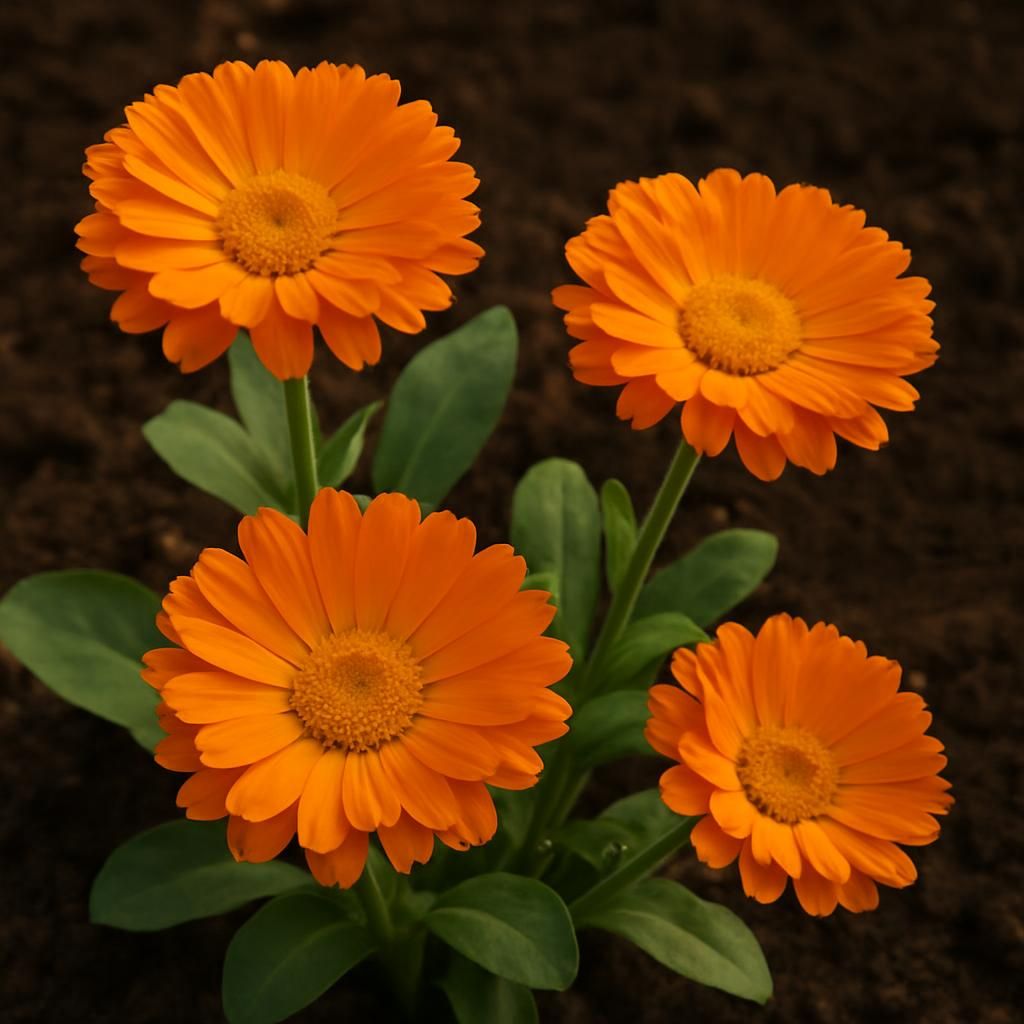
Introduction to Calendula Flower
Calendula officinalis, commonly known as pot marigold, has been cultivated for centuries as both a medicinal herb and a reliable ornamental. The bright orange and yellow daisy-like flowers contain high levels of flavonoids and triterpenoids that support skin health and reduce inflammation when used in salves, teas, and tinctures. Commercial growers value calendula for its rapid 45–60 day cycle from seed to first bloom and its ability to attract beneficial insects while repelling nematodes. Because the crop tolerates light frost and poor soils, it fits easily into rotation plans on small farms and urban plots. This guide delivers professional-grade, field-tested practices for soil management, planting density, irrigation scheduling, and organic disease suppression.
Botanical Profile of Calendula Flower
Calendula belongs to the Asteraceae family and grows as a low-branching annual reaching 30–60 cm in height. Stems are slightly hairy and exude a resinous scent when crushed. Leaves are alternate, oblong to lanceolate, and 5–15 cm long with entire margins. Flower heads are solitary capitula 4–7 cm across, composed of ray florets surrounding a central disc of tubular florets. Petal color ranges from pale yellow to deep orange; double-flowered cultivars are popular for cut-flower markets. The plant produces achene fruits equipped with a small pappus that aids limited wind dispersal. Roots are shallow and fibrous, making calendula sensitive to deep cultivation once established.
Soil, pH, and Climate Requirements for Calendula Flower (MUST INCLUDE A MARKDOWN TABLE OF IDEAL CONDITIONS)
Calendula performs best in well-drained loamy soils with moderate fertility. Heavy clay soils should be amended with 5–8 cm of well-rotted compost to improve structure and drainage. The crop tolerates a wide pH range but yields peak between 6.0 and 7.0. Calendula is cool-season hardy and germinates at soil temperatures as low as 10 °C; optimal vegetative growth occurs at 15–24 °C. In regions with hot summers, partial afternoon shade prevents flower scorch. The following table summarizes ideal environmental parameters.
| Parameter | Ideal Range | Notes |
|---|---|---|
| Soil Type | Loam to sandy loam | Avoid waterlogged or compacted soils |
| Soil pH | 6.0–7.0 | Lime if below 5.8; sulfur if above 7.5 |
| Temperature (Day) | 15–24 °C | Tolerates light frost down to –5 °C |
| Temperature (Night) | 8–15 °C | Higher nights reduce flower set |
| Spacing | 20–30 cm between plants | Rows 30–45 cm apart for mechanical harvest |
| Sun Exposure | Full sun to light afternoon shade | 6+ hours direct light minimum |
| Soil Organic Matter | 3–5 % | Maintain with annual compost applications |
Step-by-Step Planting & Propagation
Direct seeding is the most economical method. Prepare beds by incorporating 3–5 cm of finished compost and raking to a fine tilth. Sow seeds 6–12 mm deep, 2–3 cm apart in rows. Thin seedlings to 20–30 cm once they reach 5 cm tall. For earlier blooms, start transplants 4–6 weeks before last frost in 72-cell trays using a sterile soilless mix; maintain 18–21 °C soil temperature until germination (5–10 days). Harden off seedlings for 7 days before transplanting at the same spacing as direct-seeded plants. Successive sowings every 3–4 weeks extend the harvest window through autumn.
Care & Maintenance regimes for Calendula Flower (MUST INCLUDE A MARKDOWN TABLE OF WATER, FERTILIZER, AND PRUNING SCHEDULES)
Calendula requires consistent moisture during establishment but becomes moderately drought tolerant once flowering begins. Overwatering promotes powdery mildew. Side-dress with 1–2 cm of compost tea every 4 weeks or apply a balanced organic 4-4-4 fertilizer at 250 kg/ha at planting and again at first bloom. Deadheading spent flowers every 5–7 days encourages continuous blooming and reduces self-seeding. The maintenance schedule below provides a professional template.
| Growth Stage | Irrigation Frequency | Fertilizer Application | Pruning / Deadheading |
|---|---|---|---|
| Seedling (0–3 wks) | Keep evenly moist; 2–3×/week | None; use starter compost tea | None |
| Vegetative (3–6 wks) | 2.5 cm/week; deep infrequent | 250 kg/ha balanced organic at week 4 | Pinch tips at 15 cm to promote branching |
| Flowering (6+ wks) | 1.5–2 cm/week if no rain | Side-dress compost tea every 4 weeks | Deadhead every 5–7 days |
| Post-harvest regrowth | Reduce to 1 cm/week | Optional light compost tea | Cut back 10 cm above soil for second flush |
Pests, Diseases & Organic Management
Common pests include aphids, slugs and snails, and occasional spider mites during hot, dry spells. Monitor weekly and release lady beetles or lacewings at first sign of aphids. Hand-pick slugs at dusk or apply iron-phosphate baits. Primary diseases are powdery mildew and botrytis under humid conditions. Improve airflow by spacing plants properly and avoid overhead irrigation after 10 a.m. Preventive sprays of 1 % neem oil or potassium bicarbonate every 10–14 days suppress both pathogens. Crop rotation out of Asteraceae for at least two seasons reduces soil-borne issues.
Harvesting, Curing & Optimal Storage
Harvest flowers when fully open but before pollen shed for maximum resin content. Pick in early morning when dew has dried. Use clean shears and place blooms in shallow trays to prevent bruising. For drying, spread single-layer on screens in a dark, 25–30 °C space with good airflow; dry to 10 % moisture within 48 hours. Store dried petals in airtight glass jars away from light for up to 18 months. Fresh flowers can be refrigerated in perforated bags for 5–7 days.
Companion Planting for Calendula Flower
Calendula repels nematodes and attracts pollinators when interplanted with Tomato and Cucumber. Pairing with Nasturtium creates a beneficial-insect corridor while Thyme and Yarrow enhance pest deterrence. Avoid planting near Fennel which may inhibit growth. Rotate calendula after heavy feeders such as Corn to restore soil biology before the next nitrogen-demanding crop.