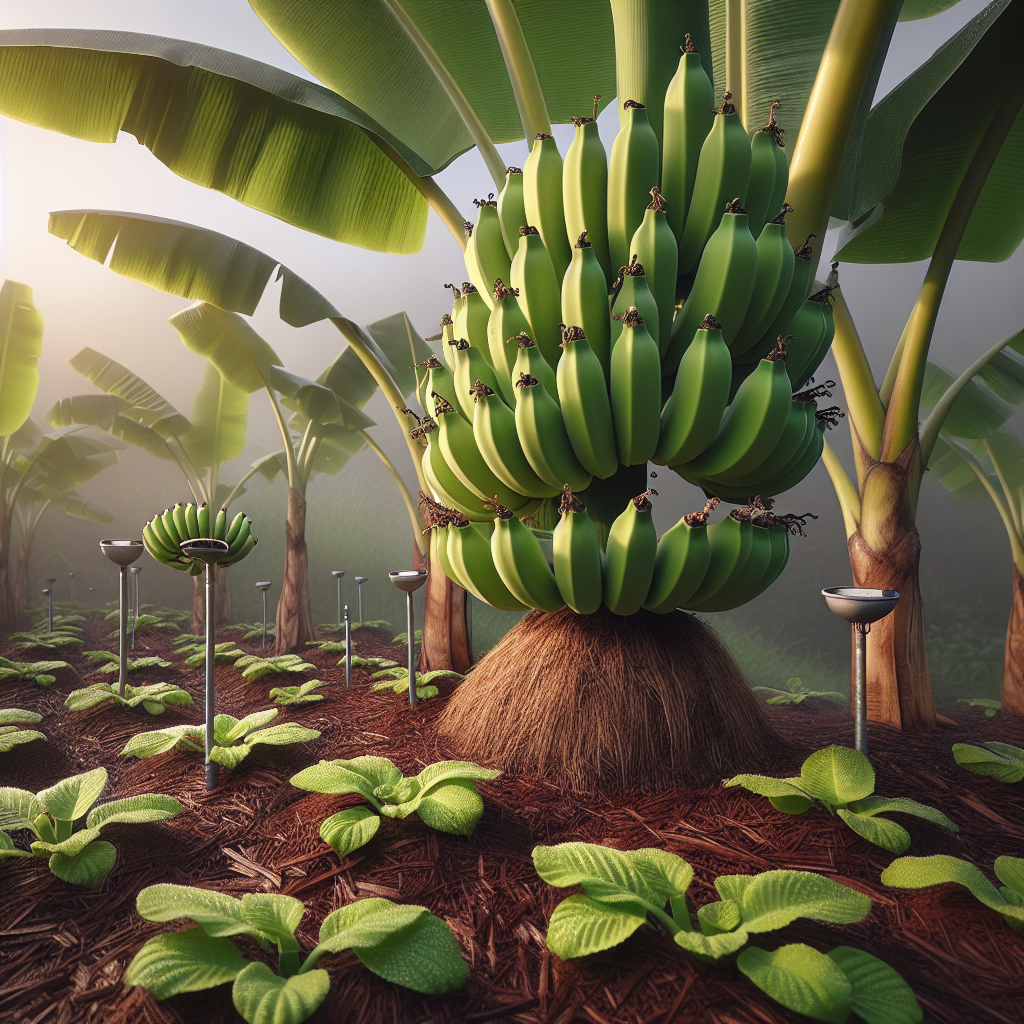
Introduction to Burro Banana
Burro banana is a traditional triploid banana type widely grown in parts of Central America, Mexico, and tropical regions where growers value fruit that bridges the gap between dessert banana and mild plantain. The fruits are blocky, squat, and slightly squared in cross-section, usually with a thicker peel than supermarket dessert bananas. When mature green, they can be cooked much like a plantain; when fully yellow with black freckles, the flesh becomes creamy, mildly tangy, and sweeter than its appearance suggests.
For growers, one of its main advantages is market differentiation. Burro banana does not look like standard export bananas, so it appeals to specialty fruit buyers, ethnic markets, chefs, and diversified farms. Its texture also gives it a longer useful culinary window: green fruit fries well, half-ripe fruit roasts or grills well, and ripe fruit works fresh or in baking. If you already know the production rhythm of Banana, Burro follows the same broad physiology but rewards tighter nutrition and water management because fruit quality is especially sensitive to stress during bunch filling.
Burro banana is not the easiest choice for cold climates, but in frost-free subtropical regions it can perform well when planted in warm, wind-sheltered sites. It is especially suited to home orchards and small mixed farms where fruit can be harvested at peak maturity rather than handled like an export crop. Because the pseudostem, corm, root system, and ratoon cycle all interact, successful growing depends less on “planting a tree” and more on managing a perennial mat of mother plants, followers, and sword suckers.
Botanical Profile of Burro Banana
Burro banana belongs to the genus Musa and is generally treated horticulturally as a cultivar group within the complex of edible bananas derived from Musa acuminata and Musa balbisiana. Like most edible bananas, it is sterile and seedless in commercial production, so propagation is vegetative rather than sexual. The plant is not a true woody tree. What looks like a trunk is a pseudostem made of tightly wrapped leaf sheaths, arising from an underground corm.
Plants are typically medium to tall, often reaching about 10 to 16 feet depending on soil fertility, heat, water, and wind exposure. Leaves are large, paddle-shaped, and easily shredded by strong wind. Moderate leaf tearing is not automatically harmful, but severe chronic wind damage reduces photosynthetic area and slows bunch development. Burro generally has a robust appearance, with a substantial canopy and thicker-looking fruit than dessert Cavendish types such as Dwarf Cavendish Banana.
The inflorescence emerges from the center of the pseudostem after the plant has accumulated enough leaf area and energy reserves. Female flowers form the hands that become marketable fruit; later, male flowers may continue below the bunch. Fruit shape is one of the defining cultivar cues: Burro bananas are short, chunky, and slightly angular, with a heavy peel and firm pulp. The skin often remains greenish longer than expected even as internal maturity advances, so harvest decisions should be based on fullness of fingers and angularity loss rather than peel color alone.
A banana mat typically contains a mother plant, one follower, and one or more younger suckers. Sword suckers, which have narrow, spear-like leaves early in development, are the preferred successors because they arise close to the corm and develop stronger attachment and higher productivity than broad-leaf water suckers. Each pseudostem fruits once, then should be cut back after harvest so the next generation can take over.
Soil, pH, and Climate Requirements for Burro Banana
Burro banana performs best in deep, well-aerated, high-organic-matter soils with excellent moisture retention but rapid drainage. The ideal root zone is a loam to sandy loam enriched with composted organic matter. Heavy clay can work if it is deeply amended and never allowed to remain waterlogged, but poorly drained soils are among the fastest ways to lose a banana planting. Banana roots need oxygen. When pore spaces stay filled with water, roots suffocate, nutrient uptake collapses, and the corm becomes vulnerable to rot organisms.
Target a soil pH of 5.5 to 7.0, with 6.0 to 6.5 being especially reliable for balanced nutrient availability. In strongly acidic soils below about 5.2, calcium and magnesium shortages become more common, and root vigor may decline. In alkaline soils above 7.5, iron, manganese, and zinc deficiencies often appear as chlorosis on young leaves. Before planting, test soil for pH, organic matter, potassium, calcium, magnesium, and micronutrients. Bananas are heavy feeders, and Burro fruit quality is strongly tied to potassium supply.
Drainage matters as much as fertility. A good site should allow irrigation or rainfall to penetrate 18 to 24 inches without standing water after 24 hours. If water puddles remain after a day, use mounds, raised beds, or drainage swales before planting. In commercial-style blocks, contour drainage on slopes is critical to prevent root asphyxia downslope and erosion upslope.
Temperature preferences are distinctly tropical to warm subtropical. Ideal growth occurs roughly between 75 and 95°F. Growth slows noticeably below 60°F, and chilling injury can occur with prolonged cool weather even above freezing. Brief dips into the upper 30s°F may damage leaves; frost can destroy the pseudostem. Root activity is also strongly temperature-dependent, so cool soils delay establishment and sucker development.
Burro banana needs abundant sunlight for full bunch development, usually at least 8 hours of direct sun daily. In very hot inland regions, slight afternoon shelter can reduce leaf scorch on young transplants, but mature plants still need strong light. Rainfall or irrigation equivalent of about 1.5 to 2 inches per week is usually needed during active growth, more in sandy soils and less in humid, heavier soils. The goal is consistent, even moisture in the root zone, not alternating saturation and drought.
Wind protection is highly desirable. Strong wind shreds leaves, leans pseudostems, breaks fruiting plants, and can snap bunch-bearing stems before harvest. Use living windbreaks, fence lines, or strategic placement near sheltered south-facing walls in marginal climates.
For soil-building principles that improve long-term banana performance, see soil health strategies.
Step-by-Step Planting & Propagation
Start with clean, disease-free planting material. The best propagules are sword suckers 3 to 5 feet tall with a solid corm base, or tissue-cultured plants from a reputable source if available. Avoid weak water suckers unless no other material exists; they often establish more slowly and produce inferior first crops.
Select the site. Choose a frost-free, full-sun location with rich soil and protection from prevailing wind. Avoid low spots where cold air settles or water accumulates.
Prepare the ground. Clear perennial weeds thoroughly. Incorporate 3 to 6 inches of well-finished compost into the top 12 to 18 inches if soil is poor. In compacted ground, loosen deeply rather than creating a glazed planting hole.
Adjust pH and minerals. Add lime if pH is too low, gypsum if calcium is needed without raising pH, and potassium sources as indicated by soil testing. Bananas demand high potassium relative to many fruit crops.
Dig the planting hole. Make it roughly twice as wide as the corm or root ball and deep enough so the propagule sits at the same depth it was growing previously. In wet climates, plant slightly high on a mound 12 to 18 inches tall.
Trim and sanitize if using suckers. Remove damaged roots and any decaying tissue. Some growers pare the corm lightly to expose healthy white tissue and reduce carryover pests. Let trimmed surfaces dry briefly in shade before planting.
Plant firmly. Set the sucker or plantlet upright and backfill with friable soil. Firm enough to remove air pockets, but do not compact heavily. Water deeply immediately after planting.
Mulch heavily. Apply 4 to 8 inches of coarse organic mulch, keeping it 4 inches away from direct contact with the pseudostem. Mulch moderates soil temperature, reduces evaporation, and feeds soil biology.
Space correctly. Home growers often use 10 to 12 feet between mats. Tighter spacings may increase humidity and disease pressure; wider spacing improves airflow and access. In intensive systems, spacing depends on fertility, irrigation, and desuckering discipline.
Establish the ratoon structure. Once new suckers emerge, keep one strong follower and optionally one younger backup. Remove excess suckers regularly so the mat does not become overcrowded.
Support fruiting plants if necessary. In windy areas or under heavy bunch load, install props before the stem begins to lean.
Tissue-cultured plants often establish uniformly but may need extra hardening-off. They should be acclimated gradually to full sun and field conditions, especially in dry or windy environments.
Care & Maintenance regimes for Burro Banana
Water management should be precise rather than casual. The root zone should stay consistently moist to a depth of about 12 to 18 inches during active growth. In practical terms, that means soil should feel cool and slightly damp below the mulch, never dusty-dry and never swampy. A good field check is to squeeze a handful of soil from 6 inches down: sandy soil should barely hold together, loam should form a weak ball that crumbles easily, and clay should be moist but not slick or anaerobic-smelling.
Underwatering signs include rolled or folded leaves during morning hours, slow unfurling of new leaves, narrow emerging leaves, premature yellowing of lower foliage, reduced finger fill, and fruit with poor sweetness. Overwatering signs include constantly wet soil, sour or rotten odor near the corm, yellowing despite adequate fertility, limp leaves that do not recover in cool morning conditions, and eventual pseudostem instability from root decline.
A mature Burro mat in hot weather may need deep irrigation 2 to 4 times weekly in sandy soils, or once to twice weekly in heavier loams, depending on rainfall. Drip or micro-sprinkler systems are preferable to shallow daily watering because they encourage deeper rooting and more stable nutrient uptake. Reduce watering somewhat during cool periods, but do not let fruiting plants dry down severely.
Nutrition is the engine of banana productivity. Burro responds especially well to steady feeding rather than a few large fertilizer doses. Nitrogen drives canopy growth, but potassium is crucial for bunch size, fruit filling, peel integrity, and flavor. A general program for productive soils is to feed small amounts monthly during warm growth periods using a balanced fertilizer with elevated potassium, supplemented by compost, aged manure in modest amounts, and potassium-rich mineral amendments where needed. Excess nitrogen without enough potassium produces lush foliage and disappointing bunches.
Magnesium deficiency shows as interveinal yellowing on older leaves, while iron deficiency appears on younger leaves in high-pH soils. Calcium supports root and cell wall strength. Because bananas export large amounts of nutrients in harvested bunches, recycling chopped leaves and spent pseudostems back onto the mulch ring is highly beneficial.
Desuckering is a core management task. Maintain one fruiting mother, one follower about half to two-thirds its size, and one small sword sucker if space allows. Remove extra suckers by cutting them below soil level and gouging the growing point so they do not immediately regrow. Overcrowded mats yield smaller bunches, trap humidity, and become harder to inspect for pests.
After harvest, cut the spent pseudostem down in stages. First remove the bunch, then shorten the stem to a manageable height, and finally cut near ground level once the follower is established. Split the stem and lay it around the mat as mulch. This returns water and nutrients to the soil.
Leaves should not be over-pruned. Remove only dead, broken, or severely diseased foliage. Healthy green leaves are the sugar factories that fill the bunch. As a rule, the more functional leaves retained up to fruit maturity, the better the bunch finish.
In marginal climates, cold protection may determine success. Thick mulch, reflective heat from masonry walls, frost cloth over young plants, and temporary wrapping of pseudostems during cold snaps can preserve enough tissue for recovery. If the pseudostem is killed to the ground, the corm may resprout, but cropping is delayed significantly.
Pests, Diseases & Organic Management
Burro banana faces many of the same problems as other banana cultivars, but stress reduction greatly lowers susceptibility. The first organic principle is sanitation plus vigor: start with clean material, plant in drained soil, avoid overcrowding, and maintain balanced nutrition.
Banana weevil is one of the most destructive pests in many regions. Adults lay eggs near the corm, and larvae tunnel into corm tissue, weakening plants and reducing bunch size. Symptoms include poor vigor, yellowing, delayed flowering, and stems that topple easily. Organic control relies on clean planting stock, removal of old residues that harbor adults, trapping with split pseudostem sections, and aggressive destruction of infested corm material.
Nematodes can also damage roots, especially in continuously cropped banana ground. Plants show stunting, nutrient deficiency symptoms despite feeding, weak anchorage, and reduced drought tolerance. Rotation is difficult in perennial systems, so prevention is best: use clean propagation material, high-organic-matter soils, and biological activity supported by compost and mulching.
Aphids are important not just for feeding damage but because they can vector Banana bunchy top virus in regions where the disease is present. Inspect the base of leaf sheaths and young growth. Manage colonies early with strong water sprays, conservation of beneficial insects, and organic soaps or oils applied carefully during cooler parts of the day.
Fungal leaf diseases such as Sigatoka cause elongated leaf streaks and necrotic lesions, gradually reducing photosynthetic area. Good airflow, full sun, desuckering, removal of badly infected leaves, and avoiding overhead irrigation late in the day all help suppress spread. In humid climates, dense mats become disease incubators.
Panama disease and Bacterial wilts are serious systemic threats where present. There is no simple curative treatment for infected plants. Rogue symptomatic plants promptly, disinfect cutting tools, and never move suspect suckers between sites. Quarantine discipline matters more than rescue attempts.
Fruit scarring can come from Thrips, rubbing, or poor bunch protection. In commercial-quality production, bunch sleeves or covers are often used once the hands are set, especially where insect pressure or sunburn is an issue. Covers should allow ventilation and not trap excessive moisture.
Organic management is most effective when integrated: healthy soil, clean planting stock, mulch, scouting, trap methods, sanitation, and habitat for beneficial insects such as Nasturtium and Yarrow nearby but not crowding the banana mat.
Harvesting, Curing & Optimal Storage
Burro banana should be harvested at physiological maturity, not when fully tree-ripe in most production settings. Mature fruit becomes fuller and less sharply angular, with fingers rounding out and shoulders near the pedicel filling. Depending on temperature and management, bunches often mature about 75 to 120 days after flowering. Cooler conditions lengthen this window.
For local fresh use, you can leave fruit longer on the plant than export bananas, but waiting too long increases risk of splitting, bird damage, insect attack, and bruising. Harvest whole bunches with a sharp knife or machete, supporting the stem so the bunch does not fall and bruise. Latex sap will exude from cut surfaces, so handle carefully and protect fruit from staining.
After cutting, hang the bunch in shade or set it on padded surfaces. Do not leave it in direct sun. Hands can be separated once latex flow slows. Washing is optional for home-scale production, but if washing, use clean water and dry fruit before packing.
Burro bananas can be used at several stages:
- Mature green: best for frying, boiling, roasting, and savory dishes.
- Color break to yellow-green: firmer slices for grilling and sautéing.
- Full yellow with freckles: best fresh eating, baking, smoothies, and dessert use.
Unlike some thin-skinned dessert bananas, Burro often stores reasonably well because of its thicker peel and firmer flesh. Ripen at about 58 to 68°F for best flavor development. Avoid refrigeration below about 56°F if fruit is still unripe, as chilling injury can dull flavor and blacken peel unevenly. Fully ripe fruit can be held briefly cooler, but texture declines.
If bunches are harvested green for staggered marketing, store in a well-ventilated area away from ethylene-sensitive crops. To accelerate ripening, place fruit in a warm room with naturally ethylene-producing ripe fruit. To slow ripening, keep it cooler within the safe non-chilling range and separate from ripening fruit lots.
There is no true curing step in the same sense used for onions or sweet potatoes, but a short resting period after harvest allows latex to drain and surface moisture to dry before packing. Handle gently throughout; bruises may not show immediately yet will darken as the fruit ripens.
Companion Planting for Burro Banana
Companion planting around Burro banana should support the banana mat rather than compete aggressively with it. The best companions are shallow-rooted or biologically beneficial plants that help moderate soil temperature, attract beneficial insects, reduce erosion, or contribute nitrogen without smothering young suckers.
Thai Basil is a strong companion choice near, but not directly against, the mat. Its aromatic foliage can help diversify the insect environment, and its modest root system makes it suitable for outer mulch-ring planting. Keep it far enough out that harvesting and desuckering remain easy.
Clover works well as a living groundcover in wider-spaced plantings where water is reliable. It helps protect soil from crusting, reduces splash-borne disease spread, and contributes nitrogen biologically. Mow or trim it low so it does not become a vole habitat or compete heavily in dry periods.
Nasturtium is useful as an insectary and sacrificial trap plant in diversified gardens. It attracts pollinators and beneficial insects and can draw some pest attention away from nearby crops. Place it at the sunny perimeter of the banana zone rather than under dense shade.
Yarrow is valuable in orchard-style systems because it attracts parasitoids and predatory insects while tolerating periodic dryness once established. Use it in alleys or borders, not directly in the high-irrigation core of the banana root zone.
Avoid planting heavy feeders such as large squash, corn, or dense root crops directly within the feeding circle of Burro banana. Likewise, avoid woody shrubs that compete for light and moisture. The best layout is a clean, thickly mulched banana basin with companions positioned on the outer edge where they enhance biodiversity without intercepting most of the irrigation and fertilizer.
On mixed farms, companion strategy is less about folklore and more about spacing, root competition, airflow, and beneficial insect support. Thoughtful placement matters more than the mere presence of “friendly” plants.