Introduction to Burdock Root (Dried)
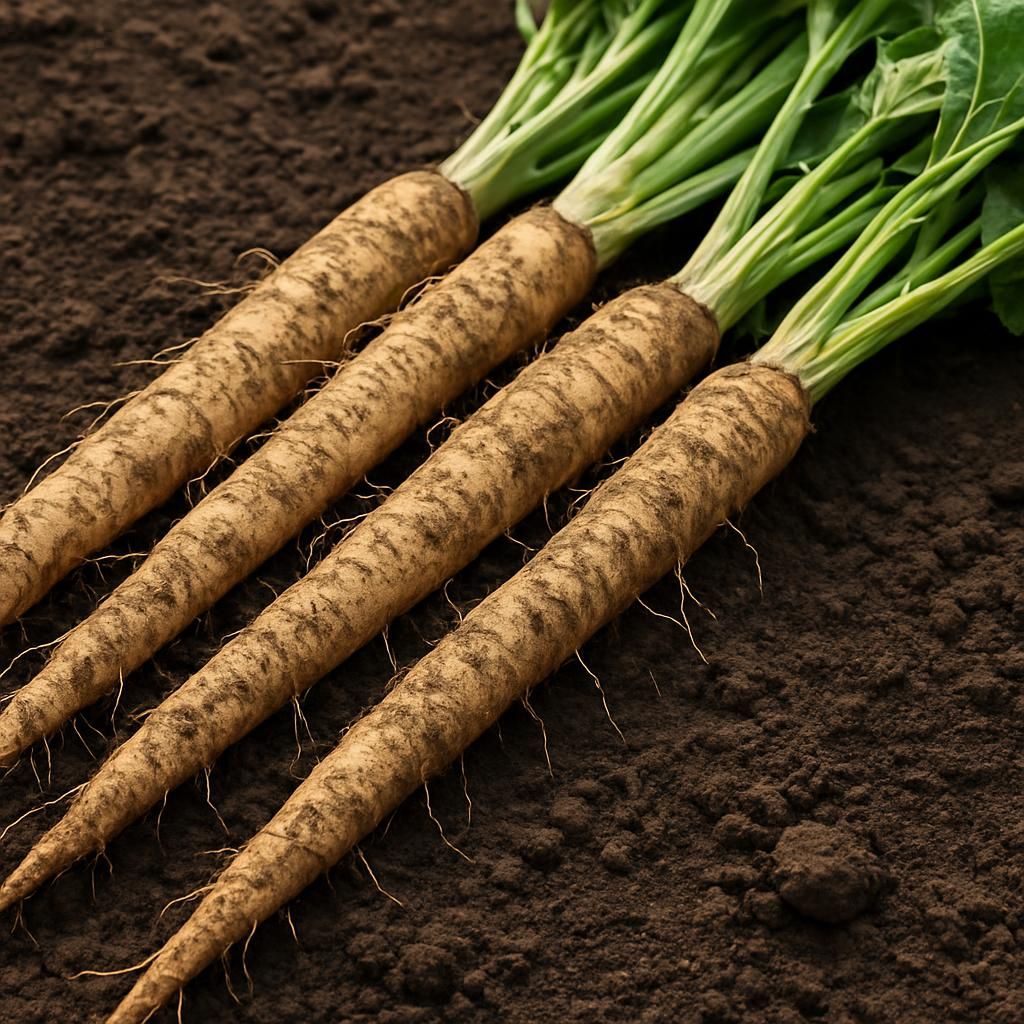
Burdock root (Arctium lappa) is a hardy biennial whose long, starchy taproots are harvested in the first year, then sliced and dried to create a versatile product used in soups, teas, and traditional herbal preparations. The dried root retains high inulin content and a mildly sweet, earthy flavor that makes it popular in Asian and macrobiotic cuisines. Professional growers target consistent root length (50–70 cm) and uniform drying to meet premium market specifications.
Botanical Profile of Burdock Root (Dried)
Arctium lappa belongs to the Asteraceae family and produces large, heart-shaped basal leaves and tall flowering stalks up to 2 m in the second year. The edible portion is the fleshy taproot that can reach 3–4 cm in diameter at the crown and taper to a fine tip. Roots develop a dark, woody exterior and pale, crisp interior when mature. Drying preserves the root’s inulin, polyphenols, and fiber while extending shelf life to 18–24 months under proper storage.
Soil, pH, and Climate Requirements for Burdock Root (Dried)
Burdock requires deep, loose, stone-free soil to allow straight taproot development. Heavy clay or compacted soils cause forking and reduce marketable length. The crop prefers cool-season growth and tolerates light frost.
| Parameter | Ideal Range | Notes |
|---|---|---|
| Soil Type | Sandy loam to loam | Stone-free to 70 cm depth |
| Soil pH | 6.0–7.0 | Slightly acidic to neutral |
| Temperature Range | 15–22 °C daytime | Cool nights improve root quality |
| Frost Tolerance | -5 °C minimum | Seedlings tolerate light frost |
| Spacing | 10–15 cm within row, 60–75 cm between rows | Allows mechanical cultivation |
| Planting Depth | 1–2 cm | Direct sow; light cover only |
| Time to Harvest | 100–150 days | First-year roots only |
Step-by-Step Planting & Propagation
- Select a field with at least 70 cm of workable, stone-free soil. Perform a deep-ripping pass if compaction layers exist.
- Test soil and amend with well-rotted compost at 10–15 t/ha to improve structure without excess nitrogen.
- Sow seeds directly 1–2 cm deep when soil temperature reaches 10 °C. Use precision seeders for uniform 10–15 cm in-row spacing.
- Irrigate lightly after sowing to ensure even emergence; maintain surface moisture for 7–10 days.
- Thin seedlings to final spacing once true leaves appear, retaining the strongest plants.
- Avoid transplanting; taproot disturbance leads to forking and lower dried-root quality.
Care & Maintenance regimes for Burdock Root (Dried)
Consistent moisture and balanced nutrition are critical for straight, high-inulin roots. Over-fertilization with nitrogen produces lush foliage at the expense of root size.
| Stage | Water Schedule | Fertilizer Schedule | Pruning / Other |
|---|---|---|---|
| Germination (0–3 wk) | Light daily irrigation to keep surface moist | None; rely on pre-plant compost | None |
| Vegetative (3–8 wk) | 25–30 mm/week; maintain 60–70% field capacity | Side-dress 20 kg N/ha at 4 weeks | Weed control; shallow cultivation |
| Bulking (8–16 wk) | 20–25 mm/week; reduce slightly near harvest | Optional 10 kg K/ha if soil test low | Remove flower stalks in year-two plants |
| Pre-harvest (last 3 wk) | Withhold water 7–10 days before lifting | No additional fertilizer | Monitor for lodging |
Pests, Diseases & Organic Management
Burdock is relatively pest-resistant but can suffer from Aphids, Slugs, and Root-knot nematodes. Fungal issues such as Powdery mildew and Alternaria leaf spot appear under humid conditions. Organic management includes floating row covers for early-season insects, beer traps or diatomaceous earth for slugs, and neem or insecticidal soap sprays for aphids. Crop rotation with Onion or Garlic breaks nematode cycles. Maintain 60 cm row spacing and good airflow to reduce foliar diseases.
Harvesting, Curing & Optimal Storage
Harvest when roots reach 50–70 cm and soil is moist but not saturated. Lift carefully with a deep-digging fork or mechanical harvester to avoid breakage. Immediately wash roots, trim tops to 2 cm, and slice into uniform 3–5 mm pieces. Dry at 35–40 °C with good airflow until moisture content reaches 8–10 %. Store dried slices in airtight containers away from light and humidity for up to two years. Vacuum-sealing extends shelf life further.
Companion Planting for Burdock Root (Dried)
Burdock pairs well with deep-rooted companions that do not compete for surface nutrients. Carrot and Parsley share similar soil preferences and can be grown in alternate rows. Marigold and Nasturtium provide pest-repellent benefits. Avoid planting near shallow-rooted leafy greens that require frequent irrigation. Clover sown between rows supplies nitrogen and suppresses weeds without shading the crop.