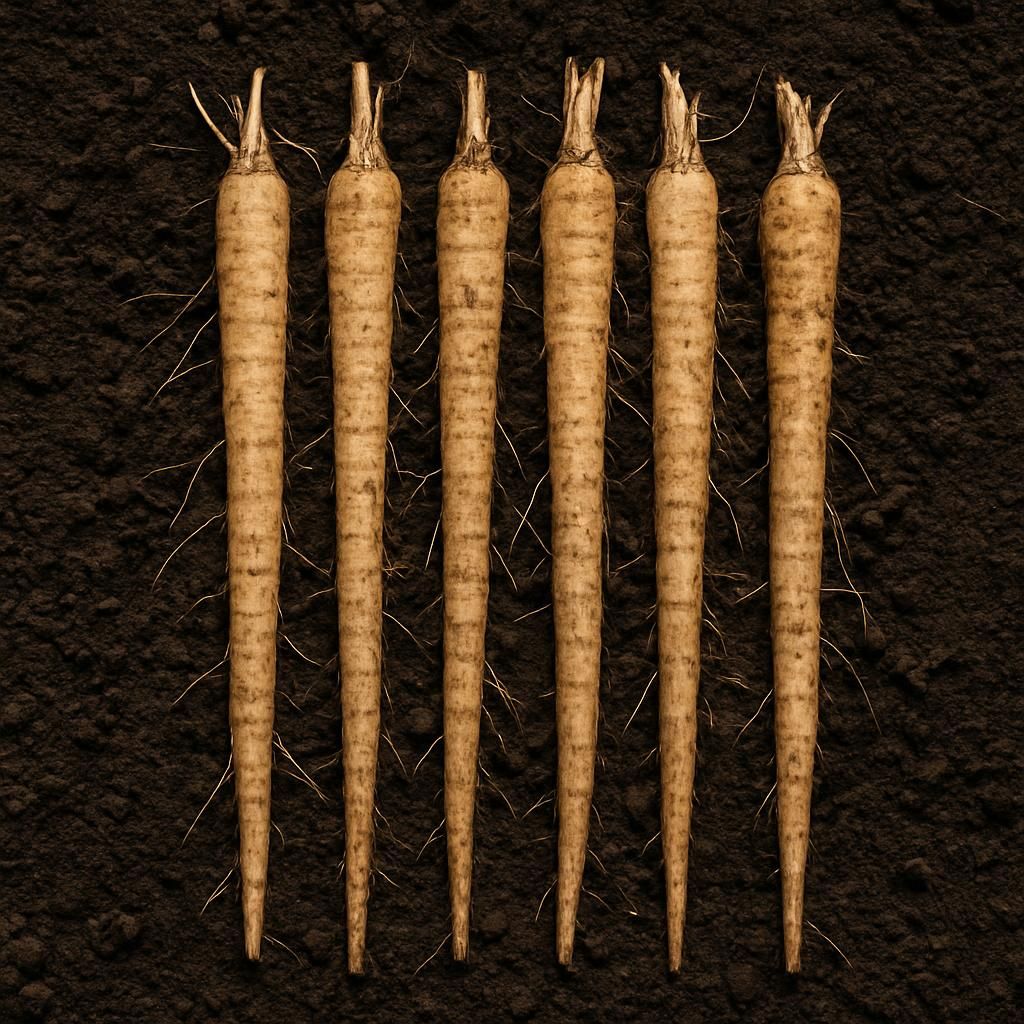
Introduction to Burdock (Gobo - Takinogawa)
Burdock, known in Japan as gobo and specifically the Takinogawa variety, is a deep-rooting biennial cultivated for its long, slender taproot that reaches 60–120 cm. The root is harvested for culinary use, offering a distinctive earthy, slightly sweet flavor and firm texture when stir-fried, pickled, or simmered. Takinogawa is favored by commercial growers for its uniformity, straight growth, and resistance to forking.
Botanical Profile of Burdock (Gobo - Takinogawa)
Arctium lappa belongs to the Asteraceae family. The plant produces a basal rosette of large, heart-shaped leaves in the first year and tall flowering stalks up to 2 m in the second year. The edible portion is the fleshy taproot, which stores carbohydrates and develops a dark brown exterior with white, crisp flesh. The variety Takinogawa is selected for its long, straight roots and adaptability to intensive cultivation.
Soil, pH, and Climate Requirements for Burdock (Gobo - Takinogawa)
Burdock requires deep, loose, fertile soil free of stones to allow unrestricted root development. Heavy or compacted soils cause forking and stunted growth. Ideal conditions are summarized below:
| Parameter | Ideal Range/Value |\n|--------------------|------------------------------------| | Soil Type | Deep sandy loam or light loam | | Soil pH | 6.0 – 7.0 | | Organic Matter | 3–5% well-rotted compost or manure | | Temperature Range | 15–25 °C (optimal); 5–30 °C range | | Frost Tolerance | Hardy to −10 °C once established | | Spacing | 10–15 cm between plants; 60–75 cm rows |
Step-by-Step Planting & Propagation
- Site Preparation: Deeply till soil to 40–50 cm. Remove stones and incorporate 5–7 cm of well-rotted compost. Form raised beds 20–25 cm high for drainage.
- Seed Treatment: Soak seeds in water for 12–24 hours to improve germination. Cold stratify if sowing in spring.
- Sowing: Direct sow 1–2 cm deep in early spring (soil ≥10 °C) or late summer for fall harvest. Sow in rows 60–75 cm apart; thin seedlings to 10–15 cm.
- Succession Planting: Sow every 3–4 weeks for continuous supply.
- Transplanting: Not recommended; burdock resents root disturbance.
Care & Maintenance regimes for Burdock (Gobo - Takinogawa)
Consistent moisture and weed control are critical during the first 60 days. Apply mulch to retain moisture and suppress weeds. The schedule below outlines key inputs:
| Growth Stage | Watering | Fertilizer | Pruning/Thinning |
|---|---|---|---|
| Germination (0–3 wks) | Keep evenly moist; 2–3 cm/week | None; light compost tea optional | Thin to 10 cm at 4-leaf stage |
| Vegetative (4–10 wks) | 2.5–4 cm/week; avoid waterlogging | Side-dress 5-10-10 NPK at 4 wks; repeat at 8 wks | Remove weeds; maintain 15 cm spacing |
| Root Bulking (10+ wks) | 2–3 cm/week; reduce before harvest | Avoid high-nitrogen; potassium-rich side-dress | Minimal; remove flower stalks if bolting occurs |
Pests, Diseases & Organic Management
Common pests include Aphids, cutworms, and wireworms. Diseases such as root rot and powdery mildew can occur in poorly drained soils. Use floating row covers for cutworm prevention, apply neem oil for aphids, and rotate crops every 3–4 years. Beneficial nematodes help control soil-dwelling larvae.
Harvesting, Curing & Optimal Storage
Harvest roots 90–120 days after sowing when 2–3 cm in diameter at the shoulder. Loosen soil with a fork and pull carefully to avoid breakage. Trim tops to 2 cm. Cure roots 1–2 days in shade, then store at 0–2 °C and 95% humidity for up to 4 months. For longer storage, wash, cut into 10 cm pieces, and freeze or pickle.
Companion Planting for Burdock (Gobo - Takinogawa)
Burdock grows well with Carrot, Radish, and Lettuce. These shallow-rooted companions do not compete for space. Avoid planting near Potato to reduce shared pest pressure. Interplant with Marigold to deter nematodes.