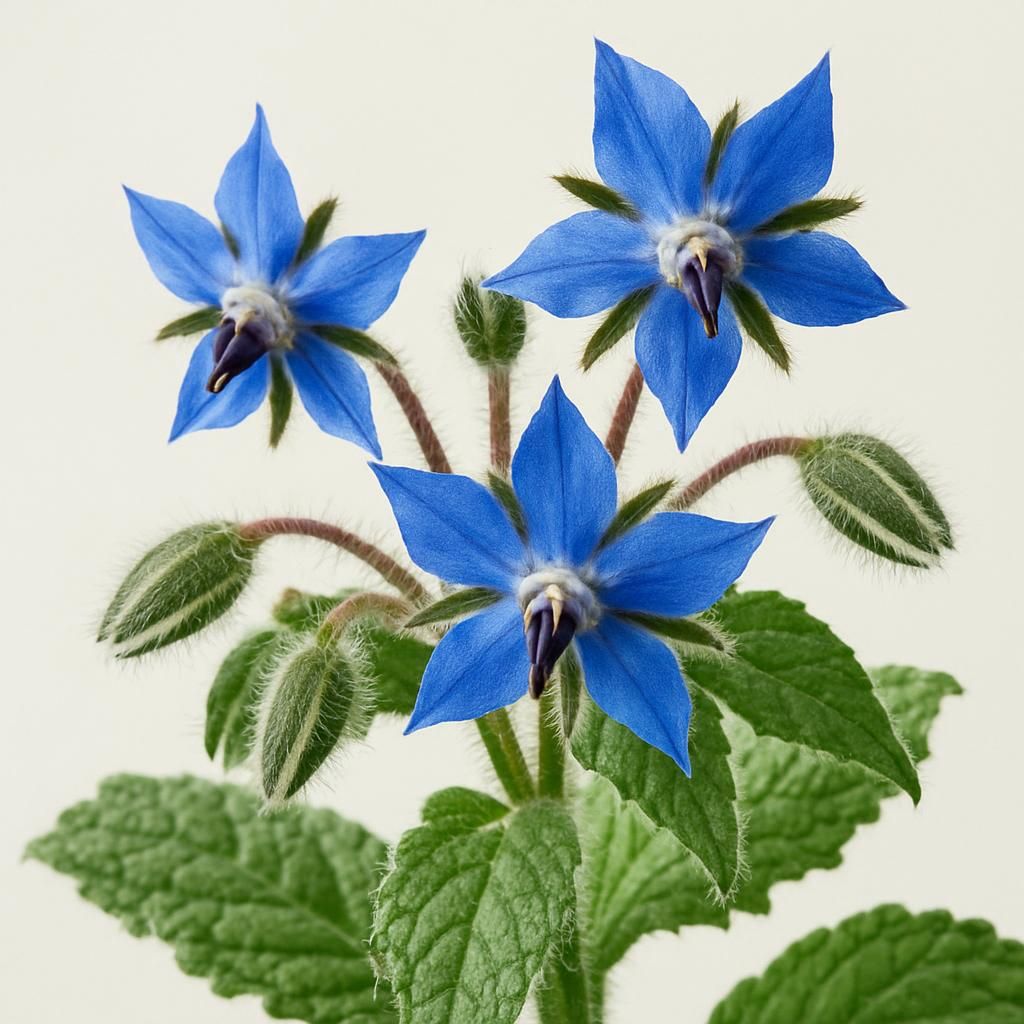
Introduction to Borage Flower
Borage Flower (Borago officinalis), also known as starflower, is a vigorous annual herb native to the Mediterranean region that has become a staple in organic gardens worldwide. Valued for its bright blue edible blooms, cucumber-flavored leaves, and exceptional ability to attract pollinators, borage is easy to grow and serves multiple roles in sustainable agriculture. Its rapid growth cycle, self-seeding habit, and drought tolerance make it suitable for both home gardeners and commercial operations seeking resilient, multi-purpose crops.
Beyond its culinary uses in salads, drinks, and garnishes, borage supports soil health through its deep taproot that mines nutrients from subsoil layers. The plant produces abundant nectar that draws bees, butterflies, and beneficial insects, enhancing biodiversity and improving yields of nearby crops. Because of these attributes, borage is frequently incorporated into Companion Planting strategies across diverse growing zones.
Botanical Profile of Borage Flower
Borago officinalis belongs to the Boraginaceae family and exhibits a robust, branching growth habit reaching 60–90 cm in height with an equal spread. The plant features large, hairy, ovate leaves up to 15 cm long and produces clusters of five-petaled, star-shaped flowers that are typically vivid blue, occasionally pink or white. Each flower measures 1.5–2 cm across and contains prominent black anthers that contrast sharply with the petals.
The plant develops a strong central taproot that can penetrate 30–45 cm into the soil, enabling efficient water and nutrient uptake in poor or compacted conditions. After flowering, borage produces four nutlet-like seeds per flower that readily drop and germinate, allowing the crop to naturalize if not harvested. The entire aerial portion is covered in stiff white hairs that deter some herbivores while giving the foliage a distinctive silvery-green appearance.
Soil, pH, and Climate Requirements for Borage Flower
Borage Flower thrives in well-drained, moderately fertile soils and tolerates a wide range of textures from sandy loam to clay loam provided drainage is adequate. It performs best in full sun but will tolerate light afternoon shade in hot climates. The crop is hardy in USDA zones 3–10 as an annual and shows excellent heat and moderate drought tolerance once established.
| Parameter | Ideal Range | Notes |
|---|---|---|
| Soil Type | Sandy loam to clay loam | Requires good drainage; avoid waterlogging |
| Soil pH | 6.0–7.5 | Slightly acidic to neutral optimal |
| Temperature Range | 15–28 °C (day) | Tolerates light frost; bolts in extreme heat |
| Annual Rainfall | 400–800 mm | Supplemental irrigation needed in dry spells |
| Sun Exposure | Full sun (6+ hours) | Partial shade acceptable in zone 9–10 |
| Spacing | 30–45 cm between plants | Rows 60 cm apart for mechanical cultivation |
Step-by-Step Planting & Propagation
Borage Flower is almost exclusively propagated from seed because cuttings root poorly. Direct sowing is preferred as seedlings develop rapidly and resent root disturbance. Prepare the bed by incorporating 5–8 cm of well-rotted compost or aged manure to improve structure and fertility. Sow seeds 1 cm deep and 30–45 cm apart in rows 60 cm wide once soil temperature reaches 10 °C.
Germination occurs in 7–14 days. Thin seedlings to final spacing when they have two true leaves. For succession planting, sow every three weeks until midsummer in temperate climates. In regions with mild winters, fall sowing produces early spring flowers. Seeds remain viable for three to five years when stored cool and dry.
Care & Maintenance regimes for Borage Flower
Borage requires minimal intervention once established. Mulch with 5 cm of organic material to suppress weeds and conserve moisture. The plant rarely needs staking unless grown in very windy sites. Regular harvesting of flowers and young leaves encourages continued blooming and prevents excessive self-seeding.
| Task | Frequency | Details |
|---|---|---|
| Watering | Weekly (20–25 mm) | Deep watering; allow top 5 cm to dry between irrigations |
| Fertilizer | At planting + mid-season | Side-dress with balanced organic fertilizer (NPK 5-5-5) at 200 g/m² |
| Pruning | Every 2–3 weeks | Deadhead spent flowers; cut back 30 % of foliage to promote bushiness |
Pests, Diseases & Organic Management
Borage Flower is generally pest-resistant due to its bristly foliage, but young seedlings may be attacked by Slugs and Snails. Aphids occasionally colonize tender shoots; strong jets of water or insecticidal soap provide effective control. Powdery mildew can appear in humid, poorly ventilated plantings; improve airflow and avoid overhead irrigation.
Root rot may develop in waterlogged soils. Preventive measures include raised beds and incorporation of coarse organic matter. No major viral or bacterial diseases are commonly reported on borage in temperate production systems.
Harvesting, Curing & Optimal Storage
Harvest young leaves when 10–15 cm long for best flavor and tenderness. Flowers are collected at peak opening, ideally in the morning when nectar content is highest. Both leaves and flowers can be used fresh or dried. Dry at 35 °C with good airflow for 4–6 days until crisp, then store in airtight containers away from light for up to one year.
Seeds are harvested when nutlets turn dark brown and begin to drop. Collect entire flowering stalks, thresh, and winnow. Store seeds at 10–15 % moisture in cool, dark conditions for replanting or culinary use.
Companion Planting for Borage Flower
Borage is an outstanding companion for Tomato and Strawberry because it attracts pollinators and repels certain pests through its aromatic foliage. It also pairs well with Cucumber, Squash, and brassicas by improving pollination and providing ground cover that moderates soil temperature. Avoid planting near Fava Bean if mechanical cultivation is planned, as borage self-seeds aggressively.