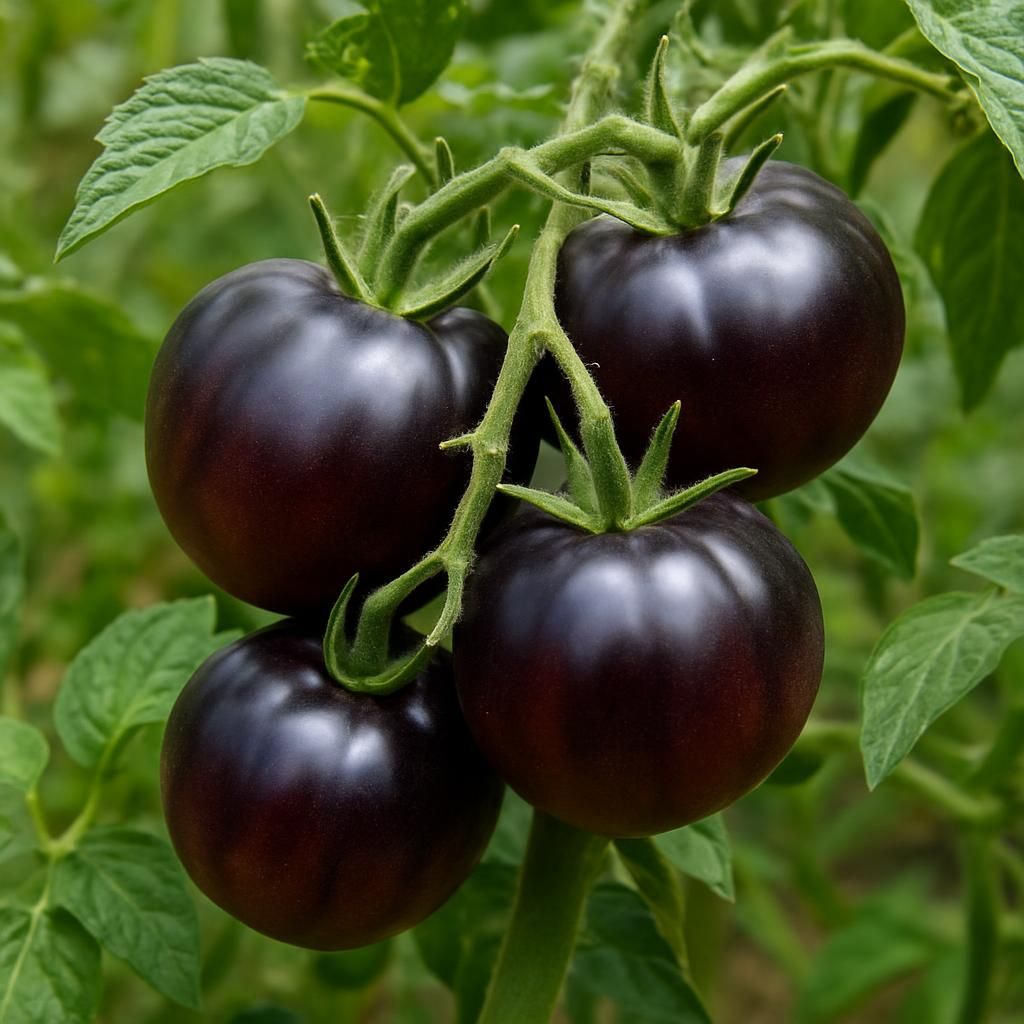
Introduction to Black Sea Man Tomato
Black Sea Man Tomato is an extraordinary heirloom variety originating from the Crimean region along the Black Sea. This indeterminate beefsteak-type cultivar stands out for its intense, smoky-sweet flavor profile and dramatic dark coloration that deepens to nearly black when fully ripe. Gardeners and small-scale farmers value it for both its exceptional taste and its ability to perform well in challenging summer heat. Unlike many modern hybrids, Black Sea Man retains the rich, complex character that made older varieties legendary among tomato enthusiasts.
The variety gained recognition through seed-saving networks and has become a favorite among collectors seeking unique pigmentation and robust flavor. Its large, slightly flattened fruits often weigh between 8-16 ounces, with thick walls and a meaty interior that makes it ideal for slicing, sauces, and roasting. The deep anthocyanin pigments not only create visual appeal but may also contribute to enhanced antioxidant properties compared to standard red tomatoes.
Botanical Profile of Black Sea Man Tomato
Black Sea Man belongs to the species Solanum lycopersicum within the Solanaceae family. As an indeterminate variety, it continues to grow and produce fruit throughout the growing season until killed by frost. The plants develop vigorous vines that can reach 6-8 feet in height when properly supported, featuring compound leaves with a slightly fuzzy texture typical of the species.
The flowers are yellow and self-pollinating, appearing in clusters along the stems. Fruit development follows typical tomato morphology, with the distinctive dark coloration resulting from high anthocyanin concentrations in the skin and flesh. The variety exhibits moderate disease resistance and performs particularly well in Mediterranean and subtropical climates where nighttime temperatures remain above 55°F (13°C).
Soil, pH, and Climate Requirements for Black Sea Man Tomato
Successful cultivation of Black Sea Man Tomato begins with understanding its specific environmental needs. This variety performs best in well-drained, fertile soils rich in organic matter. The following table outlines the ideal growing conditions:
| Parameter | Ideal Range | Notes |
|---|---|---|
| Soil Type | Loamy, well-drained | Incorporate compost for structure |
| Soil pH | 6.2 - 6.8 | Slightly acidic to neutral |
| Temperature (Day) | 70-85°F (21-29°C) | Optimal fruit set occurs in this range |
| Temperature (Night) | 55-70°F (13-21°C) | Below 55°F reduces pollination |
| Sunlight | Full sun, 8+ hours daily | Essential for deep coloration |
| Spacing | 24-36 inches between plants | Rows 4-5 feet apart |
| USDA Zones | 5-11 | Start indoors in cooler zones |
Black Sea Man requires consistent warmth for proper fruit development and color expression. In regions with shorter growing seasons, starting seeds indoors 6-8 weeks before the last frost date is essential. Raised beds or containers with high-quality potting mix amended with aged compost provide excellent drainage while retaining necessary moisture.
Step-by-Step Planting & Propagation
Begin propagation by sourcing high-quality, untreated seeds from reputable suppliers. Start seeds indoors in sterile seed-starting mix approximately 6-8 weeks before the expected last frost. Maintain soil temperature at 75-80°F (24-27°C) using a heat mat for optimal germination, which typically occurs within 7-14 days.
Transplant seedlings outdoors once soil temperatures reach at least 60°F (16°C) and all danger of frost has passed. Harden off plants for 7-10 days by gradually exposing them to outdoor conditions. Dig planting holes twice the width of the root ball and amend with compost and a balanced organic fertilizer. Plant deeply, burying the stem up to the first set of true leaves to encourage strong root development.
Install sturdy cages or trellises at planting time to support the vigorous vines. Mulch heavily with straw or shredded leaves to conserve moisture and suppress weeds. Water thoroughly after transplanting and maintain consistent soil moisture throughout the establishment period.
Care & Maintenance regimes for Black Sea Man Tomato
Proper care ensures maximum yield and fruit quality throughout the extended harvest period. The following table provides a structured schedule for water, fertilizer, and pruning activities:
| Growth Stage | Watering Schedule | Fertilizer Application | Pruning Schedule |
|---|---|---|---|
| Seedling/Transplant | Keep evenly moist, 1 inch/week | Light compost tea every 2 weeks | Remove lower leaves touching soil |
| Vegetative Growth | 1-1.5 inches/week, deep watering | Balanced organic NPK every 3 weeks | Remove suckers below first flower cluster |
| Flowering/Fruit Set | Consistent moisture, avoid fluctuation | High-phosphorus organic blend monthly | Continue sucker removal, top vines at 6 ft |
| Fruit Ripening | Reduce slightly to concentrate sugars | Potassium-rich fertilizer every 2 weeks | Minimal pruning, focus on airflow |
Mulching remains critical throughout the season to maintain soil moisture and temperature stability. Monitor plants weekly for signs of nutrient deficiency and adjust feeding accordingly. Regular removal of suckers directs energy toward fruit production rather than excessive foliage. In hot climates, afternoon shade cloth may prevent blossom drop and sunscald on developing fruit.
Pests, Diseases & Organic Management
Black Sea Man Tomato faces typical solanaceous challenges including Aphids, Spider Mites, Hornworms, and fungal diseases such as Early Blight and Late Blight. Implement integrated pest management beginning with cultural practices that promote plant health and reduce disease pressure.
Monitor plants regularly for early signs of infestation. Introduce beneficial insects such as ladybugs and lacewings for aphid control. Neem oil and insecticidal soaps provide effective organic treatment for soft-bodied pests when applied in early morning or evening. For hornworms, hand-picking remains the most reliable method, supplemented by Bacillus thuringiensis (Bt) sprays when populations are high.
Prevent fungal diseases through proper spacing, adequate airflow, and avoiding overhead irrigation. Apply copper-based fungicides preventatively in humid climates. Crop rotation with non-solanaceous crops every 3-4 years significantly reduces soil-borne pathogen buildup. Remove and destroy infected plant material at season's end to break disease cycles.
Harvesting, Curing & Optimal Storage
Harvest Black Sea Man Tomatoes when fruits reach full size and develop their characteristic deep purple-black coloration with slight softening at the blossom end. Pick in the morning when temperatures are cooler to preserve quality. Use pruning shears to cut stems rather than pulling, which can damage vines.
For storage, keep fully ripe tomatoes at room temperature away from direct sunlight for up to one week. Slightly underripe fruits can be placed in a paper bag with a banana to accelerate ripening. Avoid refrigeration, which diminishes flavor and texture. For long-term preservation, process into sauces, salsas, or dehydrate for winter use.
Companion Planting for Black Sea Man Tomato
Strategic companion planting enhances growth, deters pests, and improves overall garden biodiversity. Basil planted nearby repels Aphids and improves tomato flavor while attracting pollinators. Marigolds deter Nematodes and provide visual appeal with their bright flowers.
Thyme and Rosemary create aromatic barriers against insect pests while thriving in similar soil conditions. Avoid planting near Potato or Eggplant to prevent shared disease transmission. Nasturtium serves as a trap crop for aphids while adding edible flowers to the garden. Clover as a living mulch fixes nitrogen and suppresses weeds between tomato rows.
For more insights on timing your harvest for maximum flavor and market value, explore The Overlooked Art of Seasonal Harvest Timing for Small Farm Profit.