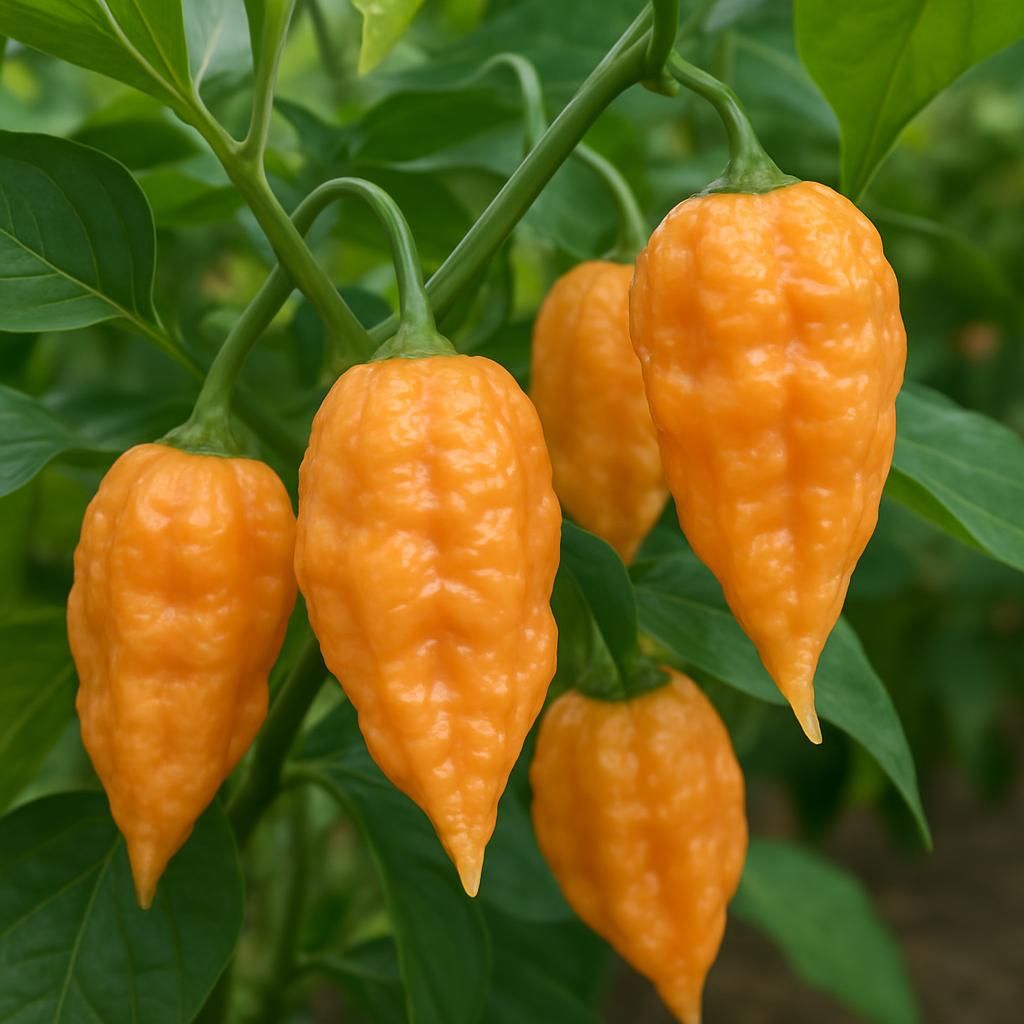
Introduction to Bhut Jolokia Peach
Bhut Jolokia Peach is a distinctive cultivar of the Ghost Pepper (Capsicum chinense) that produces striking peach-to-orange pods with extreme Scoville ratings exceeding 1,000,000 SHU. The variety combines the legendary heat of the original Ghost Pepper with a sweeter, fruitier flavor profile that appeals to both commercial hot sauce producers and home gardeners. Its vigorous growth habit and high productivity make it a standout choice for specialty pepper growers.
Originating from selective breeding programs in Northeast India and later refined in the United States, Bhut Jolokia Peach has gained international recognition for its unique color and complex flavor. The plants are relatively compact yet highly branched, often reaching 3–4 feet in height under optimal conditions. Growers value the cultivar for both fresh market sales and value-added products such as fermented hot sauces and dried powders.
Successful commercial production requires attention to soil fertility, consistent warmth, and integrated pest management. This comprehensive guide provides step-by-step instructions for soil preparation, propagation, irrigation scheduling, fertilization regimes, and post-harvest handling to help you achieve professional-grade results.
Botanical Profile of Bhut Jolokia Peach
Bhut Jolokia Peach belongs to the Solanaceae family and is botanically classified as Capsicum chinense. The plants exhibit a bushy, indeterminate growth habit with multiple stems arising from a central crown. Leaves are ovate to lanceolate, medium green, and slightly pubescent on the undersides.
Flowers are small, creamy-white with green anthers, and typically self-pollinate, although insect activity can increase fruit set. Pods develop from green to a vibrant peach-orange at maturity, measuring 2–3 inches in length with a characteristic wrinkled texture. The internal placental tissue contains high concentrations of capsaicinoids responsible for the extreme heat.
The variety matures in approximately 100–120 days from transplant. Plants continue to produce flowers and fruit over an extended season in warm climates, often until first frost. Cross-pollination with other C. chinense varieties can occur, so isolation is recommended for seed savers.
Soil, pH, and Climate Requirements for Bhut Jolokia Peach
Bhut Jolokia Peach performs best in well-drained, fertile loam or sandy loam soils with high organic matter content. The crop is highly sensitive to waterlogging; raised beds or well-aerated containers are strongly recommended in heavy clay soils.
| Parameter | Ideal Range | Notes |
|---|---|---|
| Soil Type | Loam / Sandy Loam | Excellent drainage essential |
| Soil pH | 6.0 – 6.8 | Slightly acidic to neutral |
| Temperature (Day) | 75–90 °F (24–32 °C) | Optimal fruit set and color development |
| Temperature (Night) | 60–70 °F (15–21 °C) | Avoid below 55 °F |
| Sunlight | Full sun, 8+ hours | Essential for capsaicin production |
| Spacing | 18–24 inches between plants | Rows 30–36 inches apart |
| Growing Season | 100–120 frost-free days | Warm-season crop |
Elevated beds improve soil warming in spring and reduce disease pressure. Incorporate 2–3 inches of well-aged compost or aged manure prior to planting to boost microbial activity and water-holding capacity.
Step-by-Step Planting & Propagation
Start seeds indoors 8–10 weeks before the last expected frost. Use a sterile seed-starting mix and maintain soil temperature at 80–85 °F (27–29 °C) for rapid germination, which usually occurs in 7–14 days. Provide bright grow lights or a south-facing window once seedlings emerge.
Transplant seedlings outdoors when nighttime temperatures consistently remain above 60 °F and soil has warmed to at least 65 °F. Harden off plants for 7–10 days by gradually increasing outdoor exposure. Space plants 18–24 inches apart in rows 30–36 inches wide to allow air circulation and ease of harvest.
Bhut Jolokia Peach can also be propagated from stem cuttings taken from healthy, disease-free mother plants. Root cuttings in a moist perlite-vermiculite mix under high humidity; transplant once roots are well established.
Care & Maintenance regimes for Bhut Jolokia Peach
Consistent moisture without waterlogging is critical. Drip irrigation or soaker hoses deliver water directly to the root zone while keeping foliage dry, reducing disease incidence.
| Growth Stage | Watering Frequency | Fertilizer Schedule | Pruning Actions |
|---|---|---|---|
| Seedling (0–4 wks) | Keep evenly moist | Dilute fish emulsion or seaweed weekly | None |
| Vegetative | 1–1.5 inches per week | High-nitrogen organic fertilizer every 2 wks | Remove lower leaves touching soil |
| Flowering | Maintain consistent moisture | Switch to balanced NPK (5-5-5) every 3 wks | Light tipping to encourage branching |
| Fruiting | Reduce slightly at maturity | High-potassium fertilizer every 3–4 wks | Remove damaged or diseased branches |
| Post-harvest | Reduce to prevent rot | Side-dress with compost tea | Cut back 6–8 inches to encourage regrowth |
Mulch with 2–3 inches of straw or shredded leaves to suppress weeds and stabilize soil temperature. Avoid over-fertilization with nitrogen late in the season, which can delay ripening and reduce capsaicin levels.
Pests, Diseases & Organic Management
Common pests include Aphids, Spider Mites, and Thrips. Monitor weekly and use insecticidal soap or neem oil at the first sign of infestation. Yellow sticky traps help reduce whitefly and thrips populations.
Fungal diseases such as Phytophthora and Fusarium wilt are mitigated by crop rotation, well-drained soil, and avoiding overhead watering. Remove and destroy infected plants promptly. Beneficial nematodes and Bacillus subtilis products provide effective biological control for soil-borne pathogens.
Harvesting, Curing & Optimal Storage
Harvest pods when they reach full peach-orange color and begin to wrinkle slightly. Use clean pruners to cut stems rather than pulling, which can damage the plant. Wear gloves during harvest to avoid capsaicin contact with skin and eyes.
For fresh use, store pods in the refrigerator for up to two weeks. For long-term storage, dry pods in a dehydrator at 125 °F (52 °C) until brittle, then store in airtight containers away from light. Freeze whole pods for later processing into sauces or powders.
Companion Planting for Bhut Jolokia Peach
Pair Bhut Jolokia Peach with Thai Basil and Marigold to repel aphids and nematodes. Nasturtium serves as a trap crop for aphids while providing edible flowers. Avoid planting near Fennel or members of the Brassica family, which can inhibit pepper growth.
Tomato and Eggplant make excellent neighbors in the same solanaceous guild, sharing similar cultural requirements. Interplant with Clover as a living mulch to fix nitrogen and improve soil structure.
The Overlooked Art of Seasonal Harvest Timing for Small Farm Profit offers additional insights into maximizing returns from high-value specialty crops like Bhut Jolokia Peach.