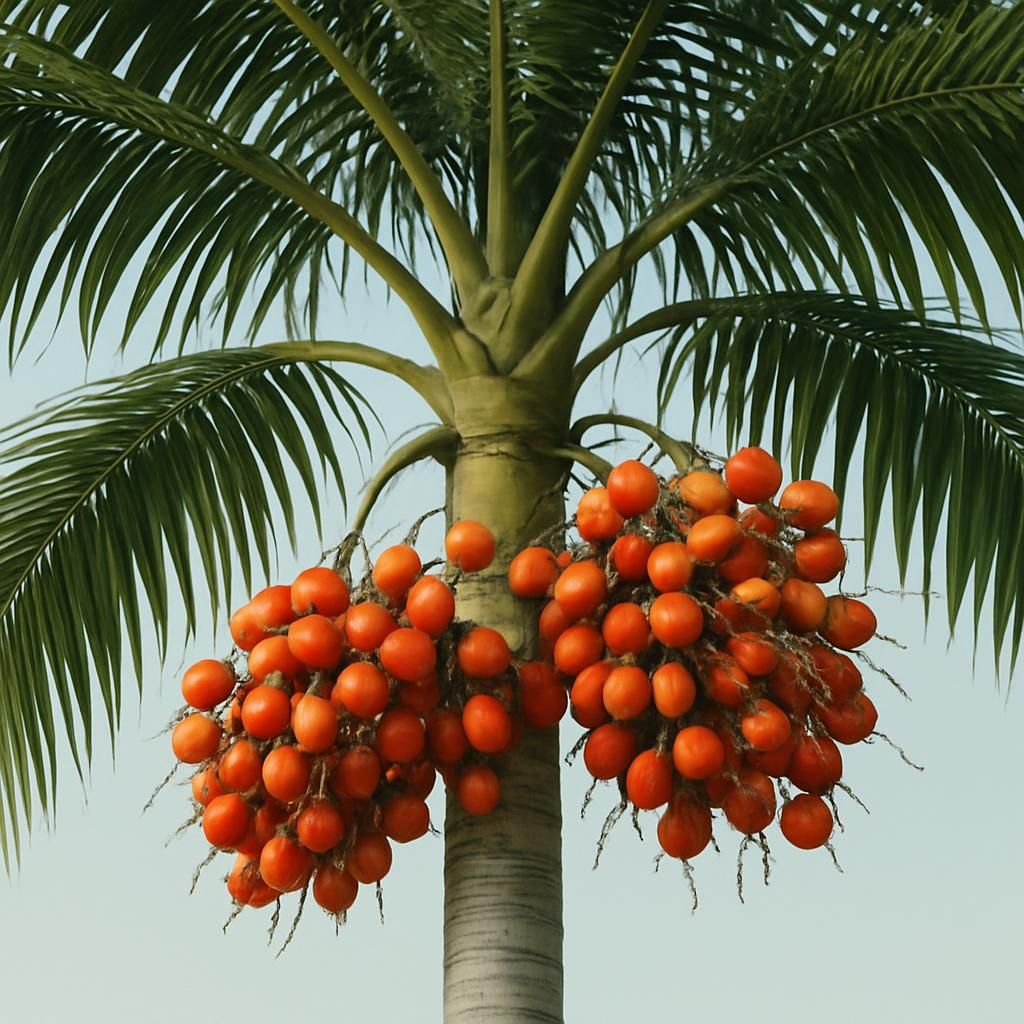
Introduction to Betel Nut (Areca catechu)
Betel nut, known scientifically as Areca catechu, is a slender, single-stemmed palm reaching 10–20 meters in height. It is grown primarily for its hard, ovoid seeds, which are harvested, cured, and used in the traditional betel quid. The crop thrives in humid tropical lowlands and is a major cash crop in India, Indonesia, Bangladesh, Sri Lanka, and parts of the Philippines and Pacific islands. Global demand remains steady due to cultural significance, while modern growers seek sustainable, high-yielding orchards.
Botanical Profile of Betel Nut (Areca catechu)
Areca catechu belongs to the Arecaceae family. The trunk is smooth, grey-green, and marked by prominent leaf scars. Leaves are pinnate, 1.2–2 m long, with numerous leaflets. Inflorescences emerge from the leaf axils as branched spadices bearing both male and female flowers. Fruits are ovoid drupes, 4–5 cm long, turning orange-red at maturity. Each fruit contains a single seed rich in alkaloids, tannins, and fiber. The palm flowers year-round in equatorial climates but shows distinct seasonal peaks in monsoon regions.
Soil, pH, and Climate Requirements for Betel Nut (Areca catechu) (MUST INCLUDE A MARKDOWN TABLE OF IDEAL CONDITIONS)
Betel nut palms require deep, well-drained soils with high organic matter. They perform best in loamy or sandy loam textures with good water-holding capacity yet excellent drainage to prevent waterlogging. The ideal soil pH range is slightly acidic to neutral.
| Parameter | Ideal Range/Value | Notes |
|---|---|---|
| Soil Type | Loamy / Sandy loam | Deep, fertile, well-drained |
| Soil pH | 5.5 – 7.0 | Slightly acidic to neutral |
| Annual Rainfall | 1500 – 4000 mm | Evenly distributed; avoid prolonged dry spells |
| Temperature Range | 20 – 35 °C | Optimal growth; sensitive to frost |
| Relative Humidity | 70 – 90 % | High humidity essential |
| Altitude | 0 – 1000 m | Lowland to mid-hill tropics |
| Sunlight | Full sun to partial shade | Young palms benefit from light shade |
Step-by-Step Planting & Propagation
Betel nut is propagated exclusively by seed. Select fully ripe, orange-red fruits from high-yielding mother palms. Soak cleaned seeds in water for 24–48 hours, then sow in raised nursery beds or polybags filled with a 1:1:1 mix of topsoil, sand, and well-rotted manure. Germination occurs in 60–90 days at 28–32 °C. Transplant 12–18-month-old seedlings (60–90 cm tall) into the main field during the onset of monsoon rains. Dig pits of 60 × 60 × 60 cm at a spacing of 2.5–3 m × 2.5–3 m. Incorporate 10–15 kg well-decomposed FYM and 100 g neem cake per pit before planting. Water immediately after transplanting and provide temporary shade for the first 4–6 weeks.
Care & Maintenance regimes for Betel Nut (Areca catechu) (MUST INCLUDE A MARKDOWN TABLE OF WATER, FERTILIZER, AND PRUNING SCHEDULES)
Regular irrigation, balanced nutrition, and minimal pruning keep palms productive for 30–40 years. Mulch the basin with 10–15 cm of organic material to conserve moisture and suppress weeds. Remove only dead or damaged fronds; excessive pruning reduces photosynthetic area.
| Stage / Season | Watering Schedule | Fertilizer Application (per palm/year) | Pruning / Other Care |
|---|---|---|---|
| Establishment (Year 1) | 20–25 L every 3–4 days | 10 kg FYM + 100 g NPK 10-10-10 split in 4 doses | Light weeding; retain all green leaves |
| Vegetative (Years 2–4) | 30–40 L weekly during dry periods | 15 kg FYM + 200 g N + 100 g P₂O₅ + 200 g K₂O | Remove only dead fronds |
| Mature Bearing | 40–50 L every 7–10 days | 20 kg FYM + 300 g N + 150 g P₂O₅ + 300 g K₂O + 50 g Mg | Annual removal of senescent leaves |
| Flowering & Fruiting | Maintain consistent moisture | Add 200 g neem cake + 5 kg vermicompost in basins | Avoid pruning during flowering |
Pests, Diseases & Organic Management
Common pests include Rhinoceros beetle, red palm weevil, and scale insects. Regular sanitation, pheromone traps, and neem oil sprays (3 % concentration) provide effective control. Major diseases are bud rot caused by Phytophthora palmivora, stem bleeding, and leaf spot. Improve drainage, apply Trichoderma viride at the base, and remove infected tissues promptly. Intercropping with Gliricidia or Black Pepper helps reduce pest pressure through biodiversity.
Harvesting, Curing & Optimal Storage
Fruits are harvested when they turn fully orange-red, typically 6–8 months after flowering. Use long-handled cutters to avoid trunk damage. Sun-dry whole fruits for 4–6 days until the husk loosens, then separate the nut. Further sun-dry or smoke-cure the nuts for 3–5 days to reduce moisture below 12 %. Store cured nuts in jute bags or airtight containers in a cool, dry place. Properly cured betel nuts retain quality for 12–18 months.
Companion Planting for Betel Nut (Areca catechu)
Betel nut palms form excellent multi-tier systems. Compatible companions include Black Pepper, Coconut, Banana, Cacao, and Gliricidia. These species improve microclimate, provide additional income, and enhance soil fertility through leaf litter. Avoid heavy feeders such as Sugarcane that compete for nutrients and water.