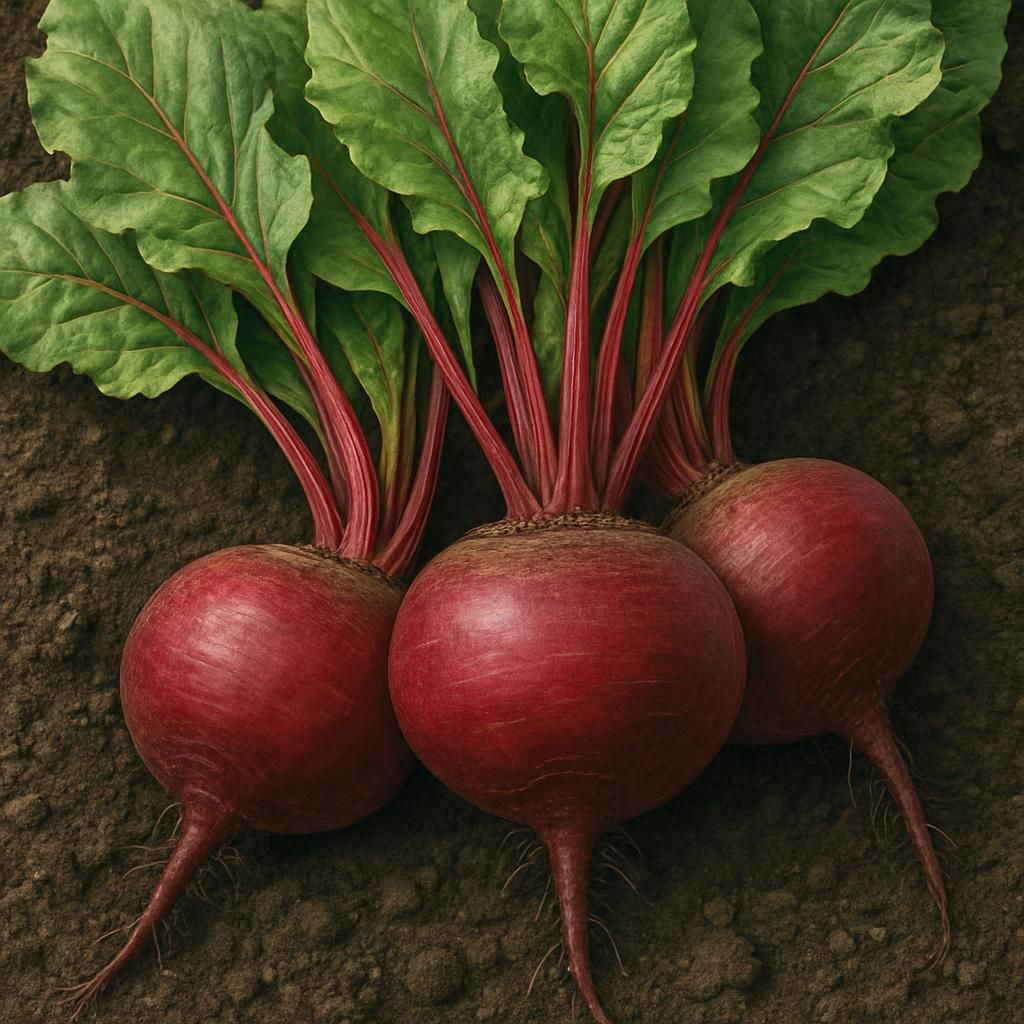
Introduction to Beet (Crosby Egyptian)
Crosby Egyptian beet is an heirloom variety first introduced in the late 1800s that remains a favorite among gardeners and market growers for its early maturity and exceptional flavor. The variety produces flattened, globe-shaped roots with smooth, deep-red skin and sweet, fine-grained flesh that cooks quickly and retains color well. Both roots and greens are edible, offering a dual-purpose crop that maximizes garden productivity. Its compact size and reliable performance in cool weather make it an excellent choice for succession planting and intensive raised-bed systems.
Botanical Profile of Beet (Crosby Egyptian)
Crosby Egyptian belongs to the Amaranthaceae family and is a biennial grown as an annual for its swollen taproot. The plant develops a rosette of broad, dark-green leaves with prominent red veins that are harvested young as salad greens or allowed to mature alongside the root. The flattened root shape distinguishes it from rounder cultivars and allows for faster cooking times. Like other beets, it stores sucrose in the root and contains betalain pigments responsible for the characteristic red color. Flowers, if allowed to develop in the second year, are small, greenish, and wind-pollinated.
Soil, pH, and Climate Requirements for Beet (Crosby Egyptian)
Crosby Egyptian beets prefer loose, well-drained soils free of stones and compaction that can cause root forking. The crop performs best in full sun but tolerates partial shade in warmer climates. Consistent moisture is essential for uniform root development, while excessive nitrogen promotes leafy growth at the expense of root size. Beets are moderately salt-tolerant and can be grown successfully in coastal or slightly saline soils.
| Parameter | Ideal Range | Notes |
|---|---|---|
| Soil Type | Sandy loam to loam | Avoid heavy clay; incorporate organic matter |
| Soil pH | 6.0 – 7.5 | Slightly acidic to neutral; lime if below 6.0 |
| Temperature (Soil) | 50–65 °F (10–18 °C) | Germination fails above 85 °F |
| Air Temperature | 55–75 °F (13–24 °C) | Cool-season crop; bolt risk above 80 °F |
| Spacing | 2–3 inches within row | Rows 12–18 inches apart |
| Days to Maturity | 55–60 days | Harvest at 2–3 inch diameter |
Step-by-Step Planting & Propagation
Direct sow Crosby Egyptian seed 2–3 weeks before the last spring frost when soil temperatures reach at least 50 °F. Prepare beds by incorporating 2–3 inches of well-aged compost and rake to a fine tilth. Sow seeds ½ inch deep in rows 12–18 inches apart, thinning seedlings to 2–3 inches once true leaves appear. For continuous harvest, sow every 2–3 weeks through midsummer for fall crops. In regions with hot summers, use shade cloth during germination to keep soil below 75 °F. Transplants are rarely used because beets resent root disturbance; however, pelleted seed can improve spacing accuracy in precision planting systems.
Care & Maintenance regimes for Beet (Crosby Egyptian)
Consistent soil moisture of 1 inch per week prevents woody or cracked roots. Mulch with 2 inches of straw or shredded leaves after thinning to suppress weeds and retain moisture. Side-dress with a balanced organic fertilizer or compost tea at the four-leaf stage if leaf color is pale. Avoid high-nitrogen amendments after roots begin to swell. Hand-weed carefully to prevent damaging shallow feeder roots. Monitor for Aphids and remove by strong water spray or insecticidal soap. In windy sites, low tunnels or row covers provide protection from desiccation.
| Growth Stage | Water Schedule | Fertilizer Schedule | Pruning/Thinning Schedule |
|---|---|---|---|
| Germination (0–14 days) | Keep top 1 inch moist daily | None | None |
| Seedling (2–4 weeks) | 1 inch/week, even moisture | Light compost tea at week 3 | Thin to 2–3 inches at 4 true leaves |
| Vegetative (4–6 weeks) | 1 inch/week | Balanced organic 5-5-5 at week 5 | Remove any flowering stalks |
| Root Bulking (6+ weeks) | 1–1.5 inches/week | Light potassium boost if needed | Harvest outer leaves as needed |
Pests, Diseases & Organic Management
Crosby Egyptian beets are susceptible to Aphids, flea beetles, and cutworms. Floating row covers applied at planting exclude most insect pests. Handpick cutworms at dusk or use collars around seedlings. Leaf spot diseases such as Cercospora can appear in humid conditions; practice 3-year crop rotation and remove infected foliage. Root-knot nematodes cause galls; solarize soil or plant nematode-suppressive marigolds the previous season. Maintain good airflow and avoid overhead irrigation to reduce fungal pressure. Beneficial insects including lady beetles and lacewings provide natural aphid control.
Harvesting, Curing & Optimal Storage
Harvest Crosby Egyptian beets when roots reach 2–3 inches in diameter for optimal sweetness and tenderness. Loosen soil with a fork and pull gently to avoid breaking skins. Greens may be harvested throughout the season by removing outer leaves, leaving the growing point intact. Rinse roots lightly and allow to air-dry before storage. Store unwashed roots in perforated plastic bags at 32–40 °F with 95 % humidity for up to 4 months. Greens keep 3–5 days refrigerated in a breathable bag. For long-term preservation, roast and freeze or pickle in vinegar brine.
Companion Planting for Beet (Crosby Egyptian)
Beets pair well with Onion, Garlic, and Lettuce because these companions deter pests and do not compete heavily for nutrients. Bush beans and kohlrabi are also compatible, while tall crops such as corn or pole beans can provide light afternoon shade in hot climates. Avoid planting near Swiss chard or spinach to reduce shared disease risk. Interplant with aromatic herbs like Thyme to mask beet scent from insect pests. After harvest, follow with nitrogen-fixing legumes to rebuild soil fertility for the next rotation cycle.