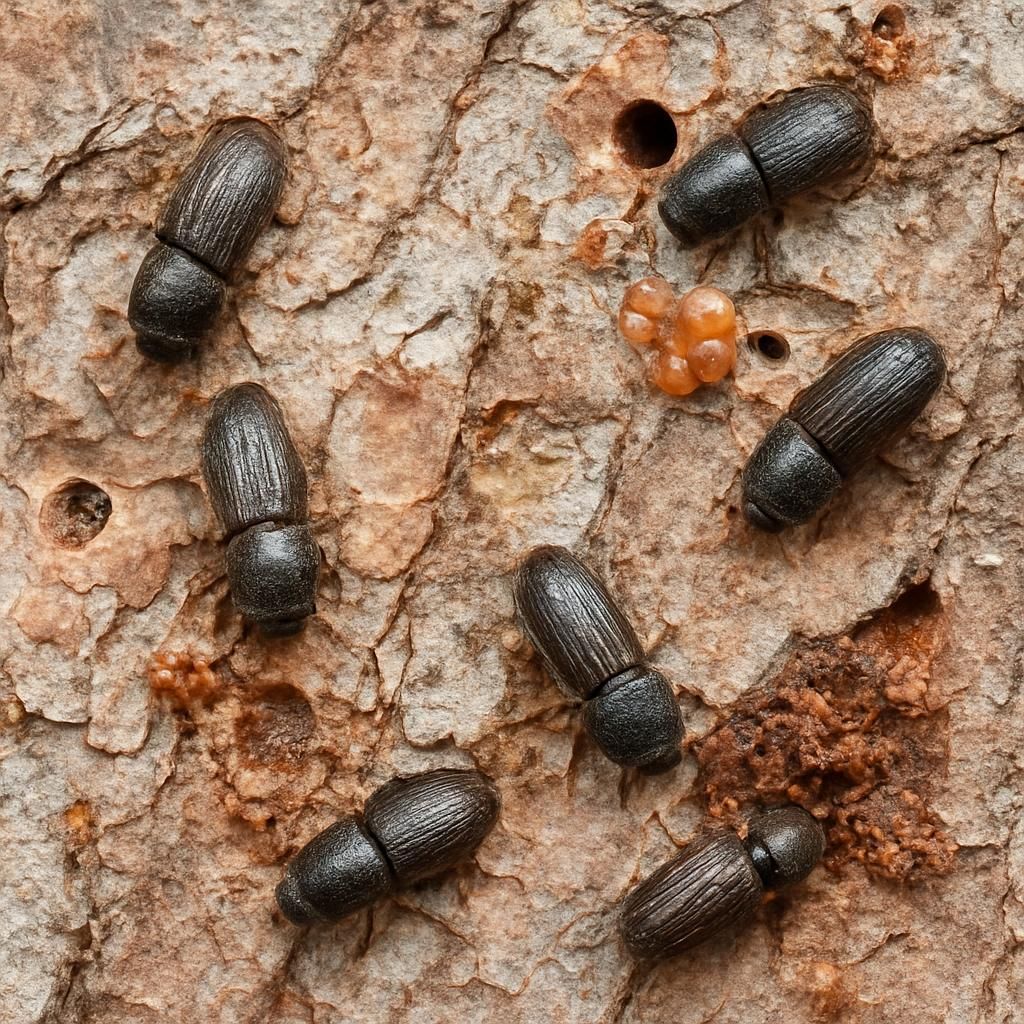
Introduction to bark beetles
Bark beetles (family Scolytinae) represent one of the most economically and ecologically significant groups of forest and orchard pests worldwide. These small, cylindrical beetles bore through the outer bark of trees to create intricate gallery systems where they feed, mate, and reproduce. While many species target conifers such as pine, spruce, fir, and cedar, certain members also attack deciduous hardwoods. Healthy trees can usually resist attack through resin flow and chemical defenses, but when trees become stressed by drought, overcrowding, mechanical injury, or pathogens, bark beetles can overwhelm these defenses and cause rapid decline. Severe infestations not only kill individual trees but can trigger landscape-level mortality events that alter forest composition and increase wildfire risk.
Professional growers and land managers must understand that bark beetles are both primary and secondary pests. Primary species can kill apparently healthy trees when populations explode, while secondary species typically finish off already weakened hosts. Early detection through visual scouting, trap monitoring, and pheromone lures remains the cornerstone of any effective program. Because these beetles spend most of their life cycle hidden beneath the bark, management relies on sanitation, cultural practices, targeted chemical applications, and biological controls rather than simple foliar sprays.
Identifying Symptoms & Damage
The earliest visible signs of bark beetle attack include small (1–3 mm) round entrance and exit holes on the trunk and larger branches, often accompanied by reddish-brown boring dust (frass) accumulating at the base of the tree or in bark crevices. Pitch tubes—resin-soaked masses of frass and sap—may appear on conifers as the tree attempts to expel invaders. As galleries expand, the inner bark (phloem) and cambium are destroyed, interrupting the flow of nutrients and water. This leads to crown thinning, yellowing or reddening of needles or leaves, and progressive dieback from the top downward.
Advanced infestations produce characteristic S-shaped or radiating gallery patterns visible when the outer bark is removed. Blue-stain fungi (Ophiostoma and Grosmannia species) are frequently introduced by the beetles and further block xylem vessels, accelerating mortality. In orchards and urban landscapes, affected trees may exhibit oozing sap, cracked bark, and increased woodpecker activity as birds search for larvae. Accurate species identification through gallery shape, frass color, and host preference is critical because management thresholds and treatment windows differ among species.
Lifecycle and Progression of bark beetles
Bark beetles undergo complete metamorphosis with four distinct stages. Most species complete one to three generations per year depending on climate and elevation. The following table summarizes the typical progression:
| Stage | Duration | Key Characteristics | Management Window |
|---|---|---|---|
| Egg | 7–14 days | Laid in galleries beneath bark; 20–80 eggs per female | Sanitation before egg hatch |
| Larva | 3–8 weeks | White, legless grubs feeding on phloem and cambium | Systemic insecticides or removal |
| Pupa | 1–3 weeks | Transformation inside pupal chambers in the bark | Limited options; focus on adults |
| Adult | 2–8 weeks active | Emerge to attack new hosts; carry symbiotic fungi | Traps, contact sprays, sanitation |
Adults locate suitable hosts using volatile chemical cues and aggregation pheromones. Once established, they release additional pheromones that attract mates and trigger mass attacks. Larvae feed laterally and vertically, creating the diagnostic gallery patterns. Mature adults either overwinter beneath the bark or emerge to seek new hosts, perpetuating the cycle.
Environmental Triggers & Risk Factors
Outbreaks are strongly correlated with environmental stressors that reduce tree vigor. Prolonged drought reduces resin pressure and oleoresin flow, allowing beetles to establish galleries more easily. High stand density increases competition for water and light, weakening individual trees. Recent thinning operations, windthrow events, or construction damage create fresh breeding material. Warmer winter temperatures allow more beetles to survive, while extended growing seasons can support additional generations. Soil compaction, nutrient deficiencies, and secondary pathogens such as root rot further predispose trees. Monitoring regional drought indices, maintaining appropriate stocking levels, and promptly removing storm-damaged timber are proven risk-reduction strategies.
Organic Control & Treatment Plans
Integrated organic management emphasizes prevention, sanitation, and biological agents. When populations are low, cultural practices alone can maintain acceptable levels. The table below outlines proven options and recommended frequencies:
| Treatment Option | Application Method | Frequency / Timing | Notes |
|---|---|---|---|
| Sanitation (remove infested trees) | Chainsaw removal + chipping or burning | Immediate upon detection; spring/fall | Most effective single practice |
| Pheromone-baited funnel traps | Traps placed 10–20 m from host trees | Deploy early spring; check weekly | Mass trapping reduces local populations |
| Beneficial nematodes (Steinernema) | Soil drench around base of trees | Early spring and late fall | Targets overwintering larvae |
| Kaolin clay particle film | Foliar spray on trunk and lower limbs | Reapply every 7–14 days during flight | Creates physical barrier; OMRI listed |
| Horticultural oil + insecticidal soap | High-pressure trunk spray | At first sign of adult emergence | Smothers adults; avoid during bloom |
| Verbenone repellent pouches | Attach to trunk at 1.5 m height | Replace every 60–90 days | Disrupts aggregation; use with traps |
Combining multiple tactics yields the best results. Always confirm local regulations before using any product and rotate modes of action to prevent resistance.
Preventing bark beetles in the Future
Long-term prevention centers on maintaining tree and stand health. Space trees appropriately during planting to reduce competition. Conduct regular thinning to remove suppressed, damaged, or diseased individuals. Mulch root zones to conserve soil moisture and moderate temperature. Avoid mechanical injury to trunks during mowing or construction. Monitor soil moisture with tensiometers and irrigate during extended dry periods. Plant species and varieties adapted to local climate and soil conditions. Maintain biodiversity by preserving beneficial insect habitat and avoiding broad-spectrum insecticide use that disrupts natural enemies. Annual scouting in late winter and early spring allows timely intervention before populations reach outbreak levels.
Crops Most Affected by bark beetles
While bark beetles primarily impact forest species, several high-value crops and ornamental plantings suffer significant losses. Coniferous timber species including pine, spruce, and fir are most frequently attacked. In orchards and landscapes, stressed Avocado and Mango trees can be colonized by certain tropical bark beetle species. Apple, Pear, and Cherry trees weakened by drought or root disease are occasionally targeted. Ornamental plantings of Pine and Cedar in urban settings also experience periodic outbreaks. Because these beetles vector pathogenic fungi, even low-level infestations can introduce diseases that further compromise crop quality and marketability.