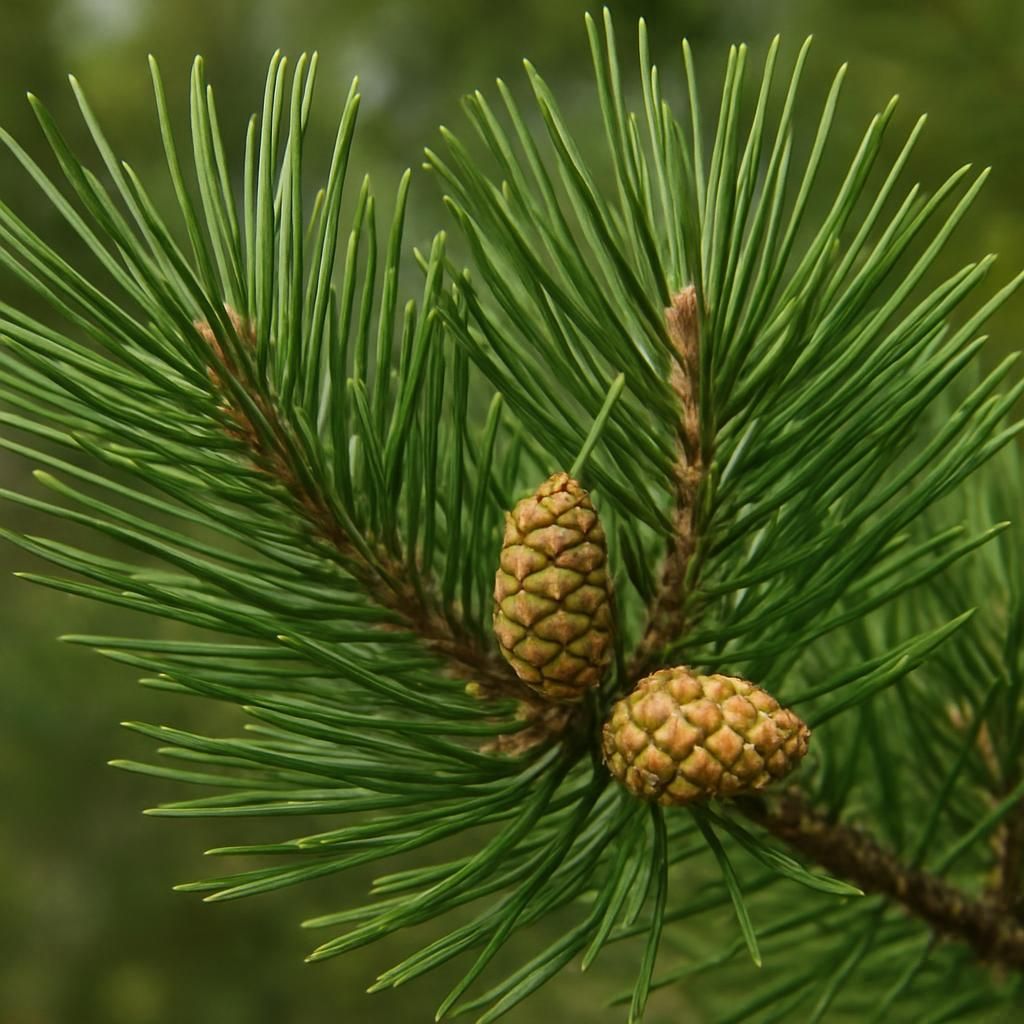
Introduction to Pine
Pine trees (Pinus spp.) form the backbone of many forestry, agroforestry, and nut-production systems across temperate regions. Their straight trunks, resinous wood, and edible seeds make them economically important for lumber, paper, turpentine, and gourmet pine nuts. Modern growers also value pines for carbon sequestration, windbreaks, and Christmas-tree markets. Successful pine cultivation begins with matching species to local soil, climate, and market goals.
Botanical Profile of Pine
Pines are coniferous evergreens belonging to the Pinaceae family. Most species are monoecious, producing separate male pollen cones and female seed cones on the same tree. Needles occur in fascicles of two to five and persist for two to five years. Seed cones mature over one to three years and release winged seeds or large edible nuts depending on species. Growth habits range from the shrubby mugo pine to timber giants exceeding 50 m. Deep taproots and extensive lateral roots provide drought tolerance once established.
Soil, pH, and Climate Requirements for Pine
Pines demand well-aerated, coarse-textured soils that prevent waterlogging. Most commercial species prefer sandy loams or gravelly soils with good drainage. Organic matter should be moderate; excessive fertility promotes lush but weak growth susceptible to pests.
| Parameter | Ideal Range | Notes |
|---|---|---|
| Soil Texture | Sandy loam to loamy sand | Avoid heavy clays and compacted soils |
| Soil pH | 4.5 – 6.0 | Strongly to moderately acidic |
| Drainage | Excellent | Raised beds or slopes recommended |
| Annual Rainfall | 600 – 1,200 mm | Supplemental irrigation in dry summers |
| Temperature Range | −40 °C to 35 °C (species dependent) | Cold-hardy; avoid frost pockets for seedlings |
| USDA Zones | 2 – 9 | Match species to local hardiness zone |
| Sunlight | Full sun (minimum 6 hours) | Partial shade reduces cone production |
Step-by-Step Planting & Propagation
- Site Preparation: Clear competing vegetation and rip soil to 60 cm depth. Incorporate elemental sulfur if pH exceeds 6.0.
- Species Selection: Choose regionally adapted pines such as Pinus taeda for southern timber or Pinus edulis for edible nuts.
- Propagation: Sow stratified seeds in spring or graft superior clones onto seedling rootstocks. Container-grown transplants establish faster than bare-root stock.
- Spacing: Timber species at 2.5 m × 2.5 m; nut orchards at 5 m × 5 m. Adjust for machinery access.
- Planting Window: Early spring or autumn when soil moisture is adequate. Plant seedlings at the same depth as the nursery line.
- Initial Protection: Install tree shelters against deer and rodents; mulch 10 cm deep within a 1 m radius.
Care & Maintenance regimes for Pine
Young pines require consistent weed control and supplemental water during the first three summers. Fertilization is minimal once established but may be needed on very poor sites. Pruning focuses on removing lower branches to produce clear timber or shaping Christmas trees.
| Operation | Schedule | Rate / Method |
|---|---|---|
| Watering | Year 1–3: weekly if <25 mm rain | 20–30 L per tree; reduce after establishment |
| Fertilizer | Year 1: 50 g NPK 10-10-10 | Broadcast 30 cm from trunk; years 2–4 increase 25 % |
| Fertilizer | Mature stands: every 4–5 years | 100–150 kg N/ha on nutrient-poor sites |
| Pruning | Timber: lift to 6 m by year 10 | Remove whorls in dormant season |
| Pruning | Christmas trees: annual shaping | Shear leaders and laterals in late spring |
| Mulching | Reapply every 2 years | 8–10 cm wood chips or pine needles |
Pests, Diseases & Organic Management
Common insect threats include pine tip moths, Aphids, and Pine weevils. Fungal diseases such as Pine wilt and needle cast reduce growth. Integrated management begins with resistant species and proper spacing for airflow. Monitor with pheromone traps; release predatory beetles for tip moths. Apply neem oil or insecticidal soaps at first sign of aphids. Remove and destroy infected branches to limit needle cast. Maintain biodiversity with understory legumes to support beneficial insects.
Harvesting, Curing & Optimal Storage
Timber harvest occurs at 25–40 years depending on species and market. Fell during winter dormancy to minimize sap stain. For pine nuts, collect closed cones in autumn before squirrels; kiln-dry at 35 °C for 48 hours then store at 4 °C in sealed containers for up to two years. Christmas trees are harvested at 6–10 years; keep cool and moist until sale. Resin tapping follows a V-cut pattern on mature trunks during active growth.
Companion Planting for Pine
Pines pair well with nitrogen-fixing Clover and Hairy vetch that improve soil fertility without competing heavily for moisture. Understory Thyme and Yarrow attract pollinators and predatory insects. Avoid shallow-rooted crops that dry surface soil. In agroforestry systems, interplant with shade-tolerant Blueberry on acidic sites for diversified income. Rotate annual vegetables away from young pine rows to prevent root damage from tillage.